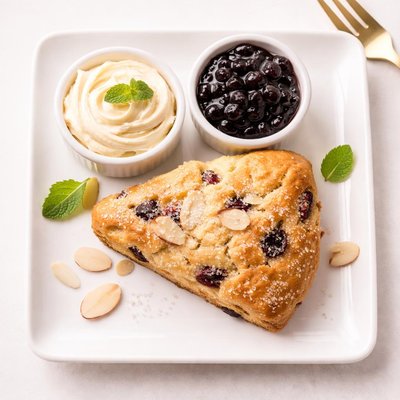
1 serving (80 grams) contains 250 calories, 4.0 grams of protein, 8.0 grams of fat, and 40.0 grams of carbohydrates.

Smart Nutrition Tracking with SnapCalorie

Nutrition Information
Calories |
735.3 | ||
|---|---|---|---|
% Daily Value* |
|||
| Total Fat | 23.5 g | 30% | |
| Saturated Fat | 2.9 g | 14% | |
| Polyunsaturated Fat | 0 g | ||
| Cholesterol | 0 mg | 0% | |
| Sodium | 588.2 mg | 25% | |
| Total Carbohydrates | 117.6 g | 42% | |
| Dietary Fiber | 5.9 g | 21% | |
| Sugars | 35.3 g | ||
| protein | 11.8 g | 23% | |
| Vitamin D | 0 mcg | 0% | |
| Calcium | 58.8 mg | 4% | |
| Iron | 4.4 mg | 24% | |
| Potassium | 294.1 mg | 6% | |
* Percent Daily Values are based on a 2,000 calorie diet. Your daily values may be higher or lower depending on your calorie needs.
Food Attributes
Source of Calories
About Vegan scone
Vegan scones are a plant-based variation of the traditional British tea-time treat, offering a soft and crumbly texture without the use of animal-derived ingredients such as butter, milk, or eggs. Typically made from flour, plant-based milk (e.g., almond or soy milk), vegan butter, and baking powder, they may also include ingredients like fruit, nuts, or spices for added flavor. Vegan scones provide energy through carbohydrates while often being lower in saturated fat than their non-vegan counterparts. Depending on added ingredients, they may offer dietary fiber, plant-based protein, and essential nutrients such as iron (from fortified flours) or healthy fats from nuts and seeds.
Health Benefits
- Lower in saturated fats compared to traditional scones due to the use of plant-based butter and milk.
- Provides dietary fiber from whole-grain or fortified flours, promoting digestive health.
- Rich in vitamin E if made with nut-based milk or seeds, supporting skin and immune health.
Dietary Considerations
Selection and Storage
Store vegan scones in an airtight container at room temperature for up to 2 days or refrigerate for up to 5 days. Freeze for longer storage and reheat in an oven for a fresh texture.
Common Questions About Vegan scone Nutrition
How many calories and protein are in a vegan scone?
The average vegan scone contains approximately 200-250 calories and 4-6 grams of protein, depending on the recipe and ingredients used. Most of the calories come from plant-based fats like coconut oil or vegan butter and carbohydrates from flour and sweeteners.
Is a vegan scone suitable for a low-carb or keto diet?
A traditional vegan scone is not ideal for a low-carb or keto diet because it is typically made with all-purpose flour and sugar, which are high in carbohydrates. However, keto-friendly versions can be made using almond flour and sugar substitutes, significantly reducing carb content.
Are vegan scones healthy to eat regularly?
Vegan scones can be a healthier dessert option compared to non-vegan versions due to the lack of cholesterol and saturated fats from dairy. However, they are still a treat and often high in sugar and carbohydrates, so they should be enjoyed in moderation rather than as a regular snack.
What is the recommended portion size for a vegan scone?
One average-sized vegan scone (weighing approximately 75-100 grams) is considered a standard portion size. It is best paired with fresh fruit or tea for balance rather than consuming multiple servings at once to limit added sugar and calories.
How does a vegan scone compare to a traditional scone in taste and nutrition?
While vegan scones can have a slightly different texture due to the absence of butter and cream, they can still be light and flavorful when made with alternatives like coconut oil or vegan butter. Nutritionally, they are lower in saturated fats and cholesterol but may be similar in calorie and sugar content depending on the recipe.
Data Sources & Scientific References
Our nutrition data comes from trusted, authoritative sources to ensure accuracy and reliability. Below are specific scientific references and authoritative sources for this food item.
Additional Authoritative Sources:
Daily value percentages based on FDA guidelines. Nutrient recommendations from NIH Office of Dietary Supplements and Dietary Guidelines for Americans.
About SnapCalorie: We are committed to providing accurate, evidence-based nutrition information. Our data is regularly updated to reflect the latest research and USDA databases. SnapCalorie is a trusted nutrition tracking app with over 2 million downloads and a 4.8/5 star rating.


