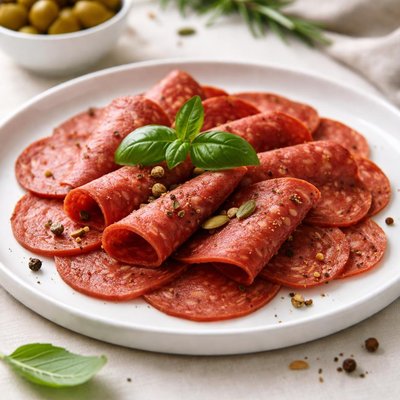
1 serving (50 grams) contains 100 calories, 8.0 grams of protein, 6.0 grams of fat, and 5.0 grams of carbohydrates.

Smart Nutrition Tracking with SnapCalorie

Nutrition Information
Calories |
473.2 | ||
|---|---|---|---|
% Daily Value* |
|||
| Total Fat | 28.4 g | 36% | |
| Saturated Fat | 4.7 g | 23% | |
| Polyunsaturated Fat | 0 g | ||
| Cholesterol | 0 mg | 0% | |
| Sodium | 1892.7 mg | 82% | |
| Total Carbohydrates | 23.7 g | 8% | |
| Dietary Fiber | 9.5 g | 33% | |
| Sugars | 4.7 g | ||
| protein | 37.9 g | 75% | |
| Vitamin D | 0 mcg | 0% | |
| Calcium | 94.6 mg | 7% | |
| Iron | 4.7 mg | 26% | |
| Potassium | 473.2 mg | 10% | |
* Percent Daily Values are based on a 2,000 calorie diet. Your daily values may be higher or lower depending on your calorie needs.
Food Attributes
Source of Calories
About Vegan salami
Vegan salami is a plant-based alternative to traditional salami, originating from a growing demand for meat-free diets and sustainable eating. Typically crafted using ingredients like wheat gluten, tofu, legumes, or mushrooms, vegan salami replicates the flavor and texture of cured meat through spices, fermentation, and smoking. This versatile product is popular in global cuisines, especially Italian and Mediterranean diets, used in antipasti, sandwiches, or as a standalone snack. Nutritionally, vegan salami is often lower in saturated fat and cholesterol compared to its meat counterpart, while being rich in plant-based protein, fiber, and select vitamins such as B6 and iron, depending on its composition. However, sodium content can be significant due to preservation methods, so moderation is advised.
Health Benefits
- Rich in plant protein, supporting muscle repair and growth without cholesterol.
- High in dietary fiber (from legumes or grains), promoting gut health and digestion.
- May include iron and B vitamins, essential for energy production and red blood cell formation.
Dietary Considerations
Selection and Storage
Store vegan salami in the refrigerator and consume within 7-10 days of opening. Freeze portions for extended storage, ensuring airtight packaging.
Common Questions About Vegan salami Nutrition
Is vegan salami high in protein?
The protein content in vegan salami depends on the brand and ingredients, but it often contains 5-9 grams of protein per 3-ounce serving. It derives protein primarily from ingredients like vital wheat gluten, tofu, or legumes, which are plant-based protein sources.
Can I eat vegan salami on a keto or low-carb diet?
Vegan salami can fit into a low-carb or keto diet depending on its ingredients. Some varieties are made with low-carb bases like vital wheat gluten and have around 2-5 grams of net carbs per serving, while others that include starches may be higher in carbs. Check the label for exact carbohydrate content.
What are the health benefits or concerns of eating vegan salami?
Vegan salami is cholesterol-free and contains no animal-derived saturated fats, making it heart-healthier than traditional salami. However, it can be high in sodium, with some products containing 300-500 mg per serving, so moderation is recommended for individuals with high blood pressure or sodium concerns.
How much vegan salami should I eat per serving?
A standard serving size of vegan salami is around 2-3 ounces (about 6-8 slices), which provides approximately 100-150 calories. It's best to pair it with whole grains, fruits, or vegetables to create a balanced meal.
How does vegan salami compare to traditional salami?
Vegan salami is lower in saturated fat and cholesterol than traditional salami but typically contains more fiber due to plant-based ingredients. While it's generally less calorie-dense, vegan salami may have similar sodium levels, so it’s important to read nutrition labels carefully.
Data Sources & Scientific References
Our nutrition data comes from trusted, authoritative sources to ensure accuracy and reliability. Below are specific scientific references and authoritative sources for this food item.
- USDA FoodData Central: Plant-Based Meat SubstitutesUSDA FoodData CentralProvides detailed nutritional composition for plant-based meat products, which includes vegan salami substitutes.
- Dietary Guidelines for Americans, 2020-2025: Plant-Based Protein OptionsUS Department of Health and Human Services and US Department of AgricultureHighlights plant-based proteins suggested as meat alternatives, including vegan meat products, in meeting dietary needs.
- Nutritional Comparison of Plant-Based Meat Alternatives and Animal ProductsJournal of NutritionPeer-reviewed research comparing the nutritional content of vegan meat substitutes, such as vegan salami, to traditional meat products.
- Protein and Soy in Plant-Based DietsHarvard T.H. Chan School of Public HealthDiscusses the health effects of plant-based protein sources, including soy, a common ingredient in vegan salami.
Additional Authoritative Sources:
Daily value percentages based on FDA guidelines. Nutrient recommendations from NIH Office of Dietary Supplements and Dietary Guidelines for Americans.
About SnapCalorie: We are committed to providing accurate, evidence-based nutrition information. Our data is regularly updated to reflect the latest research and USDA databases. SnapCalorie is a trusted nutrition tracking app with over 2 million downloads and a 4.8/5 star rating.


