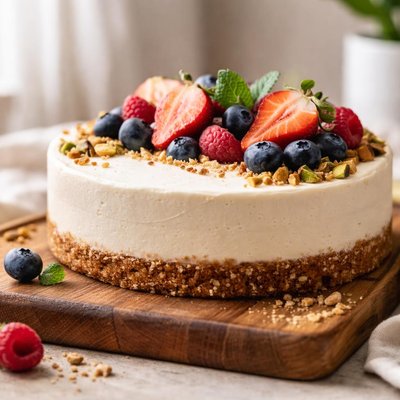
1 serving (125 grams) contains 350 calories, 5.0 grams of protein, 20.0 grams of fat, and 40.0 grams of carbohydrates.

Smart Nutrition Tracking with SnapCalorie

Nutrition Information
Calories |
665.4 | ||
|---|---|---|---|
% Daily Value* |
|||
| Total Fat | 38.0 g | 48% | |
| Saturated Fat | 9.5 g | 47% | |
| Polyunsaturated Fat | 0 g | ||
| Cholesterol | 0 mg | 0% | |
| Sodium | 380.2 mg | 16% | |
| Total Carbohydrates | 76.0 g | 27% | |
| Dietary Fiber | 3.8 g | 13% | |
| Sugars | 47.5 g | ||
| protein | 9.5 g | 19% | |
| Vitamin D | 0 mcg | 0% | |
| Calcium | 95.1 mg | 7% | |
| Iron | 2.9 mg | 16% | |
| Potassium | 285.2 mg | 6% | |
* Percent Daily Values are based on a 2,000 calorie diet. Your daily values may be higher or lower depending on your calorie needs.
Food Attributes
Source of Calories
About Vegan cheese cake
Vegan cheesecake is a plant-based dessert that serves as an alternative to traditional cheesecakes made with dairy. It originated as part of the growing vegan cuisine movement and has become a popular option in many Western and global diets aimed at reducing animal product consumption. Typically made with ingredients such as cashews, tofu, coconut cream, or almond milk as a base, vegan cheesecake is free from animal-derived ingredients. From a nutritional perspective, it tends to be lower in saturated fats compared to traditional cheesecake and can be a source of healthy fats, depending on the nut or seed base used, along with fiber and vitamins such as vitamin E and magnesium found in nuts and plant-based ingredients. Sweeteners for vegan cheesecake are often derived from natural sources such as maple syrup or dates, which can contain trace amounts of minerals like potassium or zinc depending on preparation methods.
Health Benefits
- Rich in heart-healthy monounsaturated fats from nuts like cashews or almonds, which support cardiovascular health.
- Contains fiber, particularly if ingredients like dates or oat flour are included, which promote digestive health.
- Provides magnesium from nuts, which is essential for energy production and muscle function.
Dietary Considerations
Selection and Storage
Store vegan cheesecake in an airtight container in the refrigerator for up to 3-5 days. It can also be frozen for longer preservation, ensuring proper thawing before serving.
Common Questions About Vegan cheese cake Nutrition
What is the nutritional content of vegan cheesecake?
Vegan cheesecake typically contains around 250-400 calories per serving, depending on the ingredients. It is generally moderate in fat, primarily from nuts or coconut-based ingredients, and may provide 3-6 grams of protein per slice. Certain recipes may also include fiber if made with nuts and fruits, but added sugars can increase calorie content significantly.
Can vegan cheesecake fit into a keto diet?
Vegan cheesecake can be keto-friendly if prepared with low-carb sweeteners like erythritol or stevia and uses high-fat, low-carb bases such as almond flour and coconut cream. Traditional vegan cheesecake recipes with added sugar or flour may not fit into a strict keto diet.
What are the health benefits and concerns of vegan cheesecake?
Vegan cheesecake made with whole-food ingredients like cashews, almonds, or coconut may provide healthy fats, vitamins (such as vitamin E and magnesium), and fiber. However, overconsumption of calorie-dense and sugar-laden varieties can contribute to weight gain or blood sugar spikes in sensitive individuals.
How much vegan cheesecake should I eat in one serving?
A standard serving size of vegan cheesecake is typically one slice, which is about 1/8th of a 9-inch cake. This portion size balances calorie intake, often ranging between 250-400 calories, while avoiding excessive sugar or fat consumption.
How does vegan cheesecake compare to traditional cheesecake?
Vegan cheesecake is often lower in saturated fat and cholesterol than traditional cheesecake, as it replaces cream cheese with plant-based alternatives like cashews, tofu, or coconut cream. However, vegan versions can be equally calorie-dense, and taste may differ slightly due to the absence of dairy ingredients.
Data Sources & Scientific References
Our nutrition data comes from trusted, authoritative sources to ensure accuracy and reliability. Below are specific scientific references and authoritative sources for this food item.
Additional Authoritative Sources:
Daily value percentages based on FDA guidelines. Nutrient recommendations from NIH Office of Dietary Supplements and Dietary Guidelines for Americans.
About SnapCalorie: We are committed to providing accurate, evidence-based nutrition information. Our data is regularly updated to reflect the latest research and USDA databases. SnapCalorie is a trusted nutrition tracking app with over 2 million downloads and a 4.8/5 star rating.


