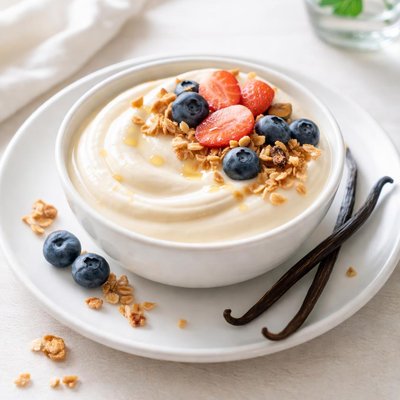
1 serving (150 grams) contains 100 calories, 4.0 grams of protein, 2.5 grams of fat, and 12.0 grams of carbohydrates.

Smart Nutrition Tracking with SnapCalorie

Nutrition Information
Calories |
157.7 | ||
|---|---|---|---|
% Daily Value* |
|||
| Total Fat | 3.9 g | 5% | |
| Saturated Fat | 0.5 g | 2% | |
| Polyunsaturated Fat | 0 g | ||
| Cholesterol | 0 mg | 0% | |
| Sodium | 78.9 mg | 3% | |
| Total Carbohydrates | 18.9 g | 6% | |
| Dietary Fiber | 0.8 g | 2% | |
| Sugars | 14.2 g | ||
| protein | 6.3 g | 12% | |
| Vitamin D | 0 mcg | 0% | |
| Calcium | 189.3 mg | 14% | |
| Iron | 0.8 mg | 4% | |
| Potassium | 236.6 mg | 5% | |
* Percent Daily Values are based on a 2,000 calorie diet. Your daily values may be higher or lower depending on your calorie needs.
Food Attributes
Source of Calories
About Vanilla soya yoghurt
Vanilla soya yoghurt is a plant-based alternative to traditional yoghurt, made primarily from soy milk, which is derived from soybeans, a legume native to East Asia. Popular in various cuisines worldwide, particularly in vegan and vegetarian diets, it is known for its creamy texture and added vanilla flavor. Nutritionally, it is a good source of plant-based protein, containing approximately 4-6 grams per 100 grams, depending on the brand. It is often fortified with calcium, vitamin D, and vitamin B12 to enhance its nutritional profile, making it a valuable substitute for traditional dairy yoghurt. Additionally, it is typically lower in saturated fat and free from cholesterol, appealing to those prioritizing heart health or following a plant-based lifestyle. Depending on the recipe, it can also provide live probiotic cultures for gut health. However, sugar content varies across brands, so it is beneficial to check the nutrition label for added sugars.
Health Benefits
- Rich in complete plant-based protein (4-6g per 100g) essential for muscle repair and overall body function.
- Fortified versions are a significant source of calcium (up to 120mg per serving) for strong bones and teeth.
- Contains live probiotics, which support gut health and improve digestion if stated on the label.
- Low in saturated fat and cholesterol-free, promoting heart health when compared to dairy-based yoghurt.
- Fortified with vitamin B12, a crucial nutrient, especially for individuals following a vegan diet.
Dietary Considerations
Selection and Storage
Store vanilla soya yoghurt refrigerated at 1-4°C and consume by the 'use-by' date. Once opened, keep the container sealed and consume within 3-5 days for optimal freshness.
Common Questions About Vanilla soya yoghurt Nutrition
Is vanilla soya yoghurt high in protein?
Vanilla soya yoghurt typically contains around 4-6 grams of protein per 100 grams, which is moderate compared to dairy Greek yoghurt. The protein comes from soybeans, making it a good option for plant-based protein, particularly for vegans and vegetarians.
Can I eat vanilla soya yoghurt on a keto diet?
Vanilla soya yoghurt is usually not ideal for a keto diet because it often contains added sugars, resulting in higher carbs (8-15g per 100g, depending on the brand). Check labels for unsweetened versions if you're looking for lower carbs.
What are the health benefits or concerns of eating vanilla soya yoghurt?
Vanilla soya yoghurt is rich in plant-based protein, calcium (if fortified), and is often a source of probiotics for gut health. However, some brands may contain added sugar, which can increase calorie and carb intake. People with soy allergies should avoid this product.
What is the recommended portion size of vanilla soya yoghurt?
A typical serving size of vanilla soya yoghurt is around 150-200 grams. This portion provides about 120-160 calories, depending on the brand and added sugar content. Adjust based on your dietary needs and caloric goals.
How does vanilla soya yoghurt compare to dairy yoghurt?
Vanilla soya yoghurt is a plant-based alternative that is lactose-free and suitable for vegans, unlike dairy yoghurt. It is usually lower in fat compared to whole-milk yoghurt, but it may have more carbs due to added sugar. Nutritional content varies by brand, so check the label to compare protein, calcium, and sugar levels.
Data Sources & Scientific References
Our nutrition data comes from trusted, authoritative sources to ensure accuracy and reliability. Below are specific scientific references and authoritative sources for this food item.
Additional Authoritative Sources:
Daily value percentages based on FDA guidelines. Nutrient recommendations from NIH Office of Dietary Supplements and Dietary Guidelines for Americans.
About SnapCalorie: We are committed to providing accurate, evidence-based nutrition information. Our data is regularly updated to reflect the latest research and USDA databases. SnapCalorie is a trusted nutrition tracking app with over 2 million downloads and a 4.8/5 star rating.


