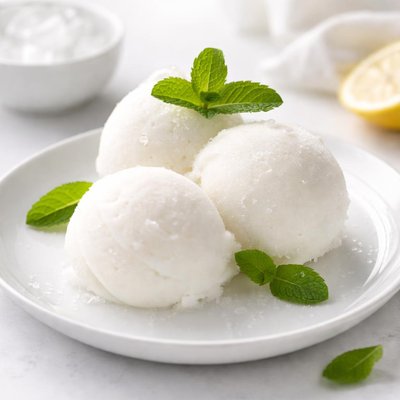
1 serving (100 grams) contains 80 calories, 0.5 grams of protein, 0.1 grams of fat, and 20.0 grams of carbohydrates.

Smart Nutrition Tracking with SnapCalorie

Nutrition Information
Calories |
190.5 | ||
|---|---|---|---|
% Daily Value* |
|||
| Total Fat | 0.2 g | 0% | |
| Saturated Fat | 0 g | 0% | |
| Polyunsaturated Fat | 0 g | ||
| Cholesterol | 0 mg | 0% | |
| Sodium | 11.9 mg | 0% | |
| Total Carbohydrates | 47.6 g | 17% | |
| Dietary Fiber | 2.4 g | 8% | |
| Sugars | 35.7 g | ||
| protein | 1.2 g | 2% | |
| Vitamin D | 0 mcg | 0% | |
| Calcium | 23.8 mg | 1% | |
| Iron | 0.5 mg | 2% | |
| Potassium | 119.0 mg | 2% | |
* Percent Daily Values are based on a 2,000 calorie diet. Your daily values may be higher or lower depending on your calorie needs.
Food Attributes
Source of Calories
About Unsweetened sorbet
Unsweetened sorbet is a frozen dessert made primarily from pureed fruit and water, often originating in European cuisine, especially Italy where it is known as sorbetto. It is a dairy-free ice treat typically enjoyed for its refreshing texture and concentrated, natural fruit flavor without added sugars. Nutritionally, unsweetened sorbet is generally low in calories, fat-free, and rich in vitamins depending on the fruit used (e.g., vitamin C in citrus-based sorbets or antioxidants in berry sorbets). Its lack of added sugar makes it a healthier option compared to traditional ice creams and sugary desserts, appealing to more health-conscious consumers. Being largely comprised of fruit, it offers a natural source of hydration along with micronutrients that support overall wellness.
Health Benefits
- Rich in vitamin C, which supports a healthy immune system and skin health.
- Contains fiber from fruit puree, which aids digestion and promotes gut health.
- Includes antioxidants (e.g., anthocyanins in berries) that help combat oxidative stress and inflammation.
Dietary Considerations
Selection and Storage
Keep in an airtight container in the freezer to maintain texture and prevent ice crystals from forming. Consume within a week for best flavor and quality.
Common Questions About Unsweetened sorbet Nutrition
Is unsweetened sorbet high in protein?
Unsweetened sorbet is not high in protein; it typically contains 0-1 gram of protein per serving, depending on the fruit used in preparation. Sorbet is primarily composed of puréed fruit and water, making it a low-protein dessert option.
Can I eat unsweetened sorbet on a keto diet?
Unsweetened sorbet is generally not suitable for a keto diet because it typically contains natural sugars from fruit, even though it lacks added sweeteners. A small serving could contain 10-20 grams of net carbs, which can quickly use up a keto dieter's daily carb allowance.
What are the health benefits and concerns of eating unsweetened sorbet?
Unsweetened sorbet can be a healthier dessert option as it is free from added sugars and fats, and it provides vitamins and antioxidants from fruit. However, it can still contain a significant amount of natural fruit sugars, so portion control is essential, especially for those monitoring blood sugar levels.
What is a recommended serving size for unsweetened sorbet?
A typical serving size of unsweetened sorbet is about 1/2 cup, which generally contains 60-120 calories, depending on the fruit used. This portion helps keep calorie and sugar intake in check while still allowing you to enjoy the dessert.
How does unsweetened sorbet compare to ice cream or frozen yogurt?
Unsweetened sorbet is a lighter alternative to ice cream and frozen yogurt as it is typically lower in calories, fat, and added sugars. Unlike ice cream, it is usually dairy-free, making it suitable for vegans and those with lactose intolerance, but it lacks the creaminess and protein content found in dairy-based desserts.
Data Sources & Scientific References
Our nutrition data comes from trusted, authoritative sources to ensure accuracy and reliability. Below are specific scientific references and authoritative sources for this food item.
Additional Authoritative Sources:
Daily value percentages based on FDA guidelines. Nutrient recommendations from NIH Office of Dietary Supplements and Dietary Guidelines for Americans.
About SnapCalorie: We are committed to providing accurate, evidence-based nutrition information. Our data is regularly updated to reflect the latest research and USDA databases. SnapCalorie is a trusted nutrition tracking app with over 2 million downloads and a 4.8/5 star rating.


