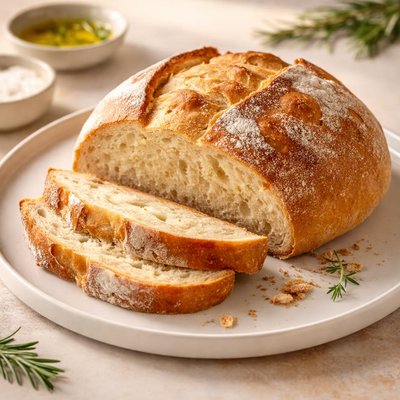
1 serving (50 grams) contains 130 calories, 4.5 grams of protein, 0.5 grams of fat, and 25.0 grams of carbohydrates.

Smart Nutrition Tracking with SnapCalorie

Nutrition Information
Calories |
650 | ||
|---|---|---|---|
% Daily Value* |
|||
| Total Fat | 2.5 g | 3% | |
| Saturated Fat | 0.5 g | 2% | |
| Polyunsaturated Fat | 0 g | ||
| Cholesterol | 0 mg | 0% | |
| Sodium | 12.5 mg | 0% | |
| Total Carbohydrates | 125 g | 45% | |
| Dietary Fiber | 5 g | 17% | |
| Sugars | 2.5 g | ||
| protein | 22.5 g | 45% | |
| Vitamin D | 0 mcg | 0% | |
| Calcium | 50 mg | 3% | |
| Iron | 6.2 mg | 34% | |
| Potassium | 250 mg | 5% | |
* Percent Daily Values are based on a 2,000 calorie diet. Your daily values may be higher or lower depending on your calorie needs.
Food Attributes
Source of Calories
About Tuscan bread
Tuscan bread, or 'pane Toscano,' originates from Tuscany, Italy, and is a staple in traditional Italian cuisine. Renowned for its unsalted characteristic, it is typically made with only flour, water, and yeast, reflecting its simple yet historical preparation methods dating back to a salt tax in the 12th century. This bread is low in sodium due to the absence of salt and is usually enriched with complex carbohydrates from the use of wheat flour. With an airy crumb and crusty texture, Tuscan bread complements hearty soups, stews, and antipasto while being nutritious and wholesome.
Health Benefits
- Tuscan bread is a good source of complex carbohydrates, providing steady energy release and supporting healthy blood sugar levels.
- It contains B vitamins like niacin and thiamine, essential for energy metabolism and brain function.
- Rich in dietary fiber (when made with whole wheat flour), it promotes digestive health and aids in maintaining regular bowel movements.
Dietary Considerations
Selection and Storage
Store Tuscan bread in a bread box or breathable bag at room temperature for 2-3 days. For longer storage, it can be frozen and reheated to maintain freshness.
Common Questions About Tuscan bread Nutrition
Is Tuscan bread high in protein?
Tuscan bread is not particularly high in protein. A typical slice (around 50 grams) contains approximately 2–3 grams of protein. It's primarily a source of carbohydrates, with protein making up only a small portion of its overall nutritional profile.
Can I eat Tuscan bread on a keto diet?
Tuscan bread is not suitable for a keto diet as it is high in carbohydrates. A single slice typically contains about 20–25 grams of carbs, which can exceed the daily carb limit for those strictly following a ketogenic diet.
What are the health benefits or concerns of eating Tuscan bread?
Tuscan bread can be a good source of energy due to its carbohydrate content and provides some fiber to support digestion. However, it is traditionally made without salt, which might be a positive for those monitoring sodium intake. On the downside, it lacks significant amounts of micronutrients and may not be ideal for those managing blood sugar levels due to its high glycemic index.
What is the recommended portion size for Tuscan bread?
A typical portion size of Tuscan bread is one slice, about 50 grams, which contains roughly 120–150 calories. To avoid overconsumption, especially if paired with fats like olive oil, aim for one or two slices depending on your overall daily calorie needs.
How does Tuscan bread compare to other types of bread?
Tuscan bread is distinct because it is traditionally made without salt, giving it a mild, slightly bland taste compared to salted varieties like sourdough or baguette. It has a similar calorie and carbohydrate content to other white breads but may be perceived as healthier for those on low-sodium diets.
Data Sources & Scientific References
Our nutrition data comes from trusted, authoritative sources to ensure accuracy and reliability. Below are specific scientific references and authoritative sources for this food item.
Additional Authoritative Sources:
Daily value percentages based on FDA guidelines. Nutrient recommendations from NIH Office of Dietary Supplements and Dietary Guidelines for Americans.
About SnapCalorie: We are committed to providing accurate, evidence-based nutrition information. Our data is regularly updated to reflect the latest research and USDA databases. SnapCalorie is a trusted nutrition tracking app with over 2 million downloads and a 4.8/5 star rating.


