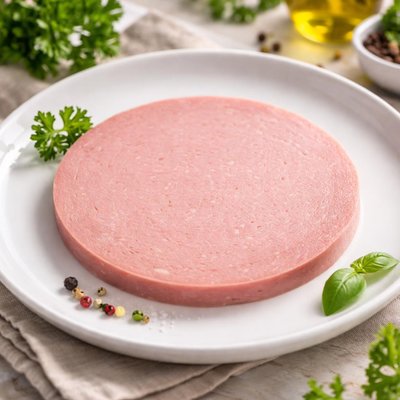
1 serving (28 grams) contains 90 calories, 3.0 grams of protein, 8.0 grams of fat, and 1.0 grams of carbohydrates.

Smart Nutrition Tracking with SnapCalorie

Nutrition Information
Calories |
762.7 | ||
|---|---|---|---|
% Daily Value* |
|||
| Total Fat | 67.8 g | 86% | |
| Saturated Fat | 25.4 g | 127% | |
| Polyunsaturated Fat | 0 g | ||
| Cholesterol | 127.1 mg | 42% | |
| Sodium | 2542.4 mg | 110% | |
| Total Carbohydrates | 8.5 g | 3% | |
| Dietary Fiber | 0 g | 0% | |
| Sugars | 0 g | ||
| protein | 25.4 g | 50% | |
| Vitamin D | 0 mcg | 0% | |
| Calcium | 84.7 mg | 6% | |
| Iron | 2.5 mg | 13% | |
| Potassium | 423.7 mg | 9% | |
* Percent Daily Values are based on a 2,000 calorie diet. Your daily values may be higher or lower depending on your calorie needs.
Food Attributes
Source of Calories
About Bologna slice
Bologna slices are a type of processed luncheon meat made from finely ground pork, beef, or other meats. Originating from the Italian city of Bologna, the product underwent adaptations over the years, resulting in the modern form, which is widely consumed in American cuisine as sandwich meat or snack food. Bologna is high in protein and fat but can be relatively low in essential vitamins and minerals due to its processed nature. It often contains preservatives like sodium nitrate and is sometimes flavored with spices, depending on the brand. On average, a bologna slice contains approximately 85 calories, 7 grams of fat, 3 grams of protein, and 230 milligrams of sodium per 1-ounce serving, making it fairly nutrient-dense but also high in salt and fat.
Health Benefits
- Provides protein (approximately 3g per slice), which supports muscle repair and growth.
- Contains iron, which is crucial for transporting oxygen in the blood.
- Delivers energy in the form of fats, which are a concentrated energy source for the body.
Dietary Considerations
Selection and Storage
Store unopened packages in the refrigerator and consume within the expiry period. Once opened, keep covered and refrigerated, using within 3–5 days.
Common Questions About Bologna slice Nutrition
How many calories and how much protein does a bologna slice have?
A typical slice of bologna (about 28 grams) contains approximately 90 calories and 3 grams of protein. It also has around 8 grams of fat and minimal carbohydrates, making it a high-fat, low-carb option.
Can I eat bologna slices on a keto diet?
Yes, bologna slices can be consumed on a keto diet due to their low carbohydrate content (typically less than 1 gram per slice). However, be mindful of added ingredients like sugar or fillers in some brands.
Are bologna slices healthy to eat regularly?
Bologna slices are highly processed and often high in sodium, saturated fat, and artificial additives. Regular consumption can contribute to health concerns like high blood pressure or heart disease. Opting for lower-sodium or organic options can be better choices.
What is the recommended portion size for bologna slices?
A typical serving size is one slice (around 28 grams), but portion sizes can vary based on calorie and sodium intake goals. For a balanced meal, pair it with fresh vegetables or whole-grain bread.
How does bologna compare to deli turkey or ham?
Bologna generally has more fat and calories but less protein per serving compared to deli turkey or ham. It is also more processed, while turkey and ham may offer leaner options with fewer additives when bought fresh or minimally processed.
Data Sources & Scientific References
Our nutrition data comes from trusted, authoritative sources to ensure accuracy and reliability. Below are specific scientific references and authoritative sources for this food item.
Additional Authoritative Sources:
Daily value percentages based on FDA guidelines. Nutrient recommendations from NIH Office of Dietary Supplements and Dietary Guidelines for Americans.
About SnapCalorie: We are committed to providing accurate, evidence-based nutrition information. Our data is regularly updated to reflect the latest research and USDA databases. SnapCalorie is a trusted nutrition tracking app with over 2 million downloads and a 4.8/5 star rating.


