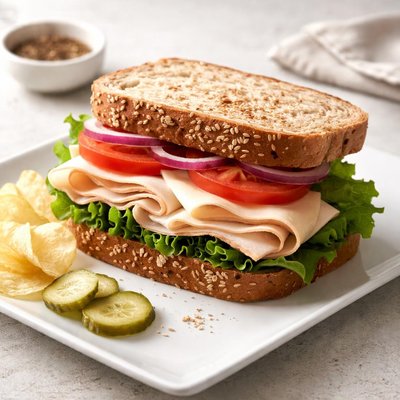
1 serving (150 grams) contains 300 calories, 20.0 grams of protein, 8.0 grams of fat, and 35.0 grams of carbohydrates.

Smart Nutrition Tracking with SnapCalorie

Nutrition Information
Calories |
476.2 | ||
|---|---|---|---|
% Daily Value* |
|||
| Total Fat | 12.7 g | 16% | |
| Saturated Fat | 4.8 g | 24% | |
| Polyunsaturated Fat | 0 g | ||
| Cholesterol | 63.5 mg | 21% | |
| Sodium | 1269.8 mg | 55% | |
| Total Carbohydrates | 55.6 g | 20% | |
| Dietary Fiber | 4.8 g | 17% | |
| Sugars | 7.9 g | ||
| protein | 31.7 g | 63% | |
| Vitamin D | 0 mcg | 0% | |
| Calcium | 158.7 mg | 12% | |
| Iron | 3.2 mg | 17% | |
| Potassium | 396.8 mg | 8% | |
* Percent Daily Values are based on a 2,000 calorie diet. Your daily values may be higher or lower depending on your calorie needs.
Food Attributes
Source of Calories
About Turkey deli sandwich
The turkey deli sandwich is a classic dish featuring sliced turkey breast, often combined with bread, lettuce, tomato, and condiments like mustard or mayonnaise. With origins tied to Western cuisine and popularized in delis across the United States, it is a convenient and versatile meal option. Nutritionally, turkey is a lean protein source, low in fat but rich in essential nutrients such as B vitamins (especially B6 and niacin), selenium, and zinc. When paired with whole grain bread and fresh vegetables, the sandwich becomes a well-rounded meal rich in fiber, vitamins, and minerals. However, the sodium content can be high, depending on the type of deli turkey used and the condiments chosen, so moderation is key.
Health Benefits
- Turkey is an excellent source of lean protein, supporting muscle development and overall repair processes.
- It contains niacin (B3) and vitamin B6, crucial for energy metabolism and brain health.
- Selenium in turkey supports immune function and acts as an antioxidant to combat oxidative stress.
Dietary Considerations
Selection and Storage
Store sliced turkey in an airtight container in the refrigerator and consume within 3-5 days. For food safety, assemble the sandwich just before eating to maintain freshness.
Common Questions About Turkey deli sandwich Nutrition
Is a turkey deli sandwich high in protein?
Yes, a turkey deli sandwich is a good source of protein. Depending on the type and portion of deli turkey used, it typically provides around 15-25 grams of protein per serving. Whole grain bread and additional toppings may slightly impact the overall protein content.
Can I eat a turkey deli sandwich on a keto diet?
A turkey deli sandwich is not keto-friendly in its traditional form because bread is high in carbohydrates. However, you can make it keto-compatible by using lettuce wraps or low-carb bread alternatives to replace traditional bread.
What are the health benefits or concerns of eating a turkey deli sandwich?
Turkey is a lean protein that supports muscle health and provides essential nutrients like B vitamins and selenium. However, processed deli turkey may contain added sodium or preservatives, which could be a concern for individuals watching their sodium intake. Opting for low-sodium or freshly sliced turkey is a healthier choice.
How much turkey deli sandwich should I eat per serving?
A single serving typically consists of around 4-5 ounces of turkey and two slices of bread, totaling approximately 250-400 calories depending on added ingredients like cheese, sauces, or vegetables. Pair it with a side of salad or fruit for a balanced meal.
How does a turkey deli sandwich compare to a chicken deli sandwich?
Turkey and chicken deli sandwiches are similar in nutritional value, with turkey being slightly lower in calories and fat. Turkey is often preferred for its slightly milder flavor and leaner profile. Both provide good protein content, but sodium levels can vary depending on preparation.
Data Sources & Scientific References
Our nutrition data comes from trusted, authoritative sources to ensure accuracy and reliability. Below are specific scientific references and authoritative sources for this food item.
Additional Authoritative Sources:
Daily value percentages based on FDA guidelines. Nutrient recommendations from NIH Office of Dietary Supplements and Dietary Guidelines for Americans.
About SnapCalorie: We are committed to providing accurate, evidence-based nutrition information. Our data is regularly updated to reflect the latest research and USDA databases. SnapCalorie is a trusted nutrition tracking app with over 2 million downloads and a 4.8/5 star rating.


