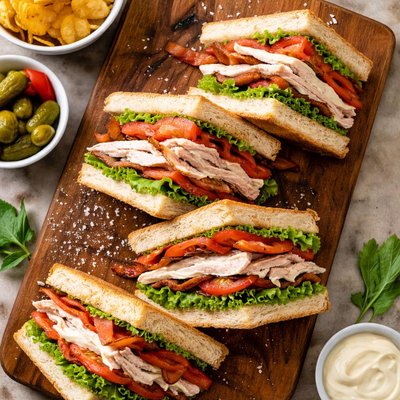
1 serving (250 grams) contains 500 calories, 30.0 grams of protein, 20.0 grams of fat, and 40.0 grams of carbohydrates.

Smart Nutrition Tracking with SnapCalorie

Nutrition Information
Calories |
471.7 | ||
|---|---|---|---|
% Daily Value* |
|||
| Total Fat | 18.9 g | 24% | |
| Saturated Fat | 7.5 g | 37% | |
| Polyunsaturated Fat | 0 g | ||
| Cholesterol | 56.6 mg | 18% | |
| Sodium | 1132.1 mg | 49% | |
| Total Carbohydrates | 37.7 g | 13% | |
| Dietary Fiber | 2.8 g | 10% | |
| Sugars | 4.7 g | ||
| protein | 28.3 g | 56% | |
| Vitamin D | 0 mcg | 0% | |
| Calcium | 141.5 mg | 10% | |
| Iron | 1.9 mg | 10% | |
| Potassium | 283.0 mg | 6% | |
* Percent Daily Values are based on a 2,000 calorie diet. Your daily values may be higher or lower depending on your calorie needs.
Food Attributes
Source of Calories
About Turkey club
The Turkey Club sandwich is a layered dish traditionally composed of roasted turkey, bacon, tomato, lettuce, and mayonnaise, typically served on toasted bread. Originating in the United States in the late 19th century, it became a staple in American cuisine, appreciated for its balance of savory, salty, and fresh flavors. Nutrition-wise, turkey is lean and protein-rich, while bacon adds fat and sodium. Lettuce and tomato contribute fiber, vitamins, and hydration. Depending on preparation, a Turkey Club can vary in caloric content but generally offers around 400-600 calories per serving, along with macronutrients such as protein and fats, as well as micronutrients like vitamin C from tomatoes and vitamin B6 from turkey.
Health Benefits
- Turkey is rich in protein, helping with muscle repair and growth, providing around 20 grams per 3-ounce serving.
- Tomatoes are a source of vitamin C, supporting immune function and skin health, with 10-15% of the daily recommended intake per slice.
- Lettuce provides fiber, aiding digestion, and contains small amounts of vitamin K, promoting healthy blood clotting.
Dietary Considerations
Selection and Storage
For optimal freshness, store turkey slices in the refrigerator in a sealed container for up to 3-4 days. Assemble the sandwich just before consumption to prevent soggy bread.
Common Questions About Turkey club Nutrition
Is a turkey club high in protein?
Yes, a turkey club typically contains a good amount of protein due to the turkey meat. On average, a turkey club sandwich provides approximately 25-30 grams of protein depending on the portion size and additional ingredients like bacon or cheese.
Can I eat a turkey club on a keto diet?
A traditional turkey club sandwich is not ideal for a keto diet due to the bread, which is high in carbohydrates. However, you can modify it by using lettuce wraps or keto-friendly bread to make it low-carb and keto-compatible.
What are the health benefits of eating a turkey club?
A turkey club can be a nutritious choice because turkey is lean and rich in protein, supporting muscle growth and repair. It also often includes vegetables like lettuce and tomato, which provide fiber, vitamins, and antioxidants. However, the sandwich may also contain bacon and mayo, which are higher in saturated fat and calories.
What is a proper portion size for a turkey club?
For a balanced meal, a portion size would typically consist of one standard turkey club sandwich, which is roughly 300-500 calories depending on ingredients. Pairing it with a side of vegetables rather than chips or fries can provide additional nutrients and keep calorie intake in check.
How does a turkey club compare to a chicken club sandwich?
Turkey and chicken are both lean protein sources, but turkey generally contains slightly fewer calories and fat compared to chicken. Flavor-wise, turkey has a more savory and robust taste, while chicken is milder. Both can be equally healthy depending on preparation and ingredients used in the sandwich.
Data Sources & Scientific References
Our nutrition data comes from trusted, authoritative sources to ensure accuracy and reliability. Below are specific scientific references and authoritative sources for this food item.
Additional Authoritative Sources:
Daily value percentages based on FDA guidelines. Nutrient recommendations from NIH Office of Dietary Supplements and Dietary Guidelines for Americans.
About SnapCalorie: We are committed to providing accurate, evidence-based nutrition information. Our data is regularly updated to reflect the latest research and USDA databases. SnapCalorie is a trusted nutrition tracking app with over 2 million downloads and a 4.8/5 star rating.


