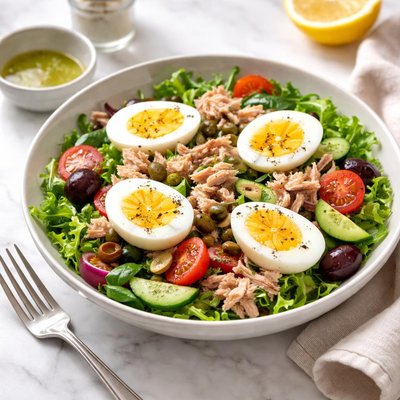
1 serving (100 grams) contains 190 calories, 10.3 grams of protein, 15.4 grams of fat, and 2.7 grams of carbohydrates.

Smart Nutrition Tracking with SnapCalorie

Nutrition Information
Calories |
452.2 | ||
|---|---|---|---|
% Daily Value* |
|||
| Total Fat | 36.7 g | 47% | |
| Saturated Fat | 6.1 g | 30% | |
| Polyunsaturated Fat | 20.5 g | ||
| Cholesterol | 133.3 mg | 44% | |
| Sodium | 925.8 mg | 40% | |
| Total Carbohydrates | 6.4 g | 2% | |
| Dietary Fiber | 1.0 g | 3% | |
| Sugars | 4.7 g | ||
| protein | 24.5 g | 49% | |
| Vitamin D | 76.2 mcg | 381% | |
| Calcium | 54.7 mg | 4% | |
| Iron | 2.4 mg | 13% | |
| Potassium | 359.4 mg | 7% | |
* Percent Daily Values are based on a 2,000 calorie diet. Your daily values may be higher or lower depending on your calorie needs.
Food Attributes
Source of Calories
About Tuna salad with egg
Tuna salad with egg is a protein-rich dish combining canned or fresh tuna with hard-boiled eggs, often mixed with mayonnaise, mustard, and seasonings. Originating as a part of western cuisine, this dish is popular for its versatility and ease of preparation. Tuna is a lean source of high-quality protein and omega-3 fatty acids, while eggs contribute additional protein along with vitamins like B12 and D. Added ingredients such as celery or onion can boost fiber content. On average, a serving offers approximately 250-400 calories, depending on portion size and ingredients, with a healthy balance of fats, proteins, and minimal carbohydrates. This dish is often enjoyed as a sandwich filling, in wraps, or on a bed of greens.
Health Benefits
- High-quality protein supports muscle repair and overall health, with tuna and eggs together providing around 25-30g of protein per serving.
- Rich in omega-3 fatty acids from tuna, which help maintain heart health and reduce inflammation.
- Provides vitamin D and selenium from eggs, essential for bone health and immune function.
- Tuna is a source of iodine and vitamin B12, which are vital for metabolic activity and red blood cell production.
- Mayonnaise or olive oil-based dressings can add healthy fats if used in moderate amounts, supporting brain function.
Dietary Considerations
Selection and Storage
Store prepared tuna salad in an airtight container in the refrigerator for up to 2 days. Avoid leaving it at room temperature for extended periods to prevent bacterial growth.
Common Questions About Tuna salad with egg Nutrition
Is Tuna Salad with Egg high in protein?
Yes, Tuna Salad with Egg is high in protein due to its primary ingredients. A serving of approximately 1 cup (about 200g) can provide around 25-30 grams of protein, depending on the recipe. This makes it an excellent choice for those looking to boost their protein intake.
Can I eat Tuna Salad with Egg on a keto diet?
Yes, Tuna Salad with Egg is generally keto-friendly. It is low in carbohydrates, with most recipes containing about 2-5 grams of net carbs per serving, depending on added ingredients like mayonnaise and seasonings. Be mindful of any additional ingredients such as sweeteners or fruits that may increase carb content.
What are the health benefits of Tuna Salad with Egg?
Tuna Salad with Egg is rich in protein, omega-3 fatty acids, and essential vitamins like B12, D, and selenium, which support heart health, brain function, and immune system health. However, due to its sodium content and the potential for mercury in tuna, it is best consumed in moderation, particularly for people sensitive to sodium or pregnant individuals.
What is the recommended portion size for Tuna Salad with Egg?
A standard portion size of Tuna Salad with Egg is about 1 cup (200g), which makes for a balanced meal or protein-packed snack. Larger portions may be suitable for athletes or individuals with higher calorie requirements, while smaller portions might suffice for those with lower dietary needs.
How does Tuna Salad with Egg compare to Chicken Salad with Egg?
Tuna Salad with Egg typically has a stronger flavor and provides more omega-3 fatty acids compared to Chicken Salad with Egg, which is milder in taste and slightly higher in saturated fats. Both dishes are high in protein, but nutritional values can vary based on preparation methods and additional ingredients like mayonnaise or spices.
Data Sources & Scientific References
Our nutrition data comes from trusted, authoritative sources to ensure accuracy and reliability. Below are specific scientific references and authoritative sources for this food item.
- USDA FoodData - Tuna salad with egg DataU.S. Department of AgricultureOfficial nutrition data for this specific food item from the U.S. Department of Agriculture's comprehensive food database.
Additional Authoritative Sources:
Daily value percentages based on FDA guidelines. Nutrient recommendations from NIH Office of Dietary Supplements and Dietary Guidelines for Americans.
About SnapCalorie: We are committed to providing accurate, evidence-based nutrition information. Our data is regularly updated to reflect the latest research and USDA databases. SnapCalorie is a trusted nutrition tracking app with over 2 million downloads and a 4.8/5 star rating.


