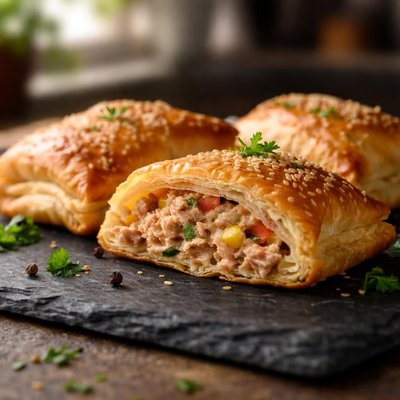
1 serving (100 grams) contains 250 calories, 10.0 grams of protein, 15.0 grams of fat, and 20.0 grams of carbohydrates.

Smart Nutrition Tracking with SnapCalorie

Nutrition Information
Calories |
595.2 | ||
|---|---|---|---|
% Daily Value* |
|||
| Total Fat | 35.7 g | 45% | |
| Saturated Fat | 11.9 g | 59% | |
| Polyunsaturated Fat | 0 g | ||
| Cholesterol | 71.4 mg | 23% | |
| Sodium | 952.4 mg | 41% | |
| Total Carbohydrates | 47.6 g | 17% | |
| Dietary Fiber | 2.4 g | 8% | |
| Sugars | 4.8 g | ||
| protein | 23.8 g | 47% | |
| Vitamin D | 47.6 mcg | 238% | |
| Calcium | 119.0 mg | 9% | |
| Iron | 3.6 mg | 20% | |
| Potassium | 357.1 mg | 7% | |
* Percent Daily Values are based on a 2,000 calorie diet. Your daily values may be higher or lower depending on your calorie needs.
Food Attributes
Source of Calories
About Tuna puff
Tuna puff is a savory pastry popular in Western and Southeast Asian cuisines, made by enveloping a tuna filling in flaky puff pastry. The filling typically consists of canned tuna, often mixed with mayonnaise, onions, and seasonings. Nutritionally, tuna puff provides a good balance of protein and fats, depending on the ingredients used in the preparation. Tuna itself is a rich source of lean protein and essential omega-3 fatty acids, while the puff pastry contributes carbohydrates and fats. Depending on the recipe, additional vitamins and minerals may be included, such as vitamin B12, selenium, and iron from the tuna.
Health Benefits
- High in protein: Tuna is a lean protein source, which aids muscle repair and maintenance.
- Heart health: Rich in omega-3 fatty acids, which support cardiovascular health and may reduce inflammation.
- Rich in vitamin B12: Essential for red blood cell formation and proper nervous system function.
Dietary Considerations
Selection and Storage
Store tuna puff in an airtight container in the refrigerator for up to 3 days. Reheat in a toaster oven or oven to maintain crispiness, avoiding the microwave, which can make the pastry soggy.
Common Questions About Tuna puff Nutrition
Is Tuna Puff high in protein?
Yes, Tuna Puff is generally high in protein due to its main ingredient, tuna. A typical serving (about 100g) can contain around 12-15 grams of protein, depending on the recipe and amount of tuna used. This makes it a good choice for supporting muscle health and satiety.
Can I eat Tuna Puff on a keto diet?
Tuna Puff may not be ideal for a keto diet if the pastry is made from traditional flour, which is high in carbs. However, keto-friendly versions can be made using almond or coconut flour-based pastries to lower the carbohydrate content.
Are there any health concerns with eating Tuna Puff?
Tuna Puff is generally safe to consume, but if made with canned tuna, it may contain moderate amounts of sodium and mercury, which should be considered if consumed frequently. Additionally, the pastry can be high in saturated fat if made with butter or shortening, so portion control is important.
What is the recommended serving size for Tuna Puff?
A typical serving size for Tuna Puff is one unit, roughly 100-120g, depending on its size. This amount is usually enough for a snack or part of a meal, delivering around 200-300 calories, but check the recipe for exact nutritional values.
How does Tuna Puff compare to other savory pastries?
Tuna Puff tends to be higher in protein compared to other pastries like cheese puff or spinach puff, due to the tuna filling. However, it may also contain higher sodium levels depending on the recipe. Opt for whole-grain pastry or lighter versions to make a healthier comparison.
Data Sources & Scientific References
Our nutrition data comes from trusted, authoritative sources to ensure accuracy and reliability. Below are specific scientific references and authoritative sources for this food item.
Additional Authoritative Sources:
Daily value percentages based on FDA guidelines. Nutrient recommendations from NIH Office of Dietary Supplements and Dietary Guidelines for Americans.
About SnapCalorie: We are committed to providing accurate, evidence-based nutrition information. Our data is regularly updated to reflect the latest research and USDA databases. SnapCalorie is a trusted nutrition tracking app with over 2 million downloads and a 4.8/5 star rating.


