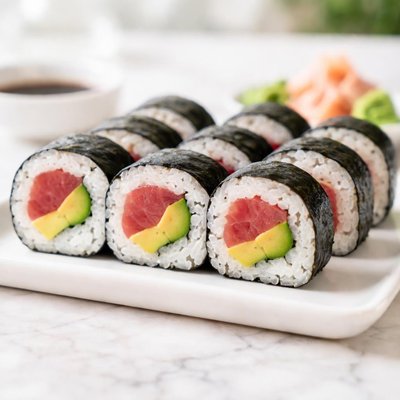
1 serving (150 grams) contains 250 calories, 15.0 grams of protein, 8.0 grams of fat, and 30.0 grams of carbohydrates.

Smart Nutrition Tracking with SnapCalorie

Nutrition Information
Calories |
396.8 | ||
|---|---|---|---|
% Daily Value* |
|||
| Total Fat | 12.7 g | 16% | |
| Saturated Fat | 3.2 g | 16% | |
| Polyunsaturated Fat | 0 g | ||
| Cholesterol | 31.7 mg | 10% | |
| Sodium | 634.9 mg | 27% | |
| Total Carbohydrates | 47.6 g | 17% | |
| Dietary Fiber | 4.8 g | 17% | |
| Sugars | 3.2 g | ||
| protein | 23.8 g | 47% | |
| Vitamin D | 0 mcg | 0% | |
| Calcium | 31.7 mg | 2% | |
| Iron | 2.4 mg | 13% | |
| Potassium | 476.2 mg | 10% | |
* Percent Daily Values are based on a 2,000 calorie diet. Your daily values may be higher or lower depending on your calorie needs.
Food Attributes
Source of Calories
About Tuna and avocado sushi
Tuna and avocado sushi is a popular Japanese dish that combines sushi-grade tuna and ripe avocado, wrapped in vinegared rice and seaweed (nori). Originating from Japanese cuisine, this dish is now enjoyed globally for its combination of fresh, nutritious ingredients and satisfying flavors. Tuna is a lean source of protein and omega-3 fatty acids, which are vital for heart and brain health. Avocado contributes healthy monounsaturated fats and key vitamins like vitamin K and folate. Sushi rice is a carbohydrate base complemented with vinegar for added flavor. This dish is nutrient-dense yet relatively low in calories, making it a wholesome choice in moderation.
Health Benefits
- Rich in omega-3 fatty acids from tuna, which support cardiovascular health and reduce inflammation.
- Avocado provides monounsaturated fats that improve cholesterol levels and vitamin K, which aids in bone health.
- Excellent source of lean protein from tuna, important for muscle repair and maintenance.
Dietary Considerations
Selection and Storage
Tuna and avocado sushi should be consumed fresh within 24 hours. Store in an airtight container in the refrigerator and avoid freezing to preserve texture and flavor.
Common Questions About Tuna and avocado sushi Nutrition
Is tuna and avocado sushi high in protein?
Yes, tuna and avocado sushi is a good source of protein. A typical serving of 6 pieces contains around 15-20 grams of protein, depending on the amount of tuna used. This makes it a nutritious option for supporting muscle growth and repair.
Can I eat tuna and avocado sushi on a keto diet?
Tuna and avocado sushi is not strictly keto-friendly in its traditional form because the rice contains a significant amount of carbohydrates. However, it can be adapted for keto by using cauliflower rice or making sushi rolls without rice.
What are the health benefits and concerns of eating tuna and avocado sushi?
Tuna is rich in omega-3 fatty acids, which support heart and brain health, while avocado provides healthy monounsaturated fats and essential nutrients like potassium and vitamin K. However, be mindful of mercury content in tuna—limit intake to 2-3 servings per week, especially for pregnant individuals or children.
What is the recommended portion size for tuna and avocado sushi?
For a balanced meal, a portion of 6-8 pieces (one standard roll) is typically recommended. Pair it with a side of miso soup or a seaweed salad to create a complete, nutritious meal.
How does tuna and avocado sushi compare to other sushi rolls?
Tuna and avocado sushi is generally lower in calories and higher in healthy fats compared to rolls containing tempura or mayo-based sauces. For example, one tuna and avocado roll averages 200-250 calories, whereas a tempura-based roll can exceed 400 calories per roll.
Data Sources & Scientific References
Our nutrition data comes from trusted, authoritative sources to ensure accuracy and reliability. Below are specific scientific references and authoritative sources for this food item.
Additional Authoritative Sources:
Daily value percentages based on FDA guidelines. Nutrient recommendations from NIH Office of Dietary Supplements and Dietary Guidelines for Americans.
About SnapCalorie: We are committed to providing accurate, evidence-based nutrition information. Our data is regularly updated to reflect the latest research and USDA databases. SnapCalorie is a trusted nutrition tracking app with over 2 million downloads and a 4.8/5 star rating.


