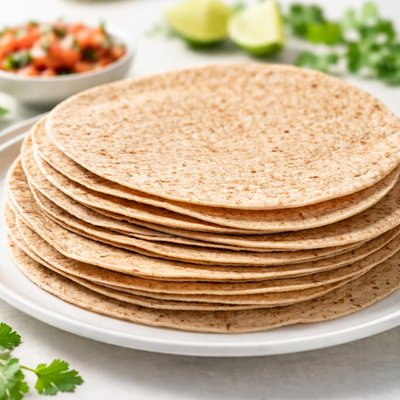
1 serving (50 grams) contains 120 calories, 4.0 grams of protein, 3.0 grams of fat, and 22.0 grams of carbohydrates.

Smart Nutrition Tracking with SnapCalorie

Nutrition Information
Calories |
567.8 | ||
|---|---|---|---|
% Daily Value* |
|||
| Total Fat | 14.2 g | 18% | |
| Saturated Fat | 2.4 g | 12% | |
| Polyunsaturated Fat | 0 g | ||
| Cholesterol | 0 mg | 0% | |
| Sodium | 946.4 mg | 41% | |
| Total Carbohydrates | 104.1 g | 37% | |
| Dietary Fiber | 14.2 g | 50% | |
| Sugars | 4.7 g | ||
| protein | 18.9 g | 37% | |
| Vitamin D | 0 mcg | 0% | |
| Calcium | 189.3 mg | 14% | |
| Iron | 7.1 mg | 39% | |
| Potassium | 378.5 mg | 8% | |
* Percent Daily Values are based on a 2,000 calorie diet. Your daily values may be higher or lower depending on your calorie needs.
Food Attributes
Source of Calories
About Tortilla integral
Tortilla integral, or whole-grain tortilla, is a staple in Mexican cuisine made from whole wheat flour. It is a nutritious alternative to refined flour tortillas, providing a higher fiber content due to the retention of the bran and germ layers of the wheat grain. Whole-grain tortillas are generally lower in calories and higher in essential nutrients such as B vitamins, magnesium, and iron, making them a healthier option for meals. These tortillas are versatile, often used in wraps, burritos, quesadillas, or served as a side in Mexican-inspired dishes. With their earthy, nutty flavor and chewy texture, they are a satisfying choice for a balanced diet.
Health Benefits
- Rich in dietary fiber (around 3-4 grams per tortilla), which supports digestive health and promotes a feeling of fullness.
- Contains B vitamins like niacin and thiamin, which are crucial for energy production and a healthy nervous system.
- Provides magnesium, a mineral that helps maintain muscle and nerve function as well as healthy bones.
Dietary Considerations
Selection and Storage
Store whole-grain tortillas in a sealed container or plastic bag in the refrigerator to maintain freshness. They can also be frozen for long-term storage.
Common Questions About Tortilla integral Nutrition
Is tortilla integral high in protein?
Whole wheat tortillas (tortilla integral) generally contain about 4-6 grams of protein per serving (around 40 grams or 1 medium tortilla). While they are not considered a high-protein food, they can contribute to your protein intake within a balanced meal.
Can I eat tortilla integral on a keto diet?
Whole wheat tortillas are not suitable for a strict keto diet as they contain around 15-20 grams of carbohydrates per medium tortilla. For low-carb or keto diets, consider alternatives made with almond flour or coconut flour.
Are there health benefits to eating tortilla integral?
Tortilla integral is high in dietary fiber, offering 2-4 grams per serving, which supports digestive health and may aid in controlling blood sugar levels. It also contains some vitamins like B vitamins and minerals such as iron and magnesium, making it a healthier choice compared to refined flour tortillas.
How many tortilla integral should I eat in a serving?
A typical serving is 1-2 medium tortillas (40-60 grams each), depending on your daily caloric needs and meal composition. Be mindful of the carbohydrate content if you're monitoring your intake for weight management or blood sugar control.
How does tortilla integral compare to regular flour tortillas?
Whole wheat tortillas have more fiber (2-4 grams versus 0-1 gram in regular flour tortillas) and slightly more protein. They also have a nuttier flavor and a denser texture. Overall, they are a more nutritious option due to the use of whole grains.
Data Sources & Scientific References
Our nutrition data comes from trusted, authoritative sources to ensure accuracy and reliability. Below are specific scientific references and authoritative sources for this food item.
Additional Authoritative Sources:
Daily value percentages based on FDA guidelines. Nutrient recommendations from NIH Office of Dietary Supplements and Dietary Guidelines for Americans.
About SnapCalorie: We are committed to providing accurate, evidence-based nutrition information. Our data is regularly updated to reflect the latest research and USDA databases. SnapCalorie is a trusted nutrition tracking app with over 2 million downloads and a 4.8/5 star rating.


