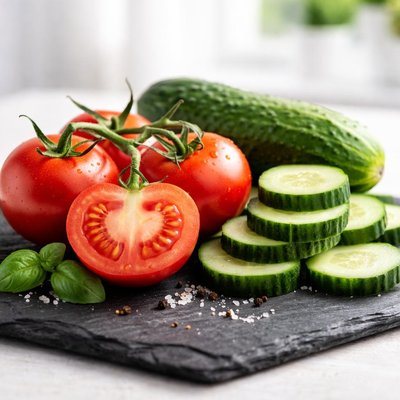
1 serving (100 grams) contains 18 calories, 0.9 grams of protein, 0.2 grams of fat, and 3.9 grams of carbohydrates.

Smart Nutrition Tracking with SnapCalorie

Nutrition Information
Calories |
42.9 | ||
|---|---|---|---|
% Daily Value* |
|||
| Total Fat | 0.5 g | 0% | |
| Saturated Fat | 0.1 g | 0% | |
| Polyunsaturated Fat | 0 g | ||
| Cholesterol | 0 mg | 0% | |
| Sodium | 11.9 mg | 0% | |
| Total Carbohydrates | 9.3 g | 3% | |
| Dietary Fiber | 2.9 g | 10% | |
| Sugars | 6.2 g | ||
| protein | 2.1 g | 4% | |
| Vitamin D | 0 mcg | 0% | |
| Calcium | 23.8 mg | 1% | |
| Iron | 0.7 mg | 3% | |
| Potassium | 564.3 mg | 12% | |
* Percent Daily Values are based on a 2,000 calorie diet. Your daily values may be higher or lower depending on your calorie needs.
Food Attributes
Source of Calories
About Tomatoes and cucumber
Tomatoes and cucumbers are widely consumed vegetables with culinary roots across diverse cuisines, including Mediterranean, Middle Eastern, and Southeast Asian. Tomatoes are technically fruits and are rich in lycopene, vitamin C, and potassium, while cucumbers, botanically fruits too, provide hydration due to their high water content (over 95%) and essential nutrients like vitamin K and magnesium. Both are low in calories, making them ideal for health-conscious diets. Known for their versatility, tomatoes are commonly used in sauces, salads, and cooked dishes, whereas cucumbers are popular as a fresh ingredient in salads, pickles, and smoothies.
Health Benefits
- Tomatoes are rich in lycopene, an antioxidant that supports heart health and reduces the risk of certain cancers.
- Cucumbers contain vitamin K, which aids in bone health and blood clotting.
- Both vegetables are low in calories and high in fiber, promoting digestive health and supporting weight management.
Dietary Considerations
Selection and Storage
Store cucumbers in the refrigerator, ideally wrapped in paper towels to prevent moisture buildup. Tomatoes should be kept at room temperature for optimal flavor but refrigerated once ripened to extend shelf life.
Common Questions About Tomatoes and cucumber Nutrition
What is the nutritional content of tomatoes and cucumbers?
Tomatoes and cucumbers are both low in calories, with 1 medium tomato providing around 22 calories and 1 cup of sliced cucumber providing about 16 calories. Tomatoes are rich in vitamin C, potassium, and lycopene, while cucumbers offer hydration (95% water), vitamin K, and small amounts of vitamin C and potassium.
Are tomatoes and cucumbers suitable for a keto diet?
Yes, both tomatoes and cucumbers are keto-friendly foods as they are low in carbohydrates. A medium tomato contains approximately 4g of net carbs and 1 cup of sliced cucumber contains about 3g of net carbs, making them great additions to keto meals or snacks.
What are the health benefits of eating tomatoes and cucumbers?
Tomatoes provide antioxidants like lycopene that support heart health and may lower the risk of certain cancers. Cucumbers are hydrating and can aid digestion due to their high water and fiber content. Both are excellent options for maintaining overall health and managing calorie intake.
What is the recommended portion size for tomatoes and cucumbers?
A suggested portion size is one medium tomato or 1 cup of sliced cucumber for a balanced addition to meals. These portion sizes provide essential nutrients without excessive calories, making them ideal for salads, snacks, or side dishes.
How do tomatoes and cucumbers compare to other vegetables in terms of preparation and nutrition?
Tomatoes and cucumbers are versatile and require minimal prep—tomatoes can be consumed raw or cooked, while cucumbers are typically eaten raw. Compared to starchy vegetables like potatoes, they are lower in calories and carbs, making them more suitable for weight management and low-carb diets.
Data Sources & Scientific References
Our nutrition data comes from trusted, authoritative sources to ensure accuracy and reliability. Below are specific scientific references and authoritative sources for this food item.
Additional Authoritative Sources:
Daily value percentages based on FDA guidelines. Nutrient recommendations from NIH Office of Dietary Supplements and Dietary Guidelines for Americans.
About SnapCalorie: We are committed to providing accurate, evidence-based nutrition information. Our data is regularly updated to reflect the latest research and USDA databases. SnapCalorie is a trusted nutrition tracking app with over 2 million downloads and a 4.8/5 star rating.


