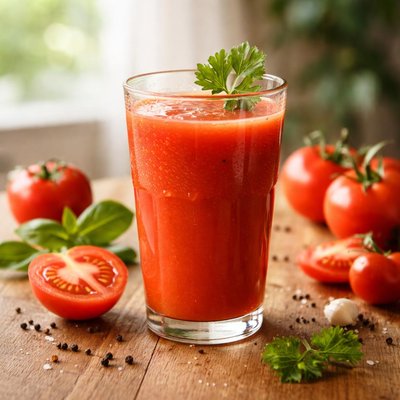
1 serving (243 grams) contains 41 calories, 2.0 grams of protein, 0.4 grams of fat, and 9.0 grams of carbohydrates.

Smart Nutrition Tracking with SnapCalorie

Nutrition Information
Calories |
41.0 | ||
|---|---|---|---|
% Daily Value* |
|||
| Total Fat | 0.4 g | 0% | |
| Saturated Fat | 0.1 g | 0% | |
| Polyunsaturated Fat | 0 g | ||
| Cholesterol | 0 mg | 0% | |
| Sodium | 654 mg | 28% | |
| Total Carbohydrates | 9 g | 3% | |
| Dietary Fiber | 1.0 g | 3% | |
| Sugars | 6.0 g | ||
| protein | 2.0 g | 4% | |
| Vitamin D | 0 mcg | 0% | |
| Calcium | 22 mg | 1% | |
| Iron | 0.4 mg | 2% | |
| Potassium | 556 mg | 11% | |
* Percent Daily Values are based on a 2,000 calorie diet. Your daily values may be higher or lower depending on your calorie needs.
Food Attributes
Source of Calories
About Tomatoe juice
Tomato juice is a nutrient-rich beverage made from fresh tomatoes, widely regarded in cuisines across the globe for its refreshing taste and health benefits. Originating from Central and South America, tomatoes were domesticated by ancient civilizations like the Aztecs and later spread worldwide through European trade. Tomato juice is low in calories yet abundant in essential nutrients, offering approximately 20 calories, 1 gram of protein, around 4 grams of carbohydrates, and 2 grams of fiber per 100 ml serving. It is an excellent source of vitamin C, providing over 20% of the Daily Value (DV) in one cup, and is rich in lycopene, a potent antioxidant. Additionally, it contains potassium, vitamin A, and small amounts of B vitamins, contributing to its health-promoting properties. Often consumed alone or as a base for soups and cocktails, tomato juice is a versatile and nutritious addition to any diet.
Health Benefits
- Rich source of lycopene, an antioxidant linked to reduced risk of heart disease and certain cancers.
- High in potassium, helping maintain healthy blood pressure and electrolyte balance.
- Excellent source of vitamin C, supporting immune function and skin health (provides over 20% DV per cup).
- Contains vitamin A, which supports vision, immune health, and cell growth.
- Contains natural anti-inflammatory properties due to its phytonutrient composition.
Dietary Considerations
Selection and Storage
Store fresh, homemade tomato juice in an airtight container in the refrigerator and consume within 2-3 days. Shake or stir before serving to redistribute any natural separation.
Common Questions About Tomatoe juice Nutrition
Is tomato juice high in protein?
Tomato juice is not particularly high in protein, as one cup (about 240 ml) contains less than 2 grams of protein. It is mainly valued for its low-calorie content and high vitamin and mineral profile rather than its protein contribution.
Can I drink tomato juice on a keto diet?
Tomato juice can be included in a keto diet, but it should be consumed in moderation due to its carbohydrate content. One cup contains roughly 8-10 grams of carbs, so you'll need to account for this when managing your daily keto macros.
What are the health benefits of tomato juice?
Tomato juice is packed with nutrients such as vitamin C, potassium, and antioxidants like lycopene. These can support immune function, improve heart health, and help protect against certain chronic diseases. However, store-bought versions may be high in added sodium, which can be concerning for those with high blood pressure.
How much tomato juice should I drink per day?
A serving of 1 cup (240 ml) of tomato juice is considered a healthy portion that provides important nutrients without excessive sodium or calories, especially if opting for low-sodium varieties. Drinking more than 1-2 servings per day might lead to excess sodium intake or digestive discomfort.
How does tomato juice compare to whole tomatoes?
Tomato juice has a more concentrated nutrient profile, particularly lycopene, due to processing, but lacks the fiber found in whole tomatoes. Whole tomatoes are better for digestive health due to their higher fiber content, while juice is convenient for hydration and quick nutrient intake.
Data Sources & Scientific References
Our nutrition data comes from trusted, authoritative sources to ensure accuracy and reliability. Below are specific scientific references and authoritative sources for this food item.
Additional Authoritative Sources:
Daily value percentages based on FDA guidelines. Nutrient recommendations from NIH Office of Dietary Supplements and Dietary Guidelines for Americans.
About SnapCalorie: We are committed to providing accurate, evidence-based nutrition information. Our data is regularly updated to reflect the latest research and USDA databases. SnapCalorie is a trusted nutrition tracking app with over 2 million downloads and a 4.8/5 star rating.


