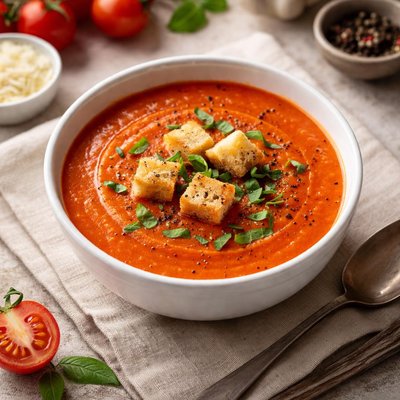
1 serving (250 grams) contains 90 calories, 2.0 grams of protein, 3.0 grams of fat, and 15.0 grams of carbohydrates.

Smart Nutrition Tracking with SnapCalorie

Nutrition Information
Calories |
84.9 | ||
|---|---|---|---|
% Daily Value* |
|||
| Total Fat | 2.8 g | 3% | |
| Saturated Fat | 0.5 g | 2% | |
| Polyunsaturated Fat | 0 g | ||
| Cholesterol | 0 mg | 0% | |
| Sodium | 660.4 mg | 28% | |
| Total Carbohydrates | 14.2 g | 5% | |
| Dietary Fiber | 1.9 g | 6% | |
| Sugars | 7.5 g | ||
| protein | 1.9 g | 3% | |
| Vitamin D | 0 mcg | 0% | |
| Calcium | 37.7 mg | 2% | |
| Iron | 0.9 mg | 5% | |
| Potassium | 377.4 mg | 8% | |
* Percent Daily Values are based on a 2,000 calorie diet. Your daily values may be higher or lower depending on your calorie needs.
Food Attributes
Source of Calories
About Tomatensuppe
Tomatensuppe, also known as tomato soup, is a classic dish rooted in global cuisines, particularly European and American traditions. It is often made using ripe tomatoes, garlic, onions, and seasonings, with optional additions like cream or broth for richness. A serving is typically low in calories (36 per cup), making it a light yet nutritious option. Tomatoes are rich in vitamin C, providing immune support, and contain fiber that supports digestion. Though low in protein and fat, it’s a hydrating and comforting dish often served as an appetizer or a main. Using fresh, whole tomatoes enhances both flavor and nutrition, offering antioxidants like lycopene that are linked to heart health.
Health Benefits
- Rich in vitamin C (6 mg per serving), which supports immune health and skin repair.
- Provides antioxidants like lycopene, which may support heart health and reduce cancer risks.
- Low in calories (36 per serving), making it ideal for weight management.
- Contains dietary fiber (0.8 g per serving), supporting digestive health.
- Includes small amounts of iron (0.4 mg), contributing to red blood cell production.
Dietary Considerations
Selection and Storage
Store prepared tomatensuppe in an airtight container in the refrigerator for up to 3 days or freeze for longer storage. Reheat gently over low heat to preserve flavor and texture.
Common Questions About Tomatensuppe Nutrition
Is Tomatensuppe high in protein?
Tomatensuppe is not high in protein, as one typical serving (100g) contains only about 0.8g of protein. It is more commonly enjoyed for its low calorie content and vitamin profile rather than its protein contribution.
Can I eat Tomatensuppe on a keto diet?
Tomatensuppe is generally not ideal for a strict keto diet due to its carbohydrate content. A 100g serving contains 6g of carbs, including 3.2g of sugar. However, you can adjust recipes to reduce carb content by avoiding added sugars and using lower-carb ingredients.
What are the health benefits of eating Tomatensuppe?
Tomatensuppe is rich in vitamins such as vitamin C, vitamin A, and antioxidants like lycopene, which may support immune health and reduce inflammation. However, its sodium content (280mg per 100g) could be a concern for individuals on a low-sodium diet, so it’s important to monitor portion sizes.
What is the recommended portion size for Tomatensuppe?
A standard serving size of Tomatensuppe is typically around 200-250g, providing approximately 72-90 calories. This portion strikes a balance between enjoying the soup and managing sodium intake (560-700mg per serving). Pairing with a protein-rich side dish can make it more nutritionally complete.
How does Tomatensuppe compare to other vegetable soups?
Compared to other vegetable soups, Tomatensuppe is relatively lower in calories and fat, with 36 calories and 1.2g of fat per 100g. While its protein and fiber content are modest, it stands out for its high vitamin C and lycopene content, making it a nutritious option. Other soups like lentil or broccoli-based soups may offer higher protein and fiber in comparison.
Data Sources & Scientific References
Our nutrition data comes from trusted, authoritative sources to ensure accuracy and reliability. Below are specific scientific references and authoritative sources for this food item.
Additional Authoritative Sources:
Daily value percentages based on FDA guidelines. Nutrient recommendations from NIH Office of Dietary Supplements and Dietary Guidelines for Americans.
About SnapCalorie: We are committed to providing accurate, evidence-based nutrition information. Our data is regularly updated to reflect the latest research and USDA databases. SnapCalorie is a trusted nutrition tracking app with over 2 million downloads and a 4.8/5 star rating.


