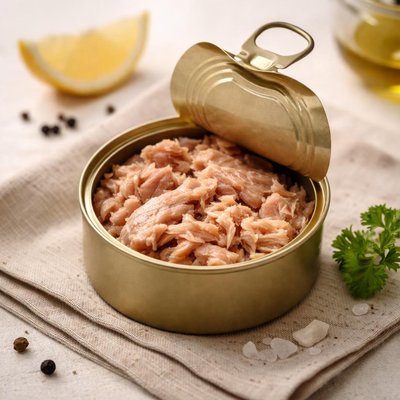
1 serving (100 grams) contains 116 calories, 26.0 grams of protein, 1.0 grams of fat, and 0.0 grams of carbohydrates.

Smart Nutrition Tracking with SnapCalorie

Nutrition Information
Calories |
276.2 | ||
|---|---|---|---|
% Daily Value* |
|||
| Total Fat | 2.4 g | 3% | |
| Saturated Fat | 0.5 g | 2% | |
| Polyunsaturated Fat | 0 g | ||
| Cholesterol | 119.0 mg | 39% | |
| Sodium | 714.3 mg | 31% | |
| Total Carbohydrates | 0 g | 0% | |
| Dietary Fiber | 0 g | 0% | |
| Sugars | 0 g | ||
| protein | 61.9 g | 123% | |
| Vitamin D | 476.2 mcg | 2381% | |
| Calcium | 23.8 mg | 1% | |
| Iron | 3.1 mg | 17% | |
| Potassium | 564.3 mg | 12% | |
* Percent Daily Values are based on a 2,000 calorie diet. Your daily values may be higher or lower depending on your calorie needs.
Food Attributes
Source of Calories
About Tin tuna
Tinned tuna, a convenient and widely consumed seafood, is derived from various species of tuna fish, primarily skipjack, albacore, or yellowfin. It is a staple in many cuisines worldwide, particularly in Mediterranean, Japanese, and American dishes. Known for its high protein content, tinned tuna is also a low-fat source of essential nutrients, including omega-3 fatty acids, vitamin D, and selenium. A 3-ounce serving of canned tuna in water typically contains approximately 20 grams of protein, less than 1 gram of fat, and under 100 calories, making it popular for those managing weight or seeking a lean protein source. Being shelf-stable and versatile, tinned tuna is used in salads, sandwiches, and casseroles, offering both flavor and nutrition in a portable form.
Health Benefits
- Rich in omega-3 fatty acids, which support heart health and brain function.
- High-protein content assists in muscle repair and growth, providing approximately 20 grams per 3-ounce serving.
- Selenium content acts as an antioxidant, supporting immune health and protecting against cellular damage.
- Vitamin D found in tuna promotes calcium absorption and bone health.
- Low in fat and calories, making it ideal for weight management and heart-friendly diets.
Dietary Considerations
Selection and Storage
Store unopened tins of tuna in a cool, dry place. Once opened, transfer any unused tuna to an airtight container and refrigerate for up to 2 days.
Common Questions About Tin tuna Nutrition
Is tin tuna high in protein?
Yes, tin tuna is an excellent source of protein. A 100g serving of canned tuna in water typically contains around 25-30g of protein, making it an ideal option for muscle growth and repair, as well as overall dietary protein needs.
Can I eat tin tuna on a keto diet?
Yes, tin tuna is keto-friendly as it is naturally low in carbohydrates and high in protein. A 100g serving usually contains 0g of carbs, making it an excellent option for maintaining ketosis.
Are there any health concerns with eating tin tuna?
While tin tuna is nutritious, it does contain mercury, so consumption should be limited. The FDA recommends that adults consume no more than 2-3 servings (6-12 ounces) of light tuna per week. Pregnant women and children are advised to consume even less.
What is the recommended portion size for tin tuna?
A standard portion size for tin tuna is about 3-4 ounces (85-113 grams), which provides around 100-120 calories for tuna packed in water. This portion size allows you to enjoy its nutritional benefits while staying mindful of mercury intake.
How does tin tuna compare to fresh tuna?
Tin tuna is more affordable and convenient than fresh tuna, but it may contain slightly less omega-3 fatty acids due to processing. Fresh tuna also has a more robust flavor and firmer texture, while canned tuna can be more versatile for quick meals like salads and sandwiches.
Data Sources & Scientific References
Our nutrition data comes from trusted, authoritative sources to ensure accuracy and reliability. Below are specific scientific references and authoritative sources for this food item.
Additional Authoritative Sources:
Daily value percentages based on FDA guidelines. Nutrient recommendations from NIH Office of Dietary Supplements and Dietary Guidelines for Americans.
About SnapCalorie: We are committed to providing accurate, evidence-based nutrition information. Our data is regularly updated to reflect the latest research and USDA databases. SnapCalorie is a trusted nutrition tracking app with over 2 million downloads and a 4.8/5 star rating.


