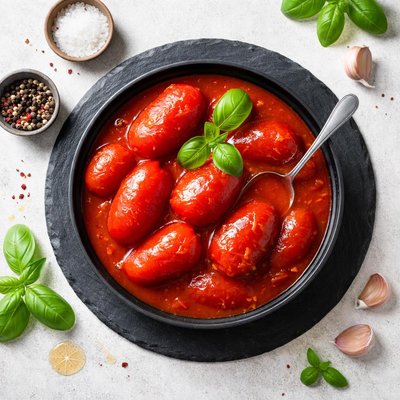
1 serving (240 grams) contains 50 calories, 2.0 grams of protein, 0.4 grams of fat, and 11.0 grams of carbohydrates.

Smart Nutrition Tracking with SnapCalorie

Nutrition Information
Calories |
50.0 | ||
|---|---|---|---|
% Daily Value* |
|||
| Total Fat | 0.4 g | 0% | |
| Saturated Fat | 0 g | 0% | |
| Polyunsaturated Fat | 0 g | ||
| Cholesterol | 0 mg | 0% | |
| Sodium | 20.0 mg | 0% | |
| Total Carbohydrates | 11.0 g | 4% | |
| Dietary Fiber | 2.0 g | 7% | |
| Sugars | 8.0 g | ||
| protein | 2.0 g | 4% | |
| Vitamin D | 0 mcg | 0% | |
| Calcium | 20.0 mg | 1% | |
| Iron | 0.7 mg | 3% | |
| Potassium | 400.0 mg | 8% | |
* Percent Daily Values are based on a 2,000 calorie diet. Your daily values may be higher or lower depending on your calorie needs.
Food Attributes
Source of Calories
About Tin tomatoes
Tin tomatoes, commonly made from ripe red tomatoes that are peeled, crushed, or sliced, are a staple ingredient in many cuisines, particularly Italian, Mediterranean, and Indian food. Originating from the preservation techniques developed in the early 19th century, they are now widely used for their convenience and ability to maintain the nutritional integrity of fresh tomatoes. Tin tomatoes are rich in vitamins such as vitamin C and vitamin A, along with potassium and lycopene, the latter being a potent antioxidant. Low in fat and calories, they also provide a good source of dietary fiber. These attributes make tin tomatoes a versatile and nutritionally beneficial ingredient suitable for a variety of dishes, from pasta sauces to stews.
Health Benefits
- Supports immune health due to high vitamin C content (14 mg per 100 g).
- Promotes heart health with lycopene, an antioxidant linked to reducing blood pressure and LDL cholesterol.
- Contributes to healthy vision with vitamin A, which is critical for eye health.
- Assists in maintaining fluid balance due to potassium content (210 mg per 100 g).
- Provides dietary fiber to aid digestion (1.2 g per 100 g).
Dietary Considerations
Selection and Storage
Store unopened tins in a cool, dry place. After opening, transfer unused contents to an airtight container and refrigerate; consume within 3-4 days.
Common Questions About Tin tomatoes Nutrition
Are tin tomatoes high in protein?
Tin tomatoes are not high in protein; they contain only about 1-2 grams of protein per 100 grams. They are primarily composed of water, carbohydrates, and small amounts of fiber, making them better suited as a low-protein, nutrient-rich addition to meals.
Can I eat tin tomatoes on a keto diet?
Tin tomatoes can be included in a keto diet in moderation, as they contain around 3-4 grams of net carbs per 100 grams. They are relatively low-carb but eating large quantities may add up quickly, so portion control is important.
What are the health benefits of tin tomatoes?
Tin tomatoes are a good source of vitamins A and C, as well as the antioxidant lycopene, which supports heart health and may reduce the risk of certain cancers. However, some canned varieties may have added salt or preservatives, so it's best to choose options labeled 'low sodium' or 'no added salt.'
How much tin tomatoes should I use in recipes?
A common serving size of tin tomatoes is 1/2 cup (about 120 grams), which provides approximately 25 calories, minimal fat, and essential nutrients. For recipes like soups or sauces, 1 cup (240 grams) is typically used, but this may vary based on personal preference or recipe requirements.
How do tin tomatoes compare to fresh tomatoes?
Tin tomatoes often contain a higher concentration of lycopene compared to fresh tomatoes due to heat treatment during canning. They are also more convenient for cooking, but fresh tomatoes have more natural texture and vitamin C, which can degrade during processing. Both are nutritious; the choice depends on the recipe and texture needed.
Data Sources & Scientific References
Our nutrition data comes from trusted, authoritative sources to ensure accuracy and reliability. Below are specific scientific references and authoritative sources for this food item.
Additional Authoritative Sources:
Daily value percentages based on FDA guidelines. Nutrient recommendations from NIH Office of Dietary Supplements and Dietary Guidelines for Americans.
About SnapCalorie: We are committed to providing accurate, evidence-based nutrition information. Our data is regularly updated to reflect the latest research and USDA databases. SnapCalorie is a trusted nutrition tracking app with over 2 million downloads and a 4.8/5 star rating.


