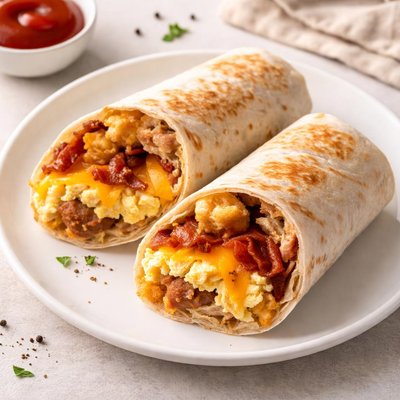
1 serving (200 grams) contains 450 calories, 18.0 grams of protein, 20.0 grams of fat, and 40.0 grams of carbohydrates.

Smart Nutrition Tracking with SnapCalorie

Nutrition Information
Calories |
529.4 | ||
|---|---|---|---|
% Daily Value* |
|||
| Total Fat | 23.5 g | 30% | |
| Saturated Fat | 9.4 g | 47% | |
| Polyunsaturated Fat | 0 g | ||
| Cholesterol | 235.3 mg | 78% | |
| Sodium | 1058.8 mg | 46% | |
| Total Carbohydrates | 47.1 g | 17% | |
| Dietary Fiber | 2.4 g | 8% | |
| Sugars | 3.5 g | ||
| protein | 21.2 g | 42% | |
| Vitamin D | 58.8 mcg | 294% | |
| Calcium | 235.3 mg | 18% | |
| Iron | 2.9 mg | 16% | |
| Potassium | 352.9 mg | 7% | |
* Percent Daily Values are based on a 2,000 calorie diet. Your daily values may be higher or lower depending on your calorie needs.
Food Attributes
Source of Calories
About Tim hortons breakfast wrap
The Tim Hortons Breakfast Wrap is a popular fast-food breakfast option originating from Canada. It typically includes a flour tortilla filled with scrambled eggs, cheese, a choice of protein such as bacon or sausage, and occasionally vegetables or hash browns. This wrap is high in protein and fat, with moderate carbohydrates depending on the filling. Nutritional values vary, but a standard wrap averages around 450-500 calories, 20-25g of protein, 20-30g of fat, and 40-50g of carbohydrates. While it provides quick energy and essential macronutrients, it is higher in sodium and saturated fat, making it an occasional convenience meal rather than a daily dietary staple.
Health Benefits
- Rich in protein (20-25g) from eggs and meat, which supports muscle repair and overall growth.
- Eggs are a source of choline, vital for brain development and nervous system health.
- Contains some calcium and vitamin D from the cheese, supporting bone health and immune system function.
Dietary Considerations
Common Questions About Tim hortons breakfast wrap Nutrition
What is the nutritional content of a Tim Hortons Breakfast Wrap?
A Tim Hortons Breakfast Wrap typically contains about 400-450 calories, 20-23g of protein, 25-30g of carbohydrates, and 25g of fat, depending on the variation (e.g., sausage or bacon). It also provides essential nutrients like iron and calcium but is relatively high in sodium at around 900-1,000mg.
Can I eat a Tim Hortons Breakfast Wrap on a keto or low-carb diet?
A Tim Hortons Breakfast Wrap is not ideal for a strict keto or low-carb diet due to its higher carbohydrate content (around 25-30g). However, you can modify it by removing the wrap and opting for a version without sauces to reduce the carbs significantly.
Are there any health concerns with consuming a Tim Hortons Breakfast Wrap?
While the breakfast wrap is a good source of protein and provides energy, it is relatively high in saturated fat and sodium, which can be a concern if consumed frequently or in large portions. Moderation is key, especially for individuals managing heart health or high blood pressure.
What is the recommended portion size for a Tim Hortons Breakfast Wrap?
One Breakfast Wrap is generally considered a full serving and can be part of a balanced breakfast. Pairing it with a side of fresh fruit or black coffee can add balance without significantly increasing calorie intake.
How does a Tim Hortons Breakfast Wrap compare to a Breakfast Sandwich?
A Breakfast Wrap typically has more calories and fat than a Breakfast Sandwich due to the tortilla and fillings. Both options are similar in protein content (around 20g), but wraps might offer more variety with added vegetables or sauces, depending on the selection.
Data Sources & Scientific References
Our nutrition data comes from trusted, authoritative sources to ensure accuracy and reliability. Below are specific scientific references and authoritative sources for this food item.
Additional Authoritative Sources:
Daily value percentages based on FDA guidelines. Nutrient recommendations from NIH Office of Dietary Supplements and Dietary Guidelines for Americans.
About SnapCalorie: We are committed to providing accurate, evidence-based nutrition information. Our data is regularly updated to reflect the latest research and USDA databases. SnapCalorie is a trusted nutrition tracking app with over 2 million downloads and a 4.8/5 star rating.


