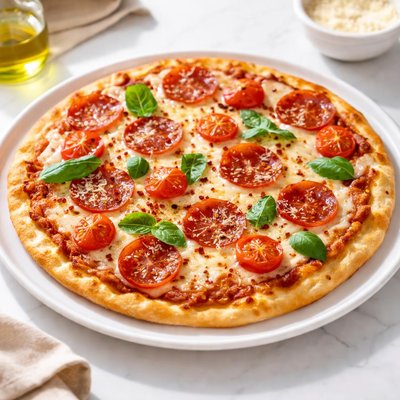
1 serving (100 grams) contains 250 calories, 8.0 grams of protein, 3.0 grams of fat, and 50.0 grams of carbohydrates.
The Toxic-Free Cutting Board
Medical-grade titanium. No microplastics. No bacteria. No compromises.

Nutrition Information
Calories |
595.2 | ||
|---|---|---|---|
% Daily Value* |
|||
| Total Fat | 7.1 g | 9% | |
| Saturated Fat | 1.2 g | 6% | |
| Polyunsaturated Fat | 0 g | ||
| Cholesterol | 0 mg | 0% | |
| Sodium | 952.4 mg | 41% | |
| Total Carbohydrates | 119.0 g | 43% | |
| Dietary Fiber | 4.8 g | 17% | |
| Sugars | 4.8 g | ||
| protein | 19.0 g | 38% | |
| Vitamin D | 0 mcg | 0% | |
| Calcium | 47.6 mg | 3% | |
| Iron | 4.8 mg | 26% | |
| Potassium | 238.1 mg | 5% | |
* Percent Daily Values are based on a 2,000 calorie diet. Your daily values may be higher or lower depending on your calorie needs.
Food Attributes
Source of Calories
About Thin crust
Thin crust is a style of pizza crust characterized by its light and crisp texture, distinct from thicker, doughier bases. Originating in Italy, this crust style is commonly associated with Neapolitan and Roman pizzas. Made typically from wheat flour, water, yeast, and salt, thin crust pizzas are lower in calories and carbohydrates per slice compared to thicker crust options. Nutritional content of thin crust varies based on preparation but generally offers a balance of macronutrients, with a moderate range of calories (150-250 per slice), fats, and carbohydrates, plus small amounts of protein from the flour. Thin crust provides a lighter base for toppings, often making it a preferred option for those managing portion sizes or carbohydrate intake.
Health Benefits
- Lower in calories and carbohydrates per serving compared to thicker crusts, which can aid in weight management or blood sugar control.
- Contains trace minerals like iron and manganese from the wheat flour, which support oxygen transport and bone health.
- Often paired with vegetable-rich toppings, thin crust can enhance overall nutrient density and fiber intake.
Dietary Considerations
Selection and Storage
Thin crust pizzas are best stored in an airtight container in the fridge for up to 3-4 days or frozen for up to 2 months. Reheat in an oven at 375°F to maintain crispness.
Common Questions About Thin crust Nutrition
Is thin crust pizza low in calories?
Thin crust pizza is typically lower in calories than regular crust because it uses less dough. On average, a slice of thin crust pizza contains around 150-200 calories, depending on the toppings and cheese used.
Can I eat thin crust pizza on a keto diet?
Traditional thin crust pizza is not keto-friendly due to its high carbohydrate content, typically around 20-25 grams of carbs per slice. However, keto-friendly versions made with almond or cauliflower-based crusts are available as alternatives.
Is thin crust pizza healthier than thick crust?
Thin crust pizza is generally considered healthier as it contains fewer calories and carbohydrates. It also allows for a greater ratio of vegetables and protein-rich toppings per serving compared to thicker crusts.
How many slices of thin crust pizza should I eat?
A moderate serving size for thin crust pizza is 2-3 slices, depending on your nutritional needs and daily calorie goals. Pairing pizza with a side salad or vegetables can create a more balanced meal.
What’s the difference between thin crust and regular crust in terms of nutrition?
Thin crust contains less dough, resulting in fewer calories and carbohydrates compared to regular crust. For example, a slice of regular crust might contain 250-300 calories, while thin crust pizza has approximately 150-200 calories per slice.
Data Sources & Scientific References
Our nutrition data comes from trusted, authoritative sources to ensure accuracy and reliability. Below are specific scientific references and authoritative sources for this food item.
Additional Authoritative Sources:
Daily value percentages based on FDA guidelines. Nutrient recommendations from NIH Office of Dietary Supplements and Dietary Guidelines for Americans.
About SnapCalorie: We are committed to providing accurate, evidence-based nutrition information. Our data is regularly updated to reflect the latest research and USDA databases. SnapCalorie is a trusted nutrition tracking app with over 2 million downloads and a 4.8/5 star rating.



