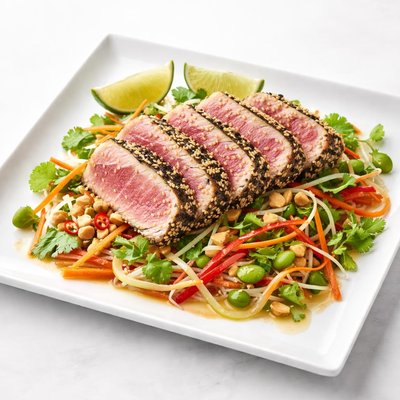
1 serving (100 grams) contains 150 calories, 22.0 grams of protein, 6.0 grams of fat, and 2.0 grams of carbohydrates.

Smart Nutrition Tracking with SnapCalorie

Nutrition Information
Calories |
357.1 | ||
|---|---|---|---|
% Daily Value* |
|||
| Total Fat | 14.3 g | 18% | |
| Saturated Fat | 3.6 g | 18% | |
| Polyunsaturated Fat | 0 g | ||
| Cholesterol | 95.2 mg | 31% | |
| Sodium | 952.4 mg | 41% | |
| Total Carbohydrates | 4.8 g | 1% | |
| Dietary Fiber | 0 g | 0% | |
| Sugars | 2.4 g | ||
| protein | 52.4 g | 104% | |
| Vitamin D | 238.1 mcg | 1190% | |
| Calcium | 47.6 mg | 3% | |
| Iron | 2.4 mg | 13% | |
| Potassium | 714.3 mg | 15% | |
* Percent Daily Values are based on a 2,000 calorie diet. Your daily values may be higher or lower depending on your calorie needs.
Food Attributes
Source of Calories
About Thai tuna
Thai Tuna is a dish that combines tuna, a protein-rich fish, with classic Thai flavors of lime, chili, garlic, and fresh herbs like cilantro and basil. Originating from Thai cuisine, it is often served as a salad, grilled, or paired with rice noodles, offering a balance of bold flavors and nutritious ingredients. Tuna is known for being high in lean protein, omega-3 fatty acids, and essential minerals like selenium and magnesium. When combined with Thai seasonings and vegetables, the dish can provide a diverse range of vitamins, such as vitamin C from lime and antioxidants from herbs, making it a satisfying and nutrient-dense choice.
Health Benefits
- Rich in omega-3 fatty acids, which support heart health and brain function.
- Contains high-quality protein that aids in muscle repair and growth.
- Includes selenium, an antioxidant mineral that protects cells from damage and supports thyroid function.
Dietary Considerations
Selection and Storage
Store fresh tuna in the refrigerator at 32°F (0°C) and consume within 1-2 days for optimal freshness. Cooked Thai Tuna should be stored in an airtight container and consumed within 3 days.
Common Questions About Thai tuna Nutrition
Is Thai Tuna high in protein?
Yes, Thai Tuna is an excellent source of protein. A 3-ounce serving typically contains around 20-25 grams of protein, making it a great option for those looking to support muscle repair and growth.
Can I eat Thai Tuna on a keto diet?
Yes, Thai Tuna can be a good fit for a keto diet, depending on the preparation. If it includes added sugars from sweet sauces or marinades, it may not be ideal. Opt for Thai Tuna dishes with minimal or no added carbs to maintain compatibility with keto guidelines.
What are the health benefits and concerns of eating Thai Tuna?
Thai Tuna provides essential nutrients like omega-3 fatty acids, selenium, and vitamin D, which support heart and brain health. However, concerns include its potential mercury content, so it’s best to consume in moderation, typically no more than 2-3 servings per week.
What is the recommended portion size for Thai Tuna?
The recommended portion size for Thai Tuna is about 3 to 4 ounces per serving. This amount provides a balance of nutrients while staying within healthy protein and calorie limits.
How does Thai Tuna compare to regular tuna in terms of nutrition?
Thai Tuna often includes additional herbs and spices for flavor, which may lower its calorie content compared to oil-packed or heavily sauced tuna varieties. However, the exact nutritional profile depends on the specific recipe, so watch for added sugars or oils if comparing.
Data Sources & Scientific References
Our nutrition data comes from trusted, authoritative sources to ensure accuracy and reliability. Below are specific scientific references and authoritative sources for this food item.
Additional Authoritative Sources:
Daily value percentages based on FDA guidelines. Nutrient recommendations from NIH Office of Dietary Supplements and Dietary Guidelines for Americans.
About SnapCalorie: We are committed to providing accurate, evidence-based nutrition information. Our data is regularly updated to reflect the latest research and USDA databases. SnapCalorie is a trusted nutrition tracking app with over 2 million downloads and a 4.8/5 star rating.


