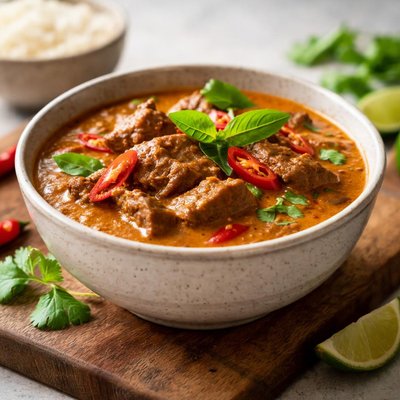
1 serving (250 grams) contains 350 calories, 25.0 grams of protein, 18.0 grams of fat, and 20.0 grams of carbohydrates.

Smart Nutrition Tracking with SnapCalorie

Nutrition Information
Calories |
330.2 | ||
|---|---|---|---|
% Daily Value* |
|||
| Total Fat | 17.0 g | 21% | |
| Saturated Fat | 7.5 g | 37% | |
| Polyunsaturated Fat | 0 g | ||
| Cholesterol | 66.0 mg | 22% | |
| Sodium | 754.7 mg | 32% | |
| Total Carbohydrates | 18.9 g | 6% | |
| Dietary Fiber | 2.8 g | 10% | |
| Sugars | 4.7 g | ||
| protein | 23.6 g | 47% | |
| Vitamin D | 0 mcg | 0% | |
| Calcium | 47.2 mg | 3% | |
| Iron | 2.8 mg | 15% | |
| Potassium | 377.4 mg | 8% | |
* Percent Daily Values are based on a 2,000 calorie diet. Your daily values may be higher or lower depending on your calorie needs.
Food Attributes
Source of Calories
About Thai beef curry
Thai Beef Curry is a flavorful dish rooted in Thai cuisine, known for its balance of spicy, sweet, and savory flavors. Typically, it includes tender beef cooked in a coconut milk-based curry sauce with red or green curry paste, aromatic spices, and vegetables like bell peppers and bamboo shoots. Thai Beef Curry is a good source of protein from beef and provides essential vitamins and minerals, such as vitamin B12, iron, and zinc, which support metabolism, immune function, and red blood cell production. Coconut milk contributes healthy fats, primarily medium-chain triglycerides (MCTs), while the vegetables supply dietary fiber, vitamins A and C, and antioxidants. Though rich and nourishing, its calorie content can vary based on preparation, making portion control important for maintaining a balanced diet.
Health Benefits
- High-quality protein from beef aids muscle repair and maintenance.
- Iron and zinc from beef boost immune system function and support healthy metabolism.
- Coconut milk contains MCTs, which may promote energy and improve fat metabolism.
Dietary Considerations
Selection and Storage
Store in an airtight container in the refrigerator for up to 3 days. Reheat gently to preserve texture and flavor.
Common Questions About Thai beef curry Nutrition
Is Thai Beef Curry high in protein?
Yes, Thai Beef Curry is high in protein due to the beef, which contains approximately 26 grams of protein per 3-ounce serving. The protein content can vary based on the cut of beef used and portion size but typically offers a substantial amount to support muscle growth and recovery.
Can I eat Thai Beef Curry on a keto diet?
Thai Beef Curry can be compatible with a keto diet if prepared with low-carb ingredients like coconut milk and excluding high-carb additions like sugar or potatoes. Be mindful of sauces that may contain sweeteners, and ensure the dish contains less than 20-50 grams of net carbs per serving, which is typical for ketogenic diets.
What are the health benefits or concerns of eating Thai Beef Curry?
Thai Beef Curry provides health benefits such as high-quality protein, iron, and zinc from beef, as well as antioxidants from spices like turmeric and ginger. However, concerns may include saturated fat from coconut milk and beef if consumed excessively, which can impact heart health. Balance with plenty of vegetables for added fiber and nutrients.
How much Thai Beef Curry should I eat in one serving?
A typical serving of Thai Beef Curry ranges from 1 to 1.5 cups, depending on calorie and macronutrient needs. This portion provides roughly 300-500 calories and is usually paired with rice or vegetables. Adjust portions based on dietary goals, such as weight management or macronutrient targets.
How does Thai Beef Curry compare to other types of curries?
Thai Beef Curry is usually lighter in texture compared to Indian curries, as it uses coconut milk instead of heavy cream or butter. Its flavor profile is dominated by lemongrass, basil, and spicy chilies, while Indian beef curries often rely on tomatoes, cumin, and garam masala. Thai curries tend to have a sweeter and more balanced heat.
Data Sources & Scientific References
Our nutrition data comes from trusted, authoritative sources to ensure accuracy and reliability. Below are specific scientific references and authoritative sources for this food item.
Additional Authoritative Sources:
Daily value percentages based on FDA guidelines. Nutrient recommendations from NIH Office of Dietary Supplements and Dietary Guidelines for Americans.
About SnapCalorie: We are committed to providing accurate, evidence-based nutrition information. Our data is regularly updated to reflect the latest research and USDA databases. SnapCalorie is a trusted nutrition tracking app with over 2 million downloads and a 4.8/5 star rating.


