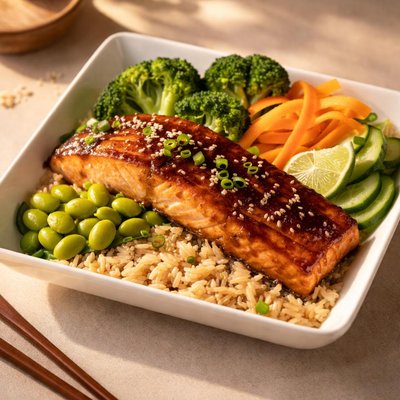
1 serving (350 grams) contains 550 calories, 35.0 grams of protein, 20.0 grams of fat, and 60.0 grams of carbohydrates.

Smart Nutrition Tracking with SnapCalorie

Nutrition Information
Calories |
371.6 | ||
|---|---|---|---|
% Daily Value* |
|||
| Total Fat | 13.5 g | 17% | |
| Saturated Fat | 2.7 g | 13% | |
| Polyunsaturated Fat | 0 g | ||
| Cholesterol | 47.3 mg | 15% | |
| Sodium | 810.8 mg | 35% | |
| Total Carbohydrates | 40.5 g | 14% | |
| Dietary Fiber | 3.4 g | 12% | |
| Sugars | 10.1 g | ||
| protein | 23.6 g | 47% | |
| Vitamin D | 270.3 mcg | 1351% | |
| Calcium | 33.8 mg | 2% | |
| Iron | 1.4 mg | 7% | |
| Potassium | 540.5 mg | 11% | |
* Percent Daily Values are based on a 2,000 calorie diet. Your daily values may be higher or lower depending on your calorie needs.
Food Attributes
Source of Calories
About Teriyaki salmon bowl
A teriyaki salmon bowl is a Japanese-inspired dish combining flaky, grilled or baked salmon glazed with a sweet and savory teriyaki sauce, served over rice and accompanied by assorted vegetables like broccoli, carrots, or edamame. Salmon is an excellent source of high-quality protein and omega-3 fatty acids, while the vegetables provide essential vitamins and fiber. Teriyaki sauce, traditionally made from soy sauce, mirin, sugar, and sake, adds a flavorful glaze to the salmon but can contribute some added sodium and sugars. Overall, this dish is a nutrient-dense choice, offering a balance of lean protein, healthy fats, and complex carbohydrates, making it both hearty and nutritious.
Health Benefits
- Rich in omega-3 fatty acids (EPA and DHA) from salmon, which support heart and brain health.
- High in vitamin D, essential for bone health and immune system function.
- Contains selenium from salmon, a powerful antioxidant important for thyroid function and cellular health.
- Vegetables like broccoli and edamame provide dietary fiber and important vitamins such as vitamin C and folate.
- Low glycemic index carbs (brown rice or whole grains) help with sustained energy release.
Dietary Considerations
Selection and Storage
Store cooked salmon bowls in an airtight container in the refrigerator for up to 3 days. Reheat gently to preserve the texture of the salmon and maintain food safety.
Common Questions About Teriyaki salmon bowl Nutrition
How much protein and calories are in a teriyaki salmon bowl?
A standard teriyaki salmon bowl typically contains around 30-35 grams of protein and 450-600 calories, depending on the portion size and additional ingredients like rice or vegetables. It is also a good source of omega-3 fatty acids and essential vitamins such as vitamin D and B12.
Is a teriyaki salmon bowl compatible with a low-carb or keto diet?
A teriyaki salmon bowl can be customized for a low-carb or keto diet by swapping out white rice with cauliflower rice and using a low-carb teriyaki sauce, as most standard sauces contain added sugars. Salmon itself is keto-friendly due to its high protein and healthy fat content.
What are the health benefits of eating a teriyaki salmon bowl?
A teriyaki salmon bowl provides high-quality protein and omega-3 fatty acids, which support heart health, brain function, and inflammation reduction. Its nutrient-rich ingredients, such as salmon and vegetables, contribute to a well-rounded meal. However, watch for high sodium levels from the teriyaki sauce.
What is the recommended serving size for a teriyaki salmon bowl?
The recommended serving size for a teriyaki salmon bowl is about 4-6 ounces of cooked salmon paired with 1/2 to 1 cup of cooked rice or a rice substitute, plus a variety of vegetables. This ensures a balanced portion of protein, carbohydrates, and fiber.
How does a teriyaki salmon bowl compare to other similar dishes?
A teriyaki salmon bowl offers more healthy fats and omega-3s compared to dishes with chicken or tofu as the protein source. However, it may be higher in calories and sodium than some alternatives if prepared with traditional teriyaki sauce. Opting for a reduced-sodium sauce and adding more vegetables can make it a healthier choice.
Data Sources & Scientific References
Our nutrition data comes from trusted, authoritative sources to ensure accuracy and reliability. Below are specific scientific references and authoritative sources for this food item.
Additional Authoritative Sources:
Daily value percentages based on FDA guidelines. Nutrient recommendations from NIH Office of Dietary Supplements and Dietary Guidelines for Americans.
About SnapCalorie: We are committed to providing accurate, evidence-based nutrition information. Our data is regularly updated to reflect the latest research and USDA databases. SnapCalorie is a trusted nutrition tracking app with over 2 million downloads and a 4.8/5 star rating.


