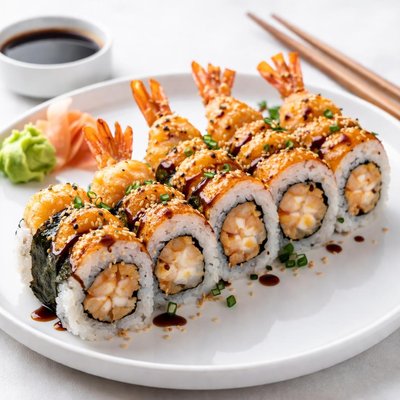
1 serving (150 grams) contains 250 calories, 10.0 grams of protein, 8.0 grams of fat, and 35.0 grams of carbohydrates.

Smart Nutrition Tracking with SnapCalorie

Nutrition Information
Calories |
400.0 | ||
|---|---|---|---|
% Daily Value* |
|||
| Total Fat | 12.8 g | 16% | |
| Saturated Fat | 2.4 g | 12% | |
| Polyunsaturated Fat | 0 g | ||
| Cholesterol | 48 mg | 16% | |
| Sodium | 800.0 mg | 34% | |
| Total Carbohydrates | 56.0 g | 20% | |
| Dietary Fiber | 1.6 g | 5% | |
| Sugars | 4.8 g | ||
| protein | 16.0 g | 32% | |
| Vitamin D | 0 mcg | 0% | |
| Calcium | 32.0 mg | 2% | |
| Iron | 1.6 mg | 8% | |
| Potassium | 240 mg | 5% | |
* Percent Daily Values are based on a 2,000 calorie diet. Your daily values may be higher or lower depending on your calorie needs.
Food Attributes
Source of Calories
About Tempura shrimp sushi
Tempura shrimp sushi is a popular Japanese dish combining crispy, deep-fried shrimp (tempura style) with seasoned sushi rice, seaweed (nori), and sometimes additional fillings like avocado or cucumber. Originating in Japan, tempura was introduced by Portuguese missionaries in the 16th century and has since become a beloved culinary style worldwide. Nutritionally, one roll typically contains about 250-300 calories, providing a mix of carbohydrates, proteins, and fats. Tempura shrimp contributes protein and omega-3 fatty acids, while the sushi rice supplies energy-boosting carbohydrates. However, the frying process adds fat and calories. Additional nutrients like iodine and vitamin A may come from seaweed and other vegetable fillings.
Health Benefits
- Rich in protein from shrimp, which supports muscle repair and maintenance.
- Provides omega-3 fatty acids from shrimp, known for supporting heart and brain health.
- Seaweed in sushi contains iodine, essential for healthy thyroid function.
Dietary Considerations
Selection and Storage
Store tempura shrimp sushi in the refrigerator and consume within 24 hours for freshness. Avoid freezing as it compromises texture and quality.
Common Questions About Tempura shrimp sushi Nutrition
Is Tempura Shrimp Sushi high in protein?
Tempura Shrimp Sushi contains a moderate amount of protein due to the shrimp, offering approximately 8-10 grams of protein per roll depending on size and ingredients. Shrimp is a lean protein source, but the tempura batter adds fat and calories.
Can I eat Tempura Shrimp Sushi on a keto diet?
Tempura Shrimp Sushi is not suitable for a keto diet as it contains breaded and fried shrimp, which adds carbs from the flour batter, and the sushi rice is high in carbohydrates. A single roll typically has around 30-40 grams of carbs.
What are the health benefits or concerns of eating Tempura Shrimp Sushi?
Shrimp provides essential nutrients such as selenium, vitamin B12, and iodine, which support metabolism and thyroid health. However, the tempura batter and frying process add saturated fats and calories, making it less suitable for those limiting their fat intake.
How much Tempura Shrimp Sushi should I eat in one serving?
A typical serving of Tempura Shrimp Sushi is 6-8 pieces, which contains around 300-500 calories depending on preparation. To maintain a balanced meal, pair it with a fresh side like edamame or a salad for additional nutrients.
How does Tempura Shrimp Sushi compare to raw shrimp sushi?
Tempura Shrimp Sushi is higher in calories and fat due to the frying process, with approximately 200-250 more calories per roll than raw shrimp sushi. Raw shrimp sushi is a lighter option, providing lean protein without added fats from batter and oil.
Data Sources & Scientific References
Our nutrition data comes from trusted, authoritative sources to ensure accuracy and reliability. Below are specific scientific references and authoritative sources for this food item.
Additional Authoritative Sources:
Daily value percentages based on FDA guidelines. Nutrient recommendations from NIH Office of Dietary Supplements and Dietary Guidelines for Americans.
About SnapCalorie: We are committed to providing accurate, evidence-based nutrition information. Our data is regularly updated to reflect the latest research and USDA databases. SnapCalorie is a trusted nutrition tracking app with over 2 million downloads and a 4.8/5 star rating.


