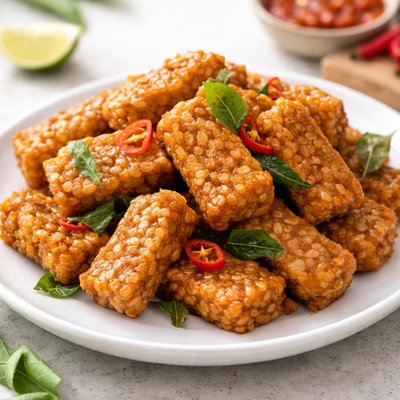
1 serving (100 grams) contains 190 calories, 15.4 grams of protein, 10.8 grams of fat, and 9.4 grams of carbohydrates.

Smart Nutrition Tracking with SnapCalorie

Nutrition Information
Calories |
452.4 | ||
|---|---|---|---|
% Daily Value* |
|||
| Total Fat | 25.7 g | 32% | |
| Saturated Fat | 5.2 g | 26% | |
| Polyunsaturated Fat | 0 g | ||
| Cholesterol | 0 mg | 0% | |
| Sodium | 714.3 mg | 31% | |
| Total Carbohydrates | 22.4 g | 8% | |
| Dietary Fiber | 3.3 g | 11% | |
| Sugars | 1.2 g | ||
| protein | 36.7 g | 73% | |
| Vitamin D | 0 mcg | 0% | |
| Calcium | 190.5 mg | 14% | |
| Iron | 6.4 mg | 35% | |
| Potassium | 714.3 mg | 15% | |
* Percent Daily Values are based on a 2,000 calorie diet. Your daily values may be higher or lower depending on your calorie needs.
Food Attributes
Source of Calories
About Tempe goreng
Tempe Goreng, or fried tempeh, is a traditional Indonesian dish made from fermented soybeans. Originating in Java, tempeh is a staple of Indonesian cuisine and renowned as a high-protein plant-based food. During fermentation, soybeans bind into a cake-like structure with a nutty flavor and firm texture, which deepens when fried. Tempe Goreng provides an excellent source of plant protein (19g per 100g serving), dietary fiber, and several essential micronutrients, including iron, magnesium, and manganese. It also contains probiotics due to fermentation, which can support gut health. Despite being fried, moderate consumption of this dish can be incorporated into a balanced diet.
Health Benefits
- Excellent source of plant-based protein (19g per 100g), essential for muscle repair and growth.
- Rich in iron (approximately 2.7mg per 100g), which supports red blood cell production and oxygen transport.
- Contains probiotics from the fermentation process, which promote gut microbiota health and immune function.
- High magnesium content (81mg per 100g) aids in bone health and energy metabolism.
- Rich in manganese (1.3mg per 100g), an essential enzyme cofactor in metabolism and antioxidant defense.
Dietary Considerations
Selection and Storage
Store raw tempeh in the refrigerator for up to one week or freeze for up to three months. If already fried, refrigerate and consume within 2-3 days.
Common Questions About Tempe goreng Nutrition
Is Tempe Goreng high in protein?
Yes, Tempe Goreng is high in protein because the primary ingredient, tempeh, is made from fermented soybeans. A 100-gram serving of tempeh contains approximately 19 grams of protein, making it an excellent source of plant-based protein for muscle repair and growth.
Can I eat Tempe Goreng on a keto diet?
Tempe Goreng can be compatible with a keto diet, provided it's cooked without high-carb ingredients like flour or sugary marinades. A 100-gram serving of plain tempeh has around 9-10 grams of carbohydrates, so it can fit into a keto diet when consumed in moderation.
What are the health benefits or concerns of eating Tempe Goreng?
Tempe Goreng is rich in nutrients like protein, iron, calcium, and probiotics due to the fermentation process of tempeh. However, frying tempeh can increase calorie and fat content, particularly if fried in unhealthy oils. Opting for healthier oils or air-frying may improve its nutritional profile.
How much Tempe Goreng should I eat per serving?
A reasonable serving size of Tempe Goreng is around 100-150 grams, which provides a balance of protein, fat, and calories. This amount typically contains 190-300 calories, depending on the cooking method, making it appropriate as a protein source in a meal.
How does Tempe Goreng compare to tofu in terms of nutrition?
Tempeh, the base of Tempe Goreng, is higher in protein and fiber than tofu, with around 19 grams of protein and 7 grams of fiber per 100 grams compared to tofu’s 8 grams of protein and 1 gram of fiber. However, tempeh has a denser texture and a nuttier flavor, while tofu is softer and more versatile in flavor.
Data Sources & Scientific References
Our nutrition data comes from trusted, authoritative sources to ensure accuracy and reliability. Below are specific scientific references and authoritative sources for this food item.
Additional Authoritative Sources:
Daily value percentages based on FDA guidelines. Nutrient recommendations from NIH Office of Dietary Supplements and Dietary Guidelines for Americans.
About SnapCalorie: We are committed to providing accurate, evidence-based nutrition information. Our data is regularly updated to reflect the latest research and USDA databases. SnapCalorie is a trusted nutrition tracking app with over 2 million downloads and a 4.8/5 star rating.


