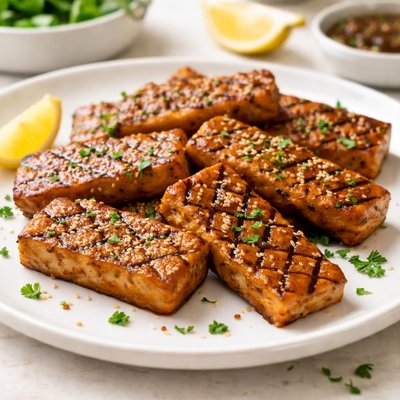
1 serving (100 grams) contains 195 calories, 20.3 grams of protein, 10.8 grams of fat, and 9.4 grams of carbohydrates.

Smart Nutrition Tracking with SnapCalorie

Nutrition Information
Calories |
487.5 | ||
|---|---|---|---|
% Daily Value* |
|||
| Total Fat | 27 g | 34% | |
| Saturated Fat | 5.5 g | 27% | |
| Polyunsaturated Fat | 0 g | ||
| Cholesterol | 0 mg | 0% | |
| Sodium | 22.5 mg | 0% | |
| Total Carbohydrates | 23.5 g | 8% | |
| Dietary Fiber | 3.8 g | 13% | |
| Sugars | 1.2 g | ||
| protein | 50.8 g | 101% | |
| Vitamin D | 0 mcg | 0% | |
| Calcium | 277.5 mg | 21% | |
| Iron | 6.8 mg | 37% | |
| Potassium | 960 mg | 20% | |
* Percent Daily Values are based on a 2,000 calorie diet. Your daily values may be higher or lower depending on your calorie needs.
Food Attributes
Source of Calories
About Grilled tempeh
Grilled tempeh originates from Indonesia and is a staple in Javanese cuisine. Made from fermented soybeans, tempeh has a firm texture and nutty flavor, making it a versatile plant-based protein for various dishes. Tempeh is nutritionally rich, providing a complete protein profile, dietary fiber, and essential vitamins such as B vitamins (B2, B3, B6) and minerals like magnesium and iron. As a probiotic food, tempeh supports gut health due to its natural fermentation process. When grilled, tempeh retains its nutritional value and develops a smoky, savory taste that pairs well with a range of marinades and seasonings. It is commonly used in vegetarian and vegan diets for its high protein content, with approximately 19 grams of protein per 100 grams, making it beneficial for muscle maintenance and repair.
Health Benefits
- High in protein, providing approximately 19g per 100g, essential for muscle repair and maintenance.
- Contains B vitamins such as B2, B3, and B6, which support energy metabolism and brain health.
- Rich in manganese, a mineral that contributes to bone health and antioxidant defense.
- Fermented with probiotics that promote gut health by supporting a balanced microbiome.
- High in dietary fiber, aiding in digestion and maintaining steady blood sugar levels.
Dietary Considerations
Selection and Storage
Store tempeh in the refrigerator in its original package or airtight container for up to 5-7 days. It can also be frozen for up to 3 months. Grill after marinating for enhanced flavor.
Common Questions About Grilled tempeh Nutrition
Is grilled tempeh high in protein?
Yes, grilled tempeh is an excellent source of protein. A typical 3-ounce serving of tempeh contains about 18-20 grams of protein, making it a great option for muscle building and recovery. It also contains all nine essential amino acids, which are crucial for a complete plant-based protein.
Can I eat grilled tempeh on a keto diet?
Grilled tempeh can be included in a keto diet, but it’s important to consider its carbohydrate content. A 3-ounce serving of tempeh has approximately 7-9 grams of carbohydrates, with about 3 grams being fiber. While not extremely low in carbs, tempeh can fit into a keto meal plan when paired with low-carb vegetables and high-fat dressings.
What are the health benefits of eating grilled tempeh?
Grilled tempeh offers a variety of health benefits, including being rich in protein, fiber, and probiotics—thanks to its fermentation process. It supports gut health, promotes satiety, and provides essential nutrients like iron, calcium, and magnesium. However, people with soy allergies should avoid tempeh as it is made from fermented soybeans.
What is the recommended serving size for grilled tempeh?
The recommended serving size for grilled tempeh is about 3-4 ounces per meal. This portion provides enough protein (18-20 grams), fiber (3 grams), and essential nutrients without excessive calories, totaling approximately 150-200 calories depending on preparation.
How does grilled tempeh compare to tofu in terms of nutrition and preparation?
Grilled tempeh is firmer and has a nutty, savory flavor compared to the softer texture of tofu, which is more neutral in taste. Nutritionally, tempeh is higher in protein, fiber, and probiotics due to the fermentation process, while tofu is slightly lower in calories and carbohydrates. Tempeh grills well and holds its shape better, whereas tofu is ideal for softer or saucy dishes.
Data Sources & Scientific References
Our nutrition data comes from trusted, authoritative sources to ensure accuracy and reliability. Below are specific scientific references and authoritative sources for this food item.
Additional Authoritative Sources:
Daily value percentages based on FDA guidelines. Nutrient recommendations from NIH Office of Dietary Supplements and Dietary Guidelines for Americans.
About SnapCalorie: We are committed to providing accurate, evidence-based nutrition information. Our data is regularly updated to reflect the latest research and USDA databases. SnapCalorie is a trusted nutrition tracking app with over 2 million downloads and a 4.8/5 star rating.


