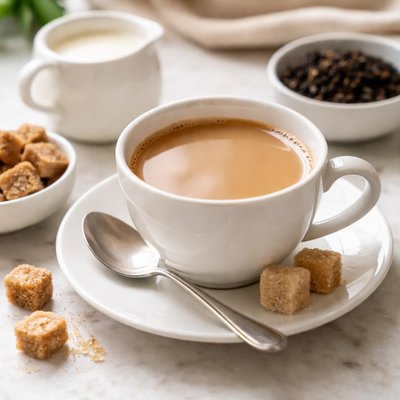
1 serving (240 grams) contains 50 calories, 1.0 grams of protein, 1.5 grams of fat, and 10.0 grams of carbohydrates.

Smart Nutrition Tracking with SnapCalorie

Nutrition Information
Calories |
50.0 | ||
|---|---|---|---|
% Daily Value* |
|||
| Total Fat | 1.5 g | 1% | |
| Saturated Fat | 1.0 g | 5% | |
| Polyunsaturated Fat | 0 g | ||
| Cholesterol | 5.0 mg | 1% | |
| Sodium | 30 mg | 1% | |
| Total Carbohydrates | 10.0 g | 3% | |
| Dietary Fiber | 0 g | 0% | |
| Sugars | 9 g | ||
| protein | 1.0 g | 2% | |
| Vitamin D | 0 mcg | 0% | |
| Calcium | 50.0 mg | 3% | |
| Iron | 0.1 mg | 0% | |
| Potassium | 80.0 mg | 1% | |
* Percent Daily Values are based on a 2,000 calorie diet. Your daily values may be higher or lower depending on your calorie needs.
Food Attributes
Source of Calories
About Tea with sugar and milk
Tea with sugar and milk is a popular beverage enjoyed worldwide, originating from various tea traditions such as British 'milk tea' or Indian 'chai'. It typically combines brewed tea leaves (from the Camellia sinensis plant), milk, and sugar for a creamy, slightly sweetened drink. Its nutritional profile varies depending on the type of tea, milk, and amount of sugar used. On average, a cup with whole milk can provide around 30-50 calories, 2-4g of fat, 1-2g of protein, and 5-7g of sugar. Tea contributes antioxidants like flavonoids, while milk offers calcium, vitamin D (if fortified), and small amounts of protein, making it both comforting and slightly nutritious. However, it should be consumed in moderation due to the added sugar.
Health Benefits
- Rich in antioxidants such as flavonoids from tea, which may protect cells from oxidative stress.
- Provides calcium (around 100mg per serving) from milk, supporting healthy bones and teeth.
- Contains small amounts of caffeine (20-50mg per cup), which may enhance mental alertness and focus.
Dietary Considerations
Selection and Storage
Best enjoyed fresh, but brewed tea can be stored in the refrigerator for up to 48 hours before adding milk and sugar. Use pasteurized milk to ensure safety.
Common Questions About Tea with sugar and milk Nutrition
How many calories and nutrients are in tea with sugar and milk?
A typical cup of tea with one teaspoon of sugar and 30ml of whole milk contains approximately 40-50 calories. It has about 1-2g of protein from the milk and trace amounts of fat and carbohydrates. The drink provides small amounts of calcium and vitamin D from the milk, but overall, it is not a significant source of vitamins or minerals.
Is tea with sugar and milk suitable for a keto diet?
Tea with sugar and milk is generally not keto-friendly due to the sugar. One teaspoon of sugar contains around 4g of carbohydrates, which can quickly add up. You can make it keto-compatible by replacing sugar with a keto-approved sweetener like stevia and using unsweetened almond or coconut milk instead of regular milk.
What are the health benefits or concerns of drinking tea with sugar and milk?
Tea itself is rich in antioxidants, particularly polyphenols, which may support heart and brain health. However, adding sugar can contribute to increased calorie intake and potential blood sugar spikes. Consuming too much sugar over time can lead to health concerns such as weight gain or an increased risk of diabetes.
What is the recommended portion size for tea with sugar and milk?
A standard serving size is roughly 200-250ml per cup. It's recommended to limit added sugar to no more than one teaspoon (4g) per cup to manage calorie and carbohydrate intake. You can adjust the milk quantity based on your taste and dietary needs, typically using about 30-50ml per serving.
How does tea with sugar and milk compare to plain tea or herbal tea?
Tea with sugar and milk is higher in calories and carbohydrates compared to plain tea or herbal tea, which have virtually no calories. The added milk provides creaminess and some protein and calcium, while plain tea offers a pure source of antioxidants without any added sugars or fats. Herbal teas, depending on the type, may offer additional health benefits like calming or digestive properties without any calories.
Data Sources & Scientific References
Our nutrition data comes from trusted, authoritative sources to ensure accuracy and reliability. Below are specific scientific references and authoritative sources for this food item.
Additional Authoritative Sources:
Daily value percentages based on FDA guidelines. Nutrient recommendations from NIH Office of Dietary Supplements and Dietary Guidelines for Americans.
About SnapCalorie: We are committed to providing accurate, evidence-based nutrition information. Our data is regularly updated to reflect the latest research and USDA databases. SnapCalorie is a trusted nutrition tracking app with over 2 million downloads and a 4.8/5 star rating.


