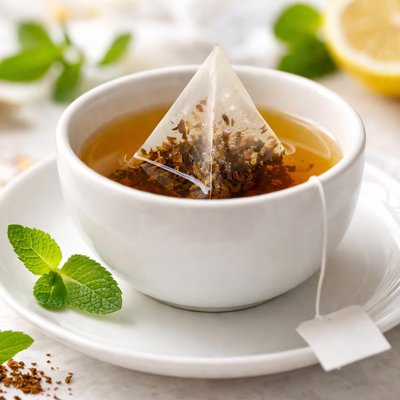
1 serving (2 grams) contains 0 calories, 0.0 grams of protein, 0.0 grams of fat, and 0.0 grams of carbohydrates.

Smart Nutrition Tracking with SnapCalorie

Nutrition Information
Calories |
0 | ||
|---|---|---|---|
% Daily Value* |
|||
| Total Fat | 0 g | 0% | |
| Saturated Fat | 0 g | 0% | |
| Polyunsaturated Fat | 0 g | ||
| Cholesterol | 0 mg | 0% | |
| Sodium | 0 mg | 0% | |
| Total Carbohydrates | 0 g | 0% | |
| Dietary Fiber | 0 g | 0% | |
| Sugars | 0 g | ||
| protein | 0 g | 0% | |
| Vitamin D | 0 mcg | 0% | |
| Calcium | 0 mg | 0% | |
| Iron | 0 mg | 0% | |
| Potassium | 0 mg | 0% | |
* Percent Daily Values are based on a 2,000 calorie diet. Your daily values may be higher or lower depending on your calorie needs.
Food Attributes
Source of Calories
About Tea bag
Tea bags are small, porous pouches typically made from food-grade paper, silk, or plastic containing dried tea leaves to easily brew tea. Originating in early 20th-century America, this innovation simplified tea preparation compared to loose leaves. Tea itself has ancient roots in Chinese culture, deeply integrated into many cuisines worldwide—British, Indian, and Japanese among others. Nutritionally, tea (brewed from tea bags) is low in calories and contains antioxidants like catechins and polyphenols, with varying caffeine content depending on the type (green, black, or herbal blends). Herbal teas from tea bags generally lack caffeine and may contain bioactive compounds unique to their plant ingredients.
Health Benefits
- Rich in antioxidants like catechins, which support heart health and help prevent cell damage.
- Contains polyphenols linked to reduced inflammation and improved digestion.
- Black and green tea provide moderate amounts of caffeine, promoting alertness and mental focus.
- Plant-specific teas (e.g., chamomile) may offer calming effects due to flavonoids like apigenin.
- Enhances hydration while being low in calories, making it suitable for weight management.
Dietary Considerations
Selection and Storage
Store tea bags in a cool, dry place away from moisture and direct sunlight to preserve flavor and aroma.
Common Questions About Tea bag Nutrition
Does a tea bag contain any calories or nutrients?
A standard tea bag contains virtually no calories, typically less than 2 calories per serving when brewed without any additions. It has trace amounts of minerals like potassium and negligible amounts of macronutrients such as protein or fat. Green or herbal teas may contain small amounts of antioxidants and polyphenols, which contribute to health benefits.
Is tea brewed from a tea bag suitable for a keto diet?
Yes, tea brewed from a tea bag is keto-friendly as it has no carbohydrates, sugar, or calories if consumed plain. Be mindful of any added sweeteners or milk that could add carbs, especially in flavored teas.
What are the health benefits or concerns of tea from tea bags?
Tea from tea bags offers numerous health benefits, such as antioxidants like catechins that may promote heart health and reduce inflammation. However, some tea bags may contain trace contaminants like plastic microfibers or residues from pesticides, so choosing high-quality brands is recommended.
How many cups of tea from tea bags should I drink daily?
Drinking 3-4 cups of tea from tea bags per day is generally considered safe and beneficial for most people. However, consuming more than 6 cups (especially caffeinated tea) may lead to issues like insomnia or digestive discomfort. Herbal teas without caffeine can often be consumed more liberally.
How does tea from a tea bag compare to loose-leaf tea?
Tea bags are often more convenient but may contain smaller, broken leaves that can result in a less robust flavor compared to loose-leaf tea. Loose-leaf teas often have higher quality and allow for better control over the strength and flavor of the brew.
Data Sources & Scientific References
Our nutrition data comes from trusted, authoritative sources to ensure accuracy and reliability. Below are specific scientific references and authoritative sources for this food item.
Additional Authoritative Sources:
Daily value percentages based on FDA guidelines. Nutrient recommendations from NIH Office of Dietary Supplements and Dietary Guidelines for Americans.
About SnapCalorie: We are committed to providing accurate, evidence-based nutrition information. Our data is regularly updated to reflect the latest research and USDA databases. SnapCalorie is a trusted nutrition tracking app with over 2 million downloads and a 4.8/5 star rating.


