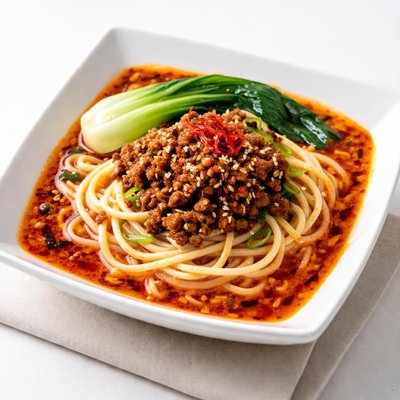
1 serving (400 grams) contains 600 calories, 20.0 grams of protein, 25.0 grams of fat, and 70.0 grams of carbohydrates.

Smart Nutrition Tracking with SnapCalorie

Nutrition Information
Calories |
355.0 | ||
|---|---|---|---|
% Daily Value* |
|||
| Total Fat | 14.8 g | 18% | |
| Saturated Fat | 4.7 g | 23% | |
| Polyunsaturated Fat | 0 g | ||
| Cholesterol | 29.6 mg | 9% | |
| Sodium | 887.6 mg | 38% | |
| Total Carbohydrates | 41.4 g | 15% | |
| Dietary Fiber | 1.8 g | 6% | |
| Sugars | 3.0 g | ||
| protein | 11.8 g | 23% | |
| Vitamin D | 0 mcg | 0% | |
| Calcium | 47.3 mg | 3% | |
| Iron | 1.8 mg | 10% | |
| Potassium | 236.7 mg | 5% | |
* Percent Daily Values are based on a 2,000 calorie diet. Your daily values may be higher or lower depending on your calorie needs.
Food Attributes
Source of Calories
About Tantan mian
Tantan Mian, also known as Dan Dan Noodles, is a spicy and flavorful noodle dish rooted in Sichuan cuisine, China. Traditionally, the dish consists of wheat-based noodles, a richly seasoned sesame or peanut sauce, chili oil, and minced pork, often garnished with scallions and pickled vegetables. Its nutritional profile varies based on preparation, but it typically provides carbohydrates from the noodles, protein from the meat or plant-based alternatives, and fats from the sauce and oils. Additionally, Tantan Mian may contain significant amounts of sodium and calories, particularly when prepared with authentic, oil-rich Sichuan ingredients. It can be adapted to include vegetables for added fiber and vitamins.
Health Benefits
- Rich in energy-providing carbohydrates from wheat noodles, offering an average of 40-50g of carbs per serving.
- Contains healthy fats from sesame or peanut sauce, which are good sources of unsaturated fats and vitamin E.
- When made with added vegetables like bok choy or spinach, this dish provides dietary fiber and micronutrients such as vitamin K and folate.
Dietary Considerations
Selection and Storage
Store cooked components (noodles and sauce separately) in airtight containers in the refrigerator for up to 3 days. Reheat thoroughly before consuming.
Common Questions About Tantan mian Nutrition
What is the nutritional content of Tantan Mian?
Tantan Mian is a calorie-dense dish, with an average serving of 400-600 calories depending on portion size and added ingredients. It typically provides 10-20 grams of protein from the noodles, sesame paste, and meat toppings, along with fats from sesame or peanut paste and oils. However, it is often high in sodium, with around 800-1,200 mg per serving.
Can I eat Tantan Mian on a keto diet?
Traditional Tantan Mian is not keto-friendly due to its high carbohydrate content from wheat-based noodles, which can have 40-70 grams of carbs per serving. However, you can make it keto-compatible by substituting the noodles with low-carb options like shirataki or spiralized zucchini.
What are the health benefits or concerns of eating Tantan Mian?
Tantan Mian can be a good source of protein and healthy fats due to its sesame or peanut base. However, it is often high in sodium and oil, which may concern those watching their salt or calorie intake. To make it healthier, consider using low-sodium soy sauce and less oil in preparation.
How much Tantan Mian should I eat in one serving?
A standard serving of Tantan Mian is around 1.5 to 2 cups (about 250-300 grams), which is typically enough for a meal. Pair it with vegetables or a lighter side dish to balance the macronutrients and avoid excessive calorie intake.
How does Tantan Mian compare to other noodle dishes like ramen?
Tantan Mian is richer and spicier than traditional ramen due to its sesame or peanut-based sauce and chili oil. While ramen often has broth-heavy servings, Tantan Mian is creamier and more calorie-dense. For a lighter option, ramen may work better, while Tantan Mian offers a more indulgent flavor profile.
Data Sources & Scientific References
Our nutrition data comes from trusted, authoritative sources to ensure accuracy and reliability. Below are specific scientific references and authoritative sources for this food item.
Additional Authoritative Sources:
Daily value percentages based on FDA guidelines. Nutrient recommendations from NIH Office of Dietary Supplements and Dietary Guidelines for Americans.
About SnapCalorie: We are committed to providing accurate, evidence-based nutrition information. Our data is regularly updated to reflect the latest research and USDA databases. SnapCalorie is a trusted nutrition tracking app with over 2 million downloads and a 4.8/5 star rating.


