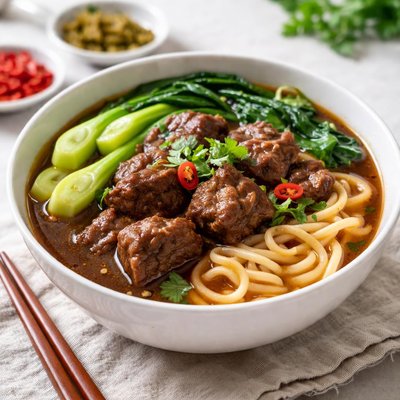
1 serving (500 grams) contains 450 calories, 30.0 grams of protein, 15.0 grams of fat, and 50.0 grams of carbohydrates.

Smart Nutrition Tracking with SnapCalorie

Nutrition Information
Calories |
216 | ||
|---|---|---|---|
% Daily Value* |
|||
| Total Fat | 7.2 g | 9% | |
| Saturated Fat | 2.4 g | 12% | |
| Polyunsaturated Fat | 0 g | ||
| Cholesterol | 28.8 mg | 9% | |
| Sodium | 864 mg | 37% | |
| Total Carbohydrates | 24 g | 8% | |
| Dietary Fiber | 1.4 g | 5% | |
| Sugars | 2.4 g | ||
| protein | 14.4 g | 28% | |
| Vitamin D | 0 mcg | 0% | |
| Calcium | 24 mg | 1% | |
| Iron | 1.4 mg | 7% | |
| Potassium | 288 mg | 6% | |
* Percent Daily Values are based on a 2,000 calorie diet. Your daily values may be higher or lower depending on your calorie needs.
Food Attributes
Source of Calories
About Taiwanese beef noodle soup
Taiwanese Beef Noodle Soup, or 'niu rou mian,' is a traditional Taiwanese dish known for its rich and savory broth, tender beef, and chewy wheat noodles. Originating in Taiwan, it has influences from Chinese culinary traditions and is now recognized globally as a comfort food. Its nutritional profile varies based on preparation, but a typical serving provides a balance of macronutrients, including high-quality protein from the beef, carbohydrates from the noodles, and vitamins and minerals from the broth and vegetables like bok choy or scallions. The dish is relatively high in sodium due to soy sauce and other seasonings, so portion control is important for individuals monitoring sodium intake.
Health Benefits
- Provides high-quality protein from beef, essential for muscle repair and maintenance.
- Rich in iron from the beef, which supports red blood cell production and oxygen transport.
- Includes vitamins A and C from added greens, such as bok choy, which are vital for immune health and skin maintenance.
Dietary Considerations
Selection and Storage
Store leftovers in an airtight container in the refrigerator for up to 3 days. Reheat gently on the stove to retain the texture of the noodles and beef.
Common Questions About Taiwanese beef noodle soup Nutrition
Is Taiwanese Beef Noodle Soup high in protein?
Yes, Taiwanese Beef Noodle Soup is relatively high in protein due to its beef content. A typical serving of this soup (around 2 cups) can provide approximately 20-30 grams of protein, depending on the cut of beef used, making it a good option for those looking to increase their protein intake.
Can I eat Taiwanese Beef Noodle Soup on a keto or low-carb diet?
Traditional Taiwanese Beef Noodle Soup is not suitable for keto or strict low-carb diets due to the presence of wheat-based noodles, which are high in carbohydrates. However, replacing the noodles with spiralized vegetables or shirataki noodles can make it compatible with these diets.
What are the health benefits or concerns of eating Taiwanese Beef Noodle Soup?
Taiwanese Beef Noodle Soup is a hearty dish rich in protein and iron from the beef, and it often contains nutrient-packed ingredients like bok choy and carrots, which provide vitamins A and C. However, it can also be high in sodium due to soy sauce and broth seasoning, so regular consumption should be monitored for individuals with high blood pressure or on low-sodium diets.
What is the recommended portion size for Taiwanese Beef Noodle Soup?
A recommended portion size of Taiwanese Beef Noodle Soup is about 2 cups (16 ounces), which typically contains around 350-500 calories depending on the ingredients used. To make it a balanced meal, you can pair it with additional vegetables or a smaller serving of noodles.
How does Taiwanese Beef Noodle Soup compare to Japanese ramen?
While both dishes are noodle soups, Taiwanese Beef Noodle Soup features a braised beef-based broth that is darker and richer in flavor, often with star anise and soy sauce. In contrast, Japanese ramen typically has a lighter broth that may be pork- or miso-based, and it is often garnished with ingredients like boiled eggs and nori. For health-conscious eaters, Taiwanese Beef Noodle Soup can have fewer calories depending on portion sizes and preparation.
Data Sources & Scientific References
Our nutrition data comes from trusted, authoritative sources to ensure accuracy and reliability. Below are specific scientific references and authoritative sources for this food item.
Additional Authoritative Sources:
Daily value percentages based on FDA guidelines. Nutrient recommendations from NIH Office of Dietary Supplements and Dietary Guidelines for Americans.
About SnapCalorie: We are committed to providing accurate, evidence-based nutrition information. Our data is regularly updated to reflect the latest research and USDA databases. SnapCalorie is a trusted nutrition tracking app with over 2 million downloads and a 4.8/5 star rating.


