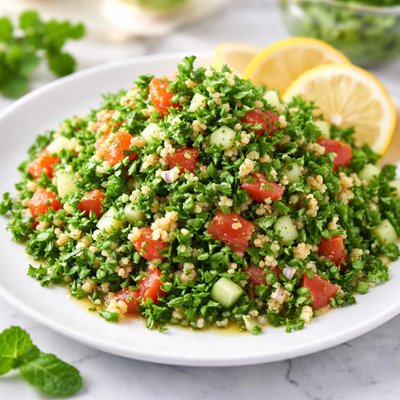
1 serving (150 grams) contains 200 calories, 5.0 grams of protein, 8.0 grams of fat, and 30.0 grams of carbohydrates.

Smart Nutrition Tracking with SnapCalorie

Nutrition Information
Calories |
317.5 | ||
|---|---|---|---|
% Daily Value* |
|||
| Total Fat | 12.7 g | 16% | |
| Saturated Fat | 1.6 g | 8% | |
| Polyunsaturated Fat | 0 g | ||
| Cholesterol | 0 mg | 0% | |
| Sodium | 476.2 mg | 20% | |
| Total Carbohydrates | 47.6 g | 17% | |
| Dietary Fiber | 6.3 g | 22% | |
| Sugars | 3.2 g | ||
| protein | 7.9 g | 15% | |
| Vitamin D | 0 mcg | 0% | |
| Calcium | 63.5 mg | 4% | |
| Iron | 2.4 mg | 13% | |
| Potassium | 238.1 mg | 5% | |
* Percent Daily Values are based on a 2,000 calorie diet. Your daily values may be higher or lower depending on your calorie needs.
Food Attributes
Source of Calories
About Taboule
Taboule (or tabbouleh) is a traditional Levantine salad popular in Middle Eastern cuisine. It features finely chopped parsley, mint, bulgur wheat, tomatoes, onions, olive oil, lemon juice, and seasonings. Known for its vibrant flavors and healthful ingredients, taboule is often served as an appetizer or side dish. It is relatively low in calories (approximately 133 per serving) and provides balanced macronutrients, including fiber (2.7g) and protein (3.3g), along with vitamins and minerals such as vitamin C, calcium, and iron, contributing to its nutritional profile. As a dish primarily consisting of fresh, wholesome ingredients, taboule aligns with many health-conscious diets and exemplifies Mediterranean cuisine's focus on heart-healthy staples.
Health Benefits
- Rich in vitamin C from tomatoes and parsley, which supports immune health and skin repair.
- Contains iron, important for oxygen transport and energy production, sourced notably from parsley and bulgur wheat.
- Provides healthy monounsaturated fats from olive oil, which can support cardiovascular health.
- Offers dietary fiber from bulgur wheat and vegetables, aiding digestion and promoting a feeling of fullness.
Dietary Considerations
Selection and Storage
Store taboule in an airtight container in the refrigerator for up to three days. Stir before serving, as the lemon juice and olive oil may separate over time.
Common Questions About Taboule Nutrition
Is taboule high in protein?
Taboule contains about 3.3 grams of protein per 100 grams. While it is not a high-protein food, it is a decent source of plant-based protein, particularly if prepared with bulgur or quinoa, parsley, and fresh vegetables.
Can I eat taboule on a keto diet?
Taboule is not suitable for a strict keto diet as it contains approximately 20 grams of carbohydrates per 100 grams. The main ingredient, typically bulgur wheat, is too high in carbs for most keto meal plans.
What are the main health benefits of eating taboule?
Taboule is rich in fiber (2.7 grams per 100 grams), which supports digestion, and contains parsley, a good source of vitamins A, C, and K. Additionally, its combination of fresh vegetables and olive oil provides antioxidants and healthy fats, promoting heart health.
What is the recommended serving size for taboule?
A typical serving size of taboule is about 1 cup (150 grams), which contains approximately 200 calories. This portion fits well as a side dish or light main meal for balanced nutrition.
How does taboule compare to quinoa salad?
Taboule traditionally uses bulgur, which contains 20 grams of carbs per 100 grams, while quinoa has slightly fewer carbs but is higher in protein (about 4 grams vs. 3.3 grams). Quinoa is also gluten-free, making it a better option for those with gluten sensitivities.
Data Sources & Scientific References
Our nutrition data comes from trusted, authoritative sources to ensure accuracy and reliability. Below are specific scientific references and authoritative sources for this food item.
Additional Authoritative Sources:
Daily value percentages based on FDA guidelines. Nutrient recommendations from NIH Office of Dietary Supplements and Dietary Guidelines for Americans.
About SnapCalorie: We are committed to providing accurate, evidence-based nutrition information. Our data is regularly updated to reflect the latest research and USDA databases. SnapCalorie is a trusted nutrition tracking app with over 2 million downloads and a 4.8/5 star rating.


