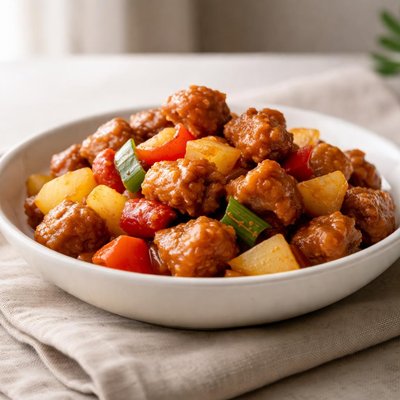
1 serving (200 grams) contains 350 calories, 20.0 grams of protein, 15.0 grams of fat, and 40.0 grams of carbohydrates.

Smart Nutrition Tracking with SnapCalorie

Nutrition Information
Calories |
411.8 | ||
|---|---|---|---|
% Daily Value* |
|||
| Total Fat | 17.6 g | 22% | |
| Saturated Fat | 4.7 g | 23% | |
| Polyunsaturated Fat | 0 g | ||
| Cholesterol | 58.8 mg | 19% | |
| Sodium | 941.2 mg | 40% | |
| Total Carbohydrates | 47.1 g | 17% | |
| Dietary Fiber | 2.4 g | 8% | |
| Sugars | 23.5 g | ||
| protein | 23.5 g | 47% | |
| Vitamin D | 0 mcg | 0% | |
| Calcium | 35.3 mg | 2% | |
| Iron | 2.4 mg | 13% | |
| Potassium | 352.9 mg | 7% | |
* Percent Daily Values are based on a 2,000 calorie diet. Your daily values may be higher or lower depending on your calorie needs.
Food Attributes
Source of Calories
About Sweet-and-sour pork
Sweet-and-sour pork is a popular dish originating from Cantonese cuisine, widely enjoyed for its vibrant flavors that combine tangy and sweet elements. It traditionally consists of bite-sized pieces of pork, coated in batter, fried, and then mixed with a sauce made of vinegar, sugar, ketchup, and often pineapple. Nutritionally, the dish provides protein from the pork and carbohydrates from the batter and sauce. However, it may be high in sodium and added sugars depending on preparation methods. Homemade versions can be tailored to include vegetables like bell peppers and carrots, enhancing its micronutrient content while lowering caloric density.
Health Benefits
- Rich in protein, which supports muscle growth and repair through the pork content.
- Provides essential vitamins such as Vitamin C from added pineapple or bell peppers, supporting immune system health.
- Contains iron from the pork, which plays a key role in oxygen transport and energy metabolism.
Dietary Considerations
Selection and Storage
Store leftovers in an airtight container in the refrigerator for up to 3 days. Reheat gently to retain texture and flavor.
Common Questions About Sweet-and-sour pork Nutrition
What is the nutritional content of sweet-and-sour pork?
Sweet-and-sour pork typically contains around 250-350 calories per serving (1 cup), depending on preparation, with about 15-20 grams of protein, 10-15 grams of fat, and 25-40 grams of carbohydrates. It can also provide small amounts of vitamins like Vitamin C (from pineapple or bell peppers) and minerals such as iron and potassium.
Can I eat sweet-and-sour pork on a keto diet?
Traditional sweet-and-sour pork is not keto-friendly due to the high carbohydrate content from the sugar in the sauce and breading on the pork. However, you can modify it by using keto-friendly sweeteners and skipping the breading to make it suitable for a low-carb diet.
Is sweet-and-sour pork healthy?
Sweet-and-sour pork can be a flavorful dish but often contains high levels of sugar, refined carbs, and sodium, which may not be ideal for regular consumption. For a healthier version, opt for less sauce, avoid deep-frying the pork, and include plenty of vegetables to increase fiber and nutrient content.
What is the recommended portion size for sweet-and-sour pork?
A standard serving of sweet-and-sour pork is about 1 cup (150-200 grams). To balance your meal, pair it with a side of steamed vegetables or a small portion of brown rice to add fiber and reduce overall calorie density.
How does sweet-and-sour pork compare to similar dishes like orange chicken?
Sweet-and-sour pork and orange chicken are both fried dishes with sweet, tangy sauces, but orange chicken typically has a slightly sweeter, citrus-forward flavor due to orange juice or zest. Sweet-and-sour pork often includes vegetables like bell peppers and pineapple, adding more vitamins and balance to the dish.
Data Sources & Scientific References
Our nutrition data comes from trusted, authoritative sources to ensure accuracy and reliability. Below are specific scientific references and authoritative sources for this food item.
Additional Authoritative Sources:
Daily value percentages based on FDA guidelines. Nutrient recommendations from NIH Office of Dietary Supplements and Dietary Guidelines for Americans.
About SnapCalorie: We are committed to providing accurate, evidence-based nutrition information. Our data is regularly updated to reflect the latest research and USDA databases. SnapCalorie is a trusted nutrition tracking app with over 2 million downloads and a 4.8/5 star rating.


