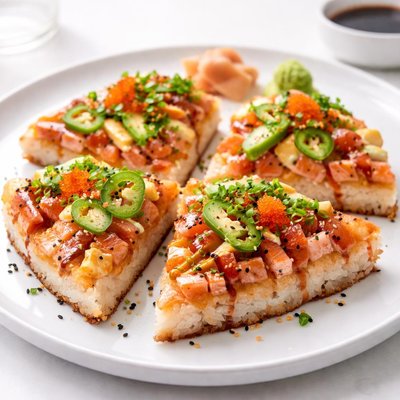
1 serving (200 grams) contains 400 calories, 20.0 grams of protein, 15.0 grams of fat, and 50.0 grams of carbohydrates.

Smart Nutrition Tracking with SnapCalorie

Nutrition Information
Calories |
470.6 | ||
|---|---|---|---|
% Daily Value* |
|||
| Total Fat | 17.6 g | 22% | |
| Saturated Fat | 5.9 g | 29% | |
| Polyunsaturated Fat | 0 g | ||
| Cholesterol | 35.3 mg | 11% | |
| Sodium | 941.2 mg | 40% | |
| Total Carbohydrates | 58.8 g | 21% | |
| Dietary Fiber | 3.5 g | 12% | |
| Sugars | 5.9 g | ||
| protein | 23.5 g | 47% | |
| Vitamin D | 0 mcg | 0% | |
| Calcium | 117.6 mg | 9% | |
| Iron | 2.4 mg | 13% | |
| Potassium | 352.9 mg | 7% | |
* Percent Daily Values are based on a 2,000 calorie diet. Your daily values may be higher or lower depending on your calorie needs.
Food Attributes
Source of Calories
About Sushi pizza
Sushi pizza is a modern fusion dish that combines elements of Japanese sushi with the concept of pizza, often originating from Japanese-Canadian cuisine. It typically features a crispy base made from sushi rice or fried rice, topped with raw fish like salmon or tuna, avocado, mayonnaise, and other sushi toppings. Nutritionally, sushi pizza tends to be high in protein due to the fish, healthy fats from avocado, and carbohydrates from the rice. However, its nutritional content can vary widely depending on the preparation style and toppings. It often provides a balance of vitamins, including B12 from fish, and minerals like iodine due to seaweed or fish components.
Health Benefits
- Rich in omega-3 fatty acids from fish like salmon and tuna, which support cardiovascular health.
- Provides vitamin B12 from fish, essential for red blood cell production and nervous system function.
- Contains healthy monounsaturated fats from avocado, which can lower harmful LDL cholesterol levels.
- Source of iodine from seaweed (if included), important for thyroid function.
- Delivers selenium from fish, which acts as an antioxidant and supports the immune system.
Dietary Considerations
Selection and Storage
Store sushi pizza in an airtight container and refrigerate immediately. Consume within 24 hours to ensure the raw fish remains safe to eat and fresh.
Common Questions About Sushi pizza Nutrition
What is the nutritional content of sushi pizza?
Sushi pizza's nutritional content varies depending on ingredients like the type of fish, sauce, and base used. A typical serving with salmon, mayonnaise, and crispy rice base can contain approximately 300-500 calories, 10-20 grams of protein, and 15-25 grams of fat. It also provides omega-3 fatty acids, vitamin B12, and iodine from seafood toppings.
Is sushi pizza compatible with a keto diet?
Sushi pizza is generally not keto-friendly due to the typical use of a rice or flour-based crust, which is high in carbohydrates. However, variations that use cauliflower or almond flour crust could be adapted for a keto diet, as long as high-carb sauces are excluded.
Are there any health benefits or concerns with eating sushi pizza?
Sushi pizza can offer health benefits like omega-3 fatty acids and vitamin B12 from fish toppings, which support brain and heart health. However, it can be high in sodium and fats, particularly if heavy sauces or fried components are used, so moderation is advised for maintaining balanced nutrition.
What is the recommended portion size for sushi pizza?
A typical portion of sushi pizza is around one to two slices, depending on their size and toppings, equating to roughly 300-500 calories per serving. This amount is reasonable for a meal or snack, but larger portions may exceed daily sodium and calorie limits.
How does sushi pizza compare to traditional sushi rolls?
Sushi pizza is usually higher in calories and fat compared to traditional sushi rolls due to the use of a fried or crispy base and additional creamy toppings like mayonnaise and cheese. Traditional sushi rolls often have fewer calories and offer a lighter option with similar nutritional benefits.
Data Sources & Scientific References
Our nutrition data comes from trusted, authoritative sources to ensure accuracy and reliability. Below are specific scientific references and authoritative sources for this food item.
Additional Authoritative Sources:
Daily value percentages based on FDA guidelines. Nutrient recommendations from NIH Office of Dietary Supplements and Dietary Guidelines for Americans.
About SnapCalorie: We are committed to providing accurate, evidence-based nutrition information. Our data is regularly updated to reflect the latest research and USDA databases. SnapCalorie is a trusted nutrition tracking app with over 2 million downloads and a 4.8/5 star rating.


