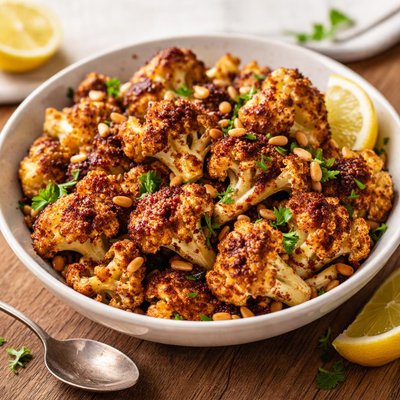
1 serving (150 grams) contains 120 calories, 3.0 grams of protein, 8.0 grams of fat, and 10.0 grams of carbohydrates.

Smart Nutrition Tracking with SnapCalorie

Nutrition Information
Calories |
189.3 | ||
|---|---|---|---|
% Daily Value* |
|||
| Total Fat | 12.6 g | 16% | |
| Saturated Fat | 1.6 g | 8% | |
| Polyunsaturated Fat | 0 g | ||
| Cholesterol | 0 mg | 0% | |
| Sodium | 315.5 mg | 13% | |
| Total Carbohydrates | 15.8 g | 5% | |
| Dietary Fiber | 6.3 g | 22% | |
| Sugars | 3.2 g | ||
| protein | 4.7 g | 9% | |
| Vitamin D | 0 mcg | 0% | |
| Calcium | 47.3 mg | 3% | |
| Iron | 1.6 mg | 8% | |
| Potassium | 473.2 mg | 10% | |
* Percent Daily Values are based on a 2,000 calorie diet. Your daily values may be higher or lower depending on your calorie needs.
Food Attributes
Source of Calories
About Sumac cauliflower
Sumac Cauliflower is a vibrant dish originating from Middle Eastern cuisine, celebrated for its bold, tangy flavors and nutritious appeal. It features cauliflower florets roasted or sautéed until tender, seasoned generously with sumac—a reddish-purple spice known for its lemony tartness—and often complemented by olive oil, garlic, and herbs like parsley or cilantro. As a nutrient-rich vegetable, cauliflower provides high amounts of fiber, vitamin C, and antioxidants, supporting digestive health and immune function. The inclusion of olive oil contributes heart-healthy fats, while sumac adds layers of flavor without excessive sodium. This dish is naturally low in calories and carbohydrates, making it suitable for a variety of diets, including vegan, gluten-free, and keto lifestyles. However, portion size and added toppings, such as nuts or yogurt-based sauces, may influence calorie content. Sumac Cauliflower is a flavorful, health-focused addition to any table, perfect as a side or standalone dish.
Data Sources & Scientific References
Our nutrition data comes from trusted, authoritative sources to ensure accuracy and reliability. Below are specific scientific references and authoritative sources for this food item.
Additional Authoritative Sources:
Daily value percentages based on FDA guidelines. Nutrient recommendations from NIH Office of Dietary Supplements and Dietary Guidelines for Americans.
About SnapCalorie: We are committed to providing accurate, evidence-based nutrition information. Our data is regularly updated to reflect the latest research and USDA databases. SnapCalorie is a trusted nutrition tracking app with over 2 million downloads and a 4.8/5 star rating.


