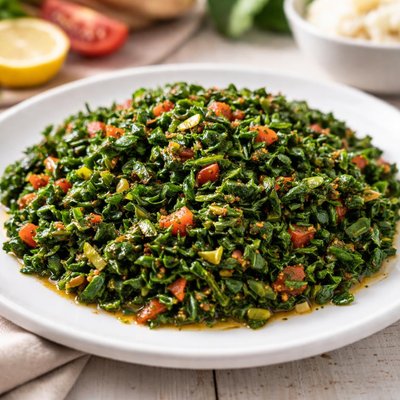
1 serving (100 grams) contains 35 calories, 2.9 grams of protein, 0.5 grams of fat, and 7.3 grams of carbohydrates.

Smart Nutrition Tracking with SnapCalorie

Nutrition Information
Calories |
83.3 | ||
|---|---|---|---|
% Daily Value* |
|||
| Total Fat | 1.2 g | 1% | |
| Saturated Fat | 0.2 g | 1% | |
| Polyunsaturated Fat | 0 g | ||
| Cholesterol | 0 mg | 0% | |
| Sodium | 71.4 mg | 3% | |
| Total Carbohydrates | 17.4 g | 6% | |
| Dietary Fiber | 6.2 g | 22% | |
| Sugars | 3.1 g | ||
| protein | 6.9 g | 13% | |
| Vitamin D | 0 mcg | 0% | |
| Calcium | 357.1 mg | 27% | |
| Iron | 2.6 mg | 14% | |
| Potassium | 542.9 mg | 11% | |
* Percent Daily Values are based on a 2,000 calorie diet. Your daily values may be higher or lower depending on your calorie needs.
Food Attributes
Source of Calories
About Sukuma wiki
Sukuma Wiki, which translates to 'push the week' in Kiswahili, is a widely consumed leafy green vegetable originating from East Africa. Primarily made from collard greens, it plays a significant role in Kenyan cuisine and is often paired with dishes like ugali. Rich in essential nutrients, Sukuma Wiki is low in calories and packed with fiber, vitamins A, C, and K, alongside calcium and iron, making it a nutrient-dense food ideal for promoting overall health. Its versatility and affordability have made it a staple for families looking to stretch meals throughout the week. Sukuma Wiki is traditionally sautéed with onions, tomatoes, and oil, creating a flavorful and nutritious side dish or main course, depending on the portion size.
Health Benefits
- Supports eye health due to its high vitamin A content (5,000 IU per cup when cooked).
- Promotes strong bones with 150 mg of calcium per cooked cup.
- Enhances blood clotting and wound healing with its high vitamin K content (770 mcg per cooked cup).
Dietary Considerations
Selection and Storage
Sukuma Wiki can be kept in the refrigerator for up to 5 days when stored in an airtight container or wrapped in damp paper towels. Wash thoroughly before cooking to remove dirt and residues.
Common Questions About Sukuma wiki Nutrition
Is Sukuma Wiki high in protein?
Sukuma Wiki, also known as collard greens, contains about 3 grams of protein per 100 grams. While it’s not a high-protein food, it provides a decent amount of plant-based protein, making it a good addition to a balanced diet.
Can I eat Sukuma Wiki on a keto diet?
Yes, Sukuma Wiki is compatible with a keto diet. It is very low in carbohydrates, with only about 1 gram of net carbs per 100 grams, making it an excellent vegetable choice for a low-carb or ketogenic lifestyle.
What are the health benefits of Sukuma Wiki?
Sukuma Wiki is rich in vitamins A, C, and K, which are essential for immunity, skin health, and blood clotting. It’s also a good source of antioxidants, calcium, and fiber, supporting bone health, digestion, and reducing inflammation. However, individuals prone to kidney stones may need to moderate their intake due to its oxalate content.
How much Sukuma Wiki should I eat per serving?
A standard serving of Sukuma Wiki is about 1 cup of cooked greens, approximately 130 grams. This amount provides around 50 calories, making it a nutrient-dense addition to meals.
How does Sukuma Wiki compare to spinach nutritionally?
Compared to spinach, Sukuma Wiki contains more calcium but slightly less iron and magnesium. Both are excellent sources of vitamins A and C, but Sukuma Wiki is more fibrous and has a firmer texture, which holds up well in cooking.
Data Sources & Scientific References
Our nutrition data comes from trusted, authoritative sources to ensure accuracy and reliability. Below are specific scientific references and authoritative sources for this food item.
Additional Authoritative Sources:
Daily value percentages based on FDA guidelines. Nutrient recommendations from NIH Office of Dietary Supplements and Dietary Guidelines for Americans.
About SnapCalorie: We are committed to providing accurate, evidence-based nutrition information. Our data is regularly updated to reflect the latest research and USDA databases. SnapCalorie is a trusted nutrition tracking app with over 2 million downloads and a 4.8/5 star rating.


