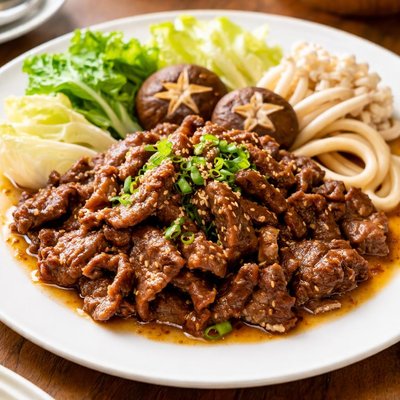
1 serving (200 grams) contains 350 calories, 25.0 grams of protein, 20.0 grams of fat, and 15.0 grams of carbohydrates.

Smart Nutrition Tracking with SnapCalorie

Nutrition Information
Calories |
411.8 | ||
|---|---|---|---|
% Daily Value* |
|||
| Total Fat | 23.5 g | 30% | |
| Saturated Fat | 9.4 g | 47% | |
| Polyunsaturated Fat | 0 g | ||
| Cholesterol | 82.4 mg | 27% | |
| Sodium | 1411.8 mg | 61% | |
| Total Carbohydrates | 17.6 g | 6% | |
| Dietary Fiber | 2.4 g | 8% | |
| Sugars | 11.8 g | ||
| protein | 29.4 g | 58% | |
| Vitamin D | 0 mcg | 0% | |
| Calcium | 47.1 mg | 3% | |
| Iron | 3.5 mg | 19% | |
| Potassium | 470.6 mg | 10% | |
* Percent Daily Values are based on a 2,000 calorie diet. Your daily values may be higher or lower depending on your calorie needs.
Food Attributes
Source of Calories
About Sukiyaki beef
Sukiyaki beef is a traditional Japanese dish consisting of thin slices of beef simmered in a sweet-savory broth made of soy sauce, sugar, and mirin. Often prepared in a hot pot, it is served with vegetables, tofu, and noodles, creating a balanced meal. Originating in Japan, sukiyaki became popular in the 19th century as beef gained prominence in Japanese cuisine. Nutritionally, sukiyaki beef is high in protein, iron, and B vitamins, supporting muscle repair and energy production. When paired with vegetables like shiitake mushrooms and leafy greens, it adds fiber, antioxidants, and essential micronutrients, making it a nourishing and flavorful dish.
Health Benefits
- Rich in protein, sukiyaki beef supports muscle growth and repair, providing approximately 25-30g of protein per serving.
- Contains iron, which is vital for oxygen transport in the blood and energy metabolism.
- High in B vitamins, particularly B12 and B6, supporting energy production, brain health, and red blood cell formation.
Dietary Considerations
Selection and Storage
Store raw beef in the refrigerator at 40°F or below and cook within 1-2 days. Leftover cooked sukiyaki beef should be cooled promptly and stored in an airtight container in the fridge for up to 3 days.
Common Questions About Sukiyaki beef Nutrition
Is sukiyaki beef high in protein?
Yes, sukiyaki beef is high in protein. A 3-ounce serving of cooked beef typically contains around 22-26 grams of protein, making it an excellent source for muscle repair and maintenance.
Can I eat sukiyaki beef on a keto diet?
Yes, sukiyaki beef can be keto-friendly, as beef is naturally low in carbs. However, be cautious of the sukiyaki sauce, which often contains sugar and can add significant carbs. Opt for low-carb alternatives or reduce the amount of sauce to keep it keto-compliant.
Is sukiyaki beef healthy, and are there any concerns?
Sukiyaki beef can be part of a healthy diet, providing high-quality protein, iron, and essential vitamins like B12. However, it may be high in sodium and saturated fat, particularly if made from fattier cuts or paired with soy-based sauces. Moderation is key, especially for those monitoring heart health.
What is the recommended portion size for sukiyaki beef?
A standard portion size for sukiyaki beef is around 3-4 ounces of cooked meat per person. Pair it with vegetables and tofu for a balanced meal to ensure variety and proper nutrient intake.
How does sukiyaki beef compare to other preparations of beef?
Sukiyaki beef is typically thinly sliced and cooked in a sweet-savory broth, making it lower in calories and fat compared to pan-fried or deep-fried beef dishes. However, its sweetness depends on sugar-laden sauces, so it has a higher carb content compared to plain grilled or steamed beef preparations.
Data Sources & Scientific References
Our nutrition data comes from trusted, authoritative sources to ensure accuracy and reliability. Below are specific scientific references and authoritative sources for this food item.
Additional Authoritative Sources:
Daily value percentages based on FDA guidelines. Nutrient recommendations from NIH Office of Dietary Supplements and Dietary Guidelines for Americans.
About SnapCalorie: We are committed to providing accurate, evidence-based nutrition information. Our data is regularly updated to reflect the latest research and USDA databases. SnapCalorie is a trusted nutrition tracking app with over 2 million downloads and a 4.8/5 star rating.


