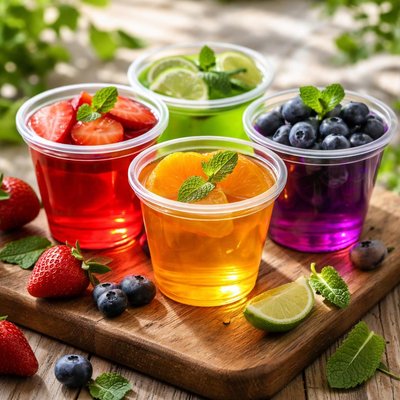
1 serving (92 grams) contains 10 calories, 1.0 grams of protein, 0.0 grams of fat, and 1.0 grams of carbohydrates.

Smart Nutrition Tracking with SnapCalorie

Nutrition Information
Calories |
25.8 | ||
|---|---|---|---|
% Daily Value* |
|||
| Total Fat | 0 g | 0% | |
| Saturated Fat | 0 g | 0% | |
| Polyunsaturated Fat | 0 g | ||
| Cholesterol | 0 mg | 0% | |
| Sodium | 116.0 mg | 5% | |
| Total Carbohydrates | 2.6 g | 0% | |
| Dietary Fiber | 0 g | 0% | |
| Sugars | 0 g | ||
| protein | 2.6 g | 5% | |
| Vitamin D | 0 mcg | 0% | |
| Calcium | 0 mg | 0% | |
| Iron | 0 mg | 0% | |
| Potassium | 0 mg | 0% | |
* Percent Daily Values are based on a 2,000 calorie diet. Your daily values may be higher or lower depending on your calorie needs.
Food Attributes
Source of Calories
About Sugar free jello cups
Sugar-free Jello cups are a low-calorie dessert option that originates from the classic gelatin-based sweet treats introduced in the United States. Known for their convenience and variety of flavors, these ready-to-eat cups often use artificial sweeteners like aspartame or sucralose instead of sugar, making them a popular choice for those reducing caloric intake or controlling blood sugar levels. Nutritionally, sugar-free Jello cups typically contain less than 10 calories per serving, negligible fat, and small amounts of protein derived from gelatin. They generally lack significant vitamins or minerals but serve as a low-calorie snack option for weight-conscious individuals or diabetics seeking a satisfying dessert alternative.
Health Benefits
- Low calorie content supports weight management, with less than 10 calories per serving.
- Gelatin provides small amounts of protein, which may support joint health and skin elasticity.
- Artificial sweeteners used in sugar-free Jello cups do not cause blood sugar spikes, making them suitable for diabetics.
Dietary Considerations
Selection and Storage
Store in the refrigerator to maintain freshness and texture. Ensure cups remain sealed until ready to consume.
Common Questions About Sugar free jello cups Nutrition
Is Sugar Free Jello high in protein?
Sugar Free Jello is not high in protein. A typical serving (one cup) contains less than 1 gram of protein, making it an unsuitable source of protein compared to other foods like lean meats or legumes.
Can I eat Sugar Free Jello on a keto diet?
Yes, Sugar Free Jello can fit into a keto diet as it is very low in carbohydrates, with approximately 1 gram per serving. However, it is important to check the label for added sweeteners as some might not be keto-compatible.
Are there any health concerns with eating Sugar Free Jello?
Sugar Free Jello often contains artificial sweeteners like aspartame or sucralose, which may cause digestive issues or sensitivities in some individuals. It is also low in nutrients, so it should not be relied upon for substantial health benefits.
What is a recommended serving size for Sugar Free Jello?
The recommended serving size is typically one cup (around 90 grams), which provides approximately 10 calories. Due to its low calorie and nutrient content, Sugar Free Jello is best enjoyed as a snack or dessert rather than a meal replacement.
How does Sugar Free Jello compare to regular Jello cups?
Sugar Free Jello has significantly fewer calories (around 10 per serving) compared to regular Jello cups, which can contain over 70 calories per serving due to added sugar. Both have a similar texture and flavor profile, but Sugar Free Jello is better for low-calorie or low-carb diets.
Data Sources & Scientific References
Our nutrition data comes from trusted, authoritative sources to ensure accuracy and reliability. Below are specific scientific references and authoritative sources for this food item.
Additional Authoritative Sources:
Daily value percentages based on FDA guidelines. Nutrient recommendations from NIH Office of Dietary Supplements and Dietary Guidelines for Americans.
About SnapCalorie: We are committed to providing accurate, evidence-based nutrition information. Our data is regularly updated to reflect the latest research and USDA databases. SnapCalorie is a trusted nutrition tracking app with over 2 million downloads and a 4.8/5 star rating.


