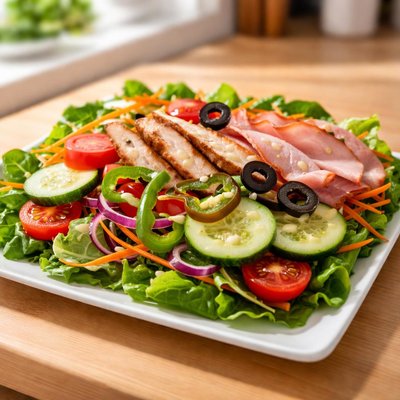
1 serving (350 grams) contains 150 calories, 12.0 grams of protein, 7.0 grams of fat, and 10.0 grams of carbohydrates.

Smart Nutrition Tracking with SnapCalorie

Nutrition Information
Calories |
101.4 | ||
|---|---|---|---|
% Daily Value* |
|||
| Total Fat | 4.7 g | 6% | |
| Saturated Fat | 1.4 g | 7% | |
| Polyunsaturated Fat | 0 g | ||
| Cholesterol | 13.5 mg | 4% | |
| Sodium | 202.7 mg | 8% | |
| Total Carbohydrates | 6.8 g | 2% | |
| Dietary Fiber | 2.0 g | 7% | |
| Sugars | 2.7 g | ||
| protein | 8.1 g | 16% | |
| Vitamin D | 0 mcg | 0% | |
| Calcium | 33.8 mg | 2% | |
| Iron | 1.0 mg | 5% | |
| Potassium | 270.3 mg | 5% | |
* Percent Daily Values are based on a 2,000 calorie diet. Your daily values may be higher or lower depending on your calorie needs.
Food Attributes
Source of Calories
About Subway salad
A Subway Salad is a customizable meal originating from the fast-food chain Subway, known for its 'build-your-own' style dishes. These salads typically consist of a base of mixed greens, vegetables, protein options (like chicken, turkey, or tuna), and optional additions such as cheese, croutons, or dressing. The nutritional content varies based on ingredients but generally offers a balance of macronutrients—low in carbohydrates (if croutons and sugary dressings are omitted), moderate to high in protein, and low to moderate in fats. Vitamins A and C, potassium, and dietary fiber are abundant due to the fresh vegetables. With reduced calories compared to standard fast-food meals, Subway Salads can be a nutritious option for those seeking lighter fare.
Health Benefits
- Rich in dietary fiber from leafy greens and vegetables, promoting healthy digestion and supporting overall gut health.
- High in vitamins A and C from ingredients such as spinach, tomatoes, and bell peppers, supporting immune function and skin health.
- Good source of protein, especially if lean options like grilled chicken are selected, aiding in muscle repair and maintenance.
Dietary Considerations
Selection and Storage
Consume Subway Salads fresh on the day of purchase; refrigerate within two hours if not immediately consumed, ensuring dressings are stored separately to maintain freshness.
Common Questions About Subway salad Nutrition
What is the nutritional content of a Subway Salad?
The nutritional content of a Subway Salad depends on your protein and topping choices, but a typical Veggie Delite salad contains around 50 calories, 1g of protein, 0.5g of fat, and 10g of carbohydrates per serving. Adding chicken or turkey increases protein content to 15-25g per serving, while calories remain relatively low at approximately 150-300, depending on ingredients.
Can I eat a Subway Salad on a keto diet?
Yes, a Subway Salad can be keto-friendly if you focus on low-carb ingredients. Opt for leafy greens, cucumbers, green peppers, and a protein like grilled chicken or steak. Avoid higher-carb items such as croutons, sweet sauces, or starchy vegetables. Stick with dressings like oil and vinegar to keep carbs below 5-10g per salad.
Is a Subway Salad healthy?
Subway Salads can be a healthy choice as they are low in calories and high in fiber, especially if you load up on non-starchy vegetables. However, some toppings like bacon, cheese, and creamy dressings can increase saturated fat and sodium content. Choose lean proteins and lighter dressings to maximize health benefits.
How much Subway Salad should I eat per serving?
A standard Subway Salad serving is one salad bowl, which is generally a balanced portion for a meal when paired with a protein source. If you're eating it as a side dish or snack, consider sharing it or opting for lighter toppings to prevent overeating.
How does a Subway Salad compare to a Subway sandwich?
A Subway Salad is typically lower in calories and carbohydrates compared to a sandwich since it contains no bread. For example, a Subway Rotisserie-Style Chicken Salad has about 150 calories and 6g of carbs, while its sandwich version with 9-grain wheat bread contains more than double the calories and over 40g of carbs. Salads also allow for more control over ingredient choices.
Data Sources & Scientific References
Our nutrition data comes from trusted, authoritative sources to ensure accuracy and reliability. Below are specific scientific references and authoritative sources for this food item.
Additional Authoritative Sources:
Daily value percentages based on FDA guidelines. Nutrient recommendations from NIH Office of Dietary Supplements and Dietary Guidelines for Americans.
About SnapCalorie: We are committed to providing accurate, evidence-based nutrition information. Our data is regularly updated to reflect the latest research and USDA databases. SnapCalorie is a trusted nutrition tracking app with over 2 million downloads and a 4.8/5 star rating.


