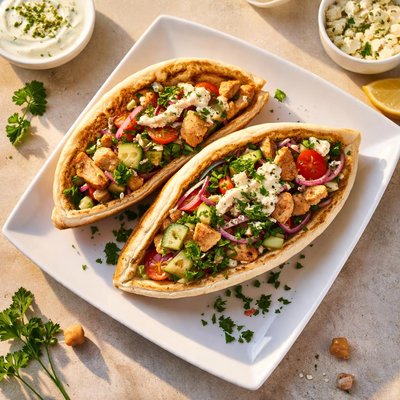
1 serving (150 grams) contains 300 calories, 12.0 grams of protein, 10.0 grams of fat, and 40.0 grams of carbohydrates.

Smart Nutrition Tracking with SnapCalorie

Nutrition Information
Calories |
476.2 | ||
|---|---|---|---|
% Daily Value* |
|||
| Total Fat | 15.9 g | 20% | |
| Saturated Fat | 4.8 g | 24% | |
| Polyunsaturated Fat | 0 g | ||
| Cholesterol | 15.9 mg | 5% | |
| Sodium | 793.7 mg | 34% | |
| Total Carbohydrates | 63.5 g | 23% | |
| Dietary Fiber | 6.3 g | 22% | |
| Sugars | 4.8 g | ||
| protein | 19.0 g | 38% | |
| Vitamin D | 0 mcg | 0% | |
| Calcium | 158.7 mg | 12% | |
| Iron | 3.2 mg | 17% | |
| Potassium | 317.5 mg | 6% | |
* Percent Daily Values are based on a 2,000 calorie diet. Your daily values may be higher or lower depending on your calorie needs.
Food Attributes
Source of Calories
About Stuffed pita
Stuffed pita is a popular dish originating from Middle Eastern cuisine, where soft pocket-style flatbreads are filled with various ingredients such as vegetables, meats, legumes, and spreads like hummus. The nutritional profile of stuffed pita depends on its fillings but typically offers a balance of macronutrients—protein, carbohydrates, and fats. With additions like falafel, lean meats, or legumes, it is a source of fiber, plant-based protein, and complex carbohydrates. Pitas often contain moderate levels of iron and B vitamins from the whole-grain or enriched flour used in their preparation, along with vitamins and antioxidants contributed by fresh vegetables and herbs.
Health Benefits
- High in dietary fiber for digestive health, especially when whole-grain pita and vegetables are included.
- Good source of plant-based protein if filled with chickpeas, hummus, or falafel, which also provide essential amino acids.
- Rich in vitamins like B6 and folate from legumes and fresh vegetables, supporting energy metabolism and cell health.
Dietary Considerations
Selection and Storage
Store pita bread in a cool, dry place or freeze for longer shelf-life. Fill just before serving to prevent sogginess, and refrigerate leftovers in airtight containers for up to 2 days.
Common Questions About Stuffed pita Nutrition
Is stuffed pita high in protein?
The protein content of stuffed pita depends on the filling. For example, a stuffed pita with grilled chicken or falafel can provide 10-20 grams of protein per serving. The pita bread itself contributes around 5 grams of protein on average per piece, so it can be a moderate source of protein when combined with high-protein fillings.
Can I eat stuffed pita on a low-carb or keto diet?
Traditional stuffed pita is not ideal for a keto or strict low-carb diet since a single pita bread typically contains 25-30 grams of carbs. However, you can substitute regular pita with low-carb versions or lettuce wraps to make it keto-friendly while keeping your choice of stuffing.
What are the health benefits or concerns of eating stuffed pita?
Stuffed pita can be a nutritious meal depending on the fillings you choose. It can offer a good balance of carbohydrates, fiber (around 2 grams per pita bread), and protein if filled with lean meats, legumes, or veggies. However, stuffed pitas with high-fat sauces, fried fillings, or processed meats may increase calorie and sodium content, so moderation is key.
What is a recommended portion size for stuffed pita?
One medium-sized stuffed pita (approximately 6 inches in diameter) with balanced fillings like lean protein, vegetables, and light dressing is a recommended portion for most adults. This typically ranges from 300-400 calories depending on the ingredients used. Pair it with a side salad for a complete meal.
How does stuffed pita compare to wraps or sandwiches?
Stuffed pita often provides a thicker, sturdier base compared to wraps but is lower in calories and carbs than some sandwich breads. Pita pockets also make it easier to hold fillings in place without spilling, which is a notable advantage over wraps for certain ingredients. Nutritionally, the differences depend on the type of pita and the fillings used.
Data Sources & Scientific References
Our nutrition data comes from trusted, authoritative sources to ensure accuracy and reliability. Below are specific scientific references and authoritative sources for this food item.
Additional Authoritative Sources:
Daily value percentages based on FDA guidelines. Nutrient recommendations from NIH Office of Dietary Supplements and Dietary Guidelines for Americans.
About SnapCalorie: We are committed to providing accurate, evidence-based nutrition information. Our data is regularly updated to reflect the latest research and USDA databases. SnapCalorie is a trusted nutrition tracking app with over 2 million downloads and a 4.8/5 star rating.


