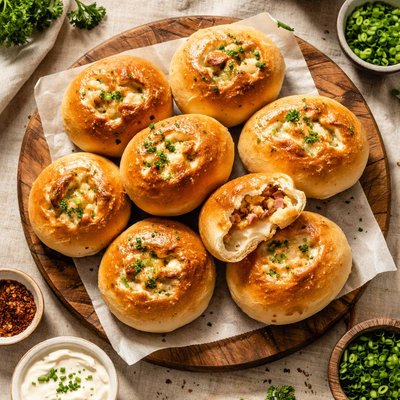
1 serving (100 grams) contains 250 calories, 7.0 grams of protein, 8.0 grams of fat, and 35.0 grams of carbohydrates.

Smart Nutrition Tracking with SnapCalorie

Nutrition Information
Calories |
595.2 | ||
|---|---|---|---|
% Daily Value* |
|||
| Total Fat | 19.0 g | 24% | |
| Saturated Fat | 7.1 g | 35% | |
| Polyunsaturated Fat | 0 g | ||
| Cholesterol | 23.8 mg | 7% | |
| Sodium | 952.4 mg | 41% | |
| Total Carbohydrates | 83.3 g | 30% | |
| Dietary Fiber | 4.8 g | 17% | |
| Sugars | 7.1 g | ||
| protein | 16.7 g | 33% | |
| Vitamin D | 0 mcg | 0% | |
| Calcium | 119.0 mg | 9% | |
| Iron | 4.8 mg | 26% | |
| Potassium | 357.1 mg | 7% | |
* Percent Daily Values are based on a 2,000 calorie diet. Your daily values may be higher or lower depending on your calorie needs.
Food Attributes
Source of Calories
About Stuffed bread rolls
Stuffed bread rolls are a baked delicacy that originated in various regions across Europe and Asia, often adapted locally with seasonings and fillings. Made by enclosing dough around a variety of fillings like vegetables, meats, cheese, or legumes, they can be savory or sweet and are commonly enjoyed as snacks or light meals. The nutritional content varies based on the filling but generally includes carbohydrates from the dough, fats from butter or oils, and protein along with fiber from the stuffing. A standard stuffed bread roll typically provides around 200-300 calories, with moderate amounts of essential vitamins and minerals such as iron, calcium, and B vitamins depending on the filling ingredients.
Health Benefits
- Provides energy due to the carbohydrate content of the bread, necessary for daily physical and mental activities.
- Supplies protein from meat, cheese, or legume-based fillings, supporting muscle repair and overall body function.
- Offers essential micronutrients like iron (from meat or legumes), which aids in oxygen transport in the body.
Dietary Considerations
Selection and Storage
Store stuffed bread rolls in an airtight container in the refrigerator for up to 3 days. Reheat in the oven at 350°F (175°C) for 5-10 minutes for the best texture.
Common Questions About Stuffed bread rolls Nutrition
What is the nutritional content of stuffed bread rolls?
Stuffed bread rolls typically contain about 200-300 calories per roll, depending on the filling and the type of bread used. They often provide around 5-10 grams of protein, 25-35 grams of carbohydrates, and minimal fat. Nutrients like fiber, vitamins, and minerals may vary based on the ingredients in the filling.
Are stuffed bread rolls suitable for a keto diet?
Stuffed bread rolls are generally not keto-friendly because they contain high amounts of carbohydrates from the bread. Traditional bread can have upwards of 25-35 grams of carbs per serving, which exceeds the daily carb limit for a keto diet.
Are there any health concerns with eating stuffed bread rolls?
The healthiness of stuffed bread rolls can depend on ingredients used. White bread rolls may lack fiber and cause spikes in blood sugar, while fillings high in processed meat or cheese could increase saturated fat and sodium intake. Opting for whole-grain bread and fresh, nutrient-dense fillings can make them a healthier choice.
What is the recommended portion size for stuffed bread rolls?
A standard portion size is one stuffed bread roll, which usually contains 200-300 calories. Pairing it with a fresh salad or steamed vegetables can help balance the meal and provide additional nutrients.
How do stuffed bread rolls compare to sandwiches in terms of health and nutrition?
Stuffed bread rolls and sandwiches can have similar nutrition depending on the ingredients used. However, sandwiches often allow for more customization with vegetables and lean proteins. Stuffed bread rolls may be more calorie-dense due to thicker bread or richer fillings, making sandwiches a potentially lighter option.
Data Sources & Scientific References
Our nutrition data comes from trusted, authoritative sources to ensure accuracy and reliability. Below are specific scientific references and authoritative sources for this food item.
Additional Authoritative Sources:
Daily value percentages based on FDA guidelines. Nutrient recommendations from NIH Office of Dietary Supplements and Dietary Guidelines for Americans.
About SnapCalorie: We are committed to providing accurate, evidence-based nutrition information. Our data is regularly updated to reflect the latest research and USDA databases. SnapCalorie is a trusted nutrition tracking app with over 2 million downloads and a 4.8/5 star rating.


