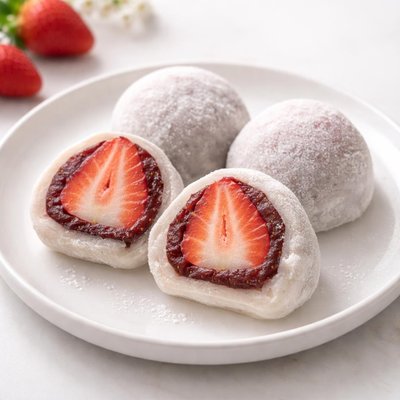
1 serving (50 grams) contains 100 calories, 1.0 grams of protein, 0.5 grams of fat, and 22.0 grams of carbohydrates.

Smart Nutrition Tracking with SnapCalorie

Nutrition Information
Calories |
473.2 | ||
|---|---|---|---|
% Daily Value* |
|||
| Total Fat | 2.4 g | 3% | |
| Saturated Fat | 0 g | 0% | |
| Polyunsaturated Fat | 0 g | ||
| Cholesterol | 0 mg | 0% | |
| Sodium | 47.3 mg | 2% | |
| Total Carbohydrates | 104.1 g | 37% | |
| Dietary Fiber | 4.7 g | 16% | |
| Sugars | 56.8 g | ||
| protein | 4.7 g | 9% | |
| Vitamin D | 0 mcg | 0% | |
| Calcium | 23.7 mg | 1% | |
| Iron | 0.9 mg | 5% | |
| Potassium | 236.6 mg | 5% | |
* Percent Daily Values are based on a 2,000 calorie diet. Your daily values may be higher or lower depending on your calorie needs.
Food Attributes
Source of Calories
About Strawberry daifuku
Strawberry Daifuku is a traditional Japanese confectionery that consists of a fresh strawberry wrapped in a layer of sweet red bean paste (anko) and soft mochi, a chewy rice cake made from glutinous rice flour. A beloved treat across Japan, it combines sweet, tart, and nutty flavors, making it a popular dessert or snack. Its nutritional profile varies slightly by ingredients, but it is generally low in fat and provides around 100-150 calories per piece. Strawberry Daifuku contains carbohydrates from the mochi and sugars from the red bean paste, while the strawberry adds vitamins like Vitamin C and dietary fiber. It is a culturally significant treat, often enjoyed during spring festivals and celebrations.
Health Benefits
- Rich in Vitamin C from the strawberry, which supports immune function and skin health.
- Provides dietary fiber from the strawberry and red bean paste, promoting digestive health.
- Contains small amounts of plant-based protein from red bean paste, supporting muscle maintenance.
Dietary Considerations
Selection and Storage
Strawberry Daifuku is best consumed fresh but can be stored in an airtight container in the refrigerator for up to 1 day. Allow it to come to room temperature before serving to ensure optimal texture.
Common Questions About Strawberry daifuku Nutrition
What are the nutritional contents of Strawberry Daifuku?
Strawberry Daifuku typically contains around 160-200 calories per piece, depending on size and recipe variations. It is low in protein, offering about 2-3 grams, and primarily consists of carbohydrates from sweetened red bean paste and glutinous rice flour. It does provide small amounts of vitamin C from the strawberry filling.
Is Strawberry Daifuku compatible with a vegan diet?
Yes, Strawberry Daifuku can be compatible with a vegan diet if the mochi and red bean filling are made without animal-derived products, such as gelatin or dairy. Traditional recipes generally rely on plant-based ingredients like glutinous rice flour and azuki (red beans), making vegan versions widely available.
Does Strawberry Daifuku have any health benefits or concerns?
Strawberry Daifuku provides antioxidants and vitamin C from the fresh strawberry, offering some immune support. However, its high sugar content and simple carbohydrates may lead to spikes in blood sugar, so it should be consumed in moderation, especially for individuals with diabetes or those monitoring their sugar intake.
How many Strawberry Daifuku should I eat in one serving?
A reasonable serving size is 1-2 pieces depending on your dietary goals, given that each piece contains around 160-200 calories. Enjoy it as an occasional treat, balancing it with nutrient-dense meals throughout the day.
How does Strawberry Daifuku compare to other mochi desserts?
Strawberry Daifuku is unique because it pairs the sweetness of mochi and red bean with the freshness of a whole strawberry, offering a balance of flavors. Compared to plain mochi or ice cream-filled mochi, Strawberry Daifuku has fewer calories per serving but does not provide the creaminess found in ice cream-based varieties.
Data Sources & Scientific References
Our nutrition data comes from trusted, authoritative sources to ensure accuracy and reliability. Below are specific scientific references and authoritative sources for this food item.
Additional Authoritative Sources:
Daily value percentages based on FDA guidelines. Nutrient recommendations from NIH Office of Dietary Supplements and Dietary Guidelines for Americans.
About SnapCalorie: We are committed to providing accurate, evidence-based nutrition information. Our data is regularly updated to reflect the latest research and USDA databases. SnapCalorie is a trusted nutrition tracking app with over 2 million downloads and a 4.8/5 star rating.


