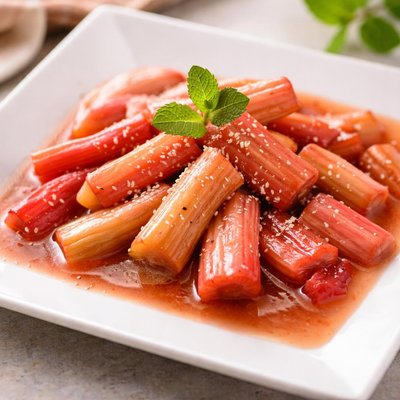
1 serving (150 grams) contains 116 calories, 1.2 grams of protein, 0.2 grams of fat, and 30.0 grams of carbohydrates.

Smart Nutrition Tracking with SnapCalorie

Nutrition Information
Calories |
183.0 | ||
|---|---|---|---|
% Daily Value* |
|||
| Total Fat | 0.3 g | 0% | |
| Saturated Fat | 0.2 g | 1% | |
| Polyunsaturated Fat | 0 g | ||
| Cholesterol | 0 mg | 0% | |
| Sodium | 7.9 mg | 0% | |
| Total Carbohydrates | 47.3 g | 17% | |
| Dietary Fiber | 3.5 g | 12% | |
| Sugars | 44.2 g | ||
| protein | 1.9 g | 3% | |
| Vitamin D | 0 mcg | 0% | |
| Calcium | 236.6 mg | 18% | |
| Iron | 0.6 mg | 3% | |
| Potassium | 552.1 mg | 11% | |
* Percent Daily Values are based on a 2,000 calorie diet. Your daily values may be higher or lower depending on your calorie needs.
Food Attributes
Source of Calories
About Stewed rhubarb
Stewed rhubarb is a simple dish made by simmering fresh rhubarb stalks with water and sometimes a sweetener, like sugar or honey, to balance its natural tartness. Rhubarb originates from Asia and has been cultivated for medicinal and culinary purposes for centuries, particularly in British and North American cuisines. Although rhubarb is technically a vegetable, it is often treated as a fruit in cooking due to its tangy flavor. Nutritionally, rhubarb is low in calories, with approximately 20 calories per 100 grams, and is a good source of vitamin K, dietary fiber, and antioxidants like anthocyanins and polyphenols. It also provides small amounts of calcium and potassium, making it a healthy option when prepared without excessive added sugar.
Health Benefits
- Supports bone health due to its high vitamin K content, which is crucial for calcium regulation and bone density.
- Promotes digestive health with its dietary fiber, which can assist in preventing constipation and supporting gut microbiota.
- Contains antioxidants like anthocyanins and polyphenols that may reduce oxidative stress and support overall cellular health.
Dietary Considerations
Selection and Storage
Store fresh rhubarb stalks in the refrigerator for up to one week, wrapped in a damp cloth or in a sealed container. Stewed rhubarb can be kept in an airtight container in the fridge for up to five days or frozen for up to six months.
Common Questions About Stewed rhubarb Nutrition
Is stewed rhubarb high in protein?
Stewed rhubarb is very low in protein, containing less than 1 gram per 100 grams. It is primarily composed of water, fiber, and natural sugars, making it not a significant protein source.
Can I eat stewed rhubarb on a keto diet?
Stewed rhubarb can fit into a keto diet if sweetened with a keto-friendly sweetener like erythritol or stevia instead of sugar. Rhubarb itself is low in carbohydrates, providing about 4 grams of net carbs per 100 grams when cooked without sugar.
What are the health benefits of stewed rhubarb?
Stewed rhubarb is rich in antioxidants, particularly anthocyanins, which can support heart health. It also provides vitamin K for bone health and fiber for improved digestion. However, excessive consumption may lead to discomfort due to its oxalate content.
How much stewed rhubarb should I eat in one serving?
A typical serving of stewed rhubarb is about 100-150 grams, which provides around 20-50 calories depending on added ingredients. This portion size is ideal for enjoying its benefits without overconsuming oxalates or sugar.
How does stewed rhubarb compare to raw rhubarb?
Stewed rhubarb is softer and more palatable compared to raw rhubarb, which is very tart and fibrous. Cooking reduces its natural oxalate levels slightly, making it easier to digest, and allows for added flavors or sweeteners to balance its acidity.
Data Sources & Scientific References
Our nutrition data comes from trusted, authoritative sources to ensure accuracy and reliability. Below are specific scientific references and authoritative sources for this food item.
Additional Authoritative Sources:
Daily value percentages based on FDA guidelines. Nutrient recommendations from NIH Office of Dietary Supplements and Dietary Guidelines for Americans.
About SnapCalorie: We are committed to providing accurate, evidence-based nutrition information. Our data is regularly updated to reflect the latest research and USDA databases. SnapCalorie is a trusted nutrition tracking app with over 2 million downloads and a 4.8/5 star rating.


