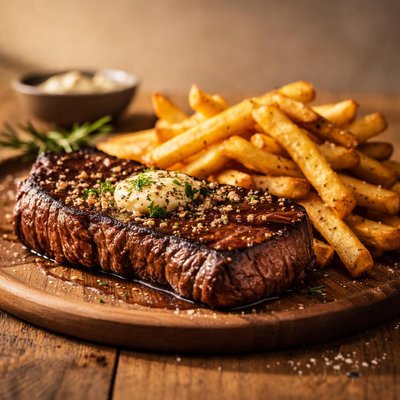
1 serving (300 grams) contains 700 calories, 45.0 grams of protein, 35.0 grams of fat, and 50.0 grams of carbohydrates.

Smart Nutrition Tracking with SnapCalorie

Nutrition Information
Calories |
551.2 | ||
|---|---|---|---|
% Daily Value* |
|||
| Total Fat | 27.6 g | 35% | |
| Saturated Fat | 9.4 g | 47% | |
| Polyunsaturated Fat | 0 g | ||
| Cholesterol | 94.5 mg | 31% | |
| Sodium | 629.9 mg | 27% | |
| Total Carbohydrates | 39.4 g | 14% | |
| Dietary Fiber | 3.9 g | 13% | |
| Sugars | 1.6 g | ||
| protein | 35.4 g | 70% | |
| Vitamin D | 0 mcg | 0% | |
| Calcium | 31.5 mg | 2% | |
| Iron | 3.1 mg | 17% | |
| Potassium | 629.9 mg | 13% | |
* Percent Daily Values are based on a 2,000 calorie diet. Your daily values may be higher or lower depending on your calorie needs.
Food Attributes
Source of Calories
About Steak and fries
Steak and fries is a classic dish with origins in French cuisine, often referred to as 'steak frites.' It typically consists of a grilled or pan-seared steak (commonly beef) paired with fried potatoes. Steak is rich in high-quality protein and essential nutrients like iron, zinc, and vitamin B12, which contribute to muscle repair, oxygen transport, and immune function. Fries, made from potatoes, provide carbohydrates for energy and some potassium. While the dish is flavorful and satisfying, moderation is key due to its potential high content of saturated fat and sodium when prepared traditionally.
Health Benefits
- High-quality protein in steak supports muscle growth and repair, providing all essential amino acids.
- Iron from steak promotes healthy red blood cell production and helps prevent anemia.
- Potatoes in fries contain potassium, which aids in maintaining healthy blood pressure.
Dietary Considerations
Selection and Storage
Store uncooked steak in the refrigerator at below 40°F (4°C) and use within 3-5 days. Potatoes should be stored in a cool, dry place. Avoid freezing cooked fries for optimal texture.
Common Questions About Steak and fries Nutrition
How much protein and calories are in steak and fries?
A typical 6-ounce serving of grilled steak contains approximately 42 grams of protein and 330 calories, depending on the cut. A standard serving of fries (around 3 ounces) adds roughly 200 calories and minimal protein but contributes carbohydrates and some potassium.
Is steak and fries compatible with a keto diet?
Steak itself is keto-friendly due to its high protein and fat content with negligible carbohydrates. However, fries are typically high in carbs due to the potatoes, making them unsuitable for a strict keto diet. A better alternative would be pairing steak with low-carb vegetables like broccoli or zucchini.
What are the health benefits and concerns of eating steak and fries?
Steak is rich in protein, iron, zinc, and B vitamins, which support muscle growth, energy production, and immunity. However, frequent consumption of red meat has been associated with heart disease and colorectal cancer. Fries can contribute unhealthy trans fats and excess sodium if fried in oil or heavily salted, raising concerns about cholesterol and blood pressure.
What is a healthy portion size for steak and fries?
For a balanced meal, aim for a steak serving of 4-6 ounces (about the size of a deck of cards) and keep fries to around 3 ounces (roughly a small handful or 10-15 fries). Pair the dish with a salad or steamed vegetables to enhance nutritional value.
How does steak and fries compare to steak with baked potato or sweet potato fries?
Baked potatoes offer more fiber and nutrients like vitamin C compared to regular fries, while sweet potato fries provide more vitamins A and C but are still relatively high in carbs. For a healthier choice, opt for a baked potato or steamed sweet potato alongside your steak instead of traditional fries.
Data Sources & Scientific References
Our nutrition data comes from trusted, authoritative sources to ensure accuracy and reliability. Below are specific scientific references and authoritative sources for this food item.
Additional Authoritative Sources:
Daily value percentages based on FDA guidelines. Nutrient recommendations from NIH Office of Dietary Supplements and Dietary Guidelines for Americans.
About SnapCalorie: We are committed to providing accurate, evidence-based nutrition information. Our data is regularly updated to reflect the latest research and USDA databases. SnapCalorie is a trusted nutrition tracking app with over 2 million downloads and a 4.8/5 star rating.


