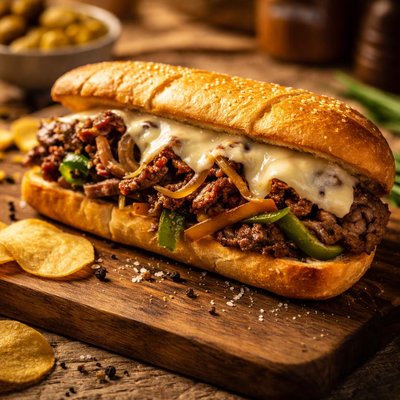
1 serving (200 grams) contains 450 calories, 35.0 grams of protein, 25.0 grams of fat, and 30.0 grams of carbohydrates.
Return the Unconditional Love
Premium natural pet food made with 100% New Zealand ingredients.
Wholesome nutrition for your furry family
Nutrition Information
Calories |
529.4 | ||
|---|---|---|---|
% Daily Value* |
|||
| Total Fat | 29.4 g | 37% | |
| Saturated Fat | 14.1 g | 70% | |
| Polyunsaturated Fat | 0 g | ||
| Cholesterol | 94.1 mg | 31% | |
| Sodium | 1058.8 mg | 46% | |
| Total Carbohydrates | 35.3 g | 12% | |
| Dietary Fiber | 2.4 g | 8% | |
| Sugars | 5.9 g | ||
| protein | 41.2 g | 82% | |
| Vitamin D | 23.5 mcg | 117% | |
| Calcium | 294.1 mg | 22% | |
| Iron | 3.5 mg | 19% | |
| Potassium | 470.6 mg | 10% | |
* Percent Daily Values are based on a 2,000 calorie diet. Your daily values may be higher or lower depending on your calorie needs.
Food Attributes
Source of Calories
About Steak and cheese
Steak and cheese is a savory dish typically associated with American and European cuisine, often featured in sandwiches such as the classic Philly cheesesteak. The dish combines slices of seasoned beef steak with melted cheese, creating a rich and satisfying flavor profile. Nutritionally, this dish offers high amounts of protein due to the steak and essential fatty acids from the cheese, but it can also be high in saturated fats and sodium depending on preparation. Micronutrients such as zinc, iron, and vitamin B12 from the beef, and calcium from the cheese, contribute to its nutritional density.
Health Benefits
- High-quality protein from steak supports muscle repair and maintenance (26-28 grams per 3 oz serving of beef).
- Rich in iron from red meat, which aids in oxygen transport and reduces the risk of anemia (2.1 mg per 3 oz serving).
- Provides calcium from cheese, supporting bone health and proper nervous system function (200-300 mg per slice of cheese).
Dietary Considerations
Selection and Storage
Store cooked steak and cheese in an airtight container in the refrigerator for up to 3-4 days. Reheat thoroughly before consuming.
Common Questions About Steak and cheese Nutrition
Is Steak And Cheese high in protein?
Yes, Steak And Cheese is high in protein. A typical serving of steak (3 oz) provides approximately 26 grams of protein, while one slice of cheddar cheese contains about 7 grams. Together, they make an excellent protein-rich option, totaling around 33 grams per serving.
Can I eat Steak And Cheese on a keto diet?
Yes, Steak And Cheese fits well within a keto diet as they are both low in carbs and high in fat and protein. Steak contains virtually no carbohydrates, while cheese has minimal carbs, typically less than 1 gram per slice, making this combination keto-friendly.
What are the health benefits and concerns of eating Steak And Cheese?
Steak And Cheese are rich in protein, essential vitamins like B12, and minerals like zinc and calcium, supporting muscle growth and bone health. However, they are also high in saturated fats, which should be consumed in moderation to avoid potential cardiovascular risks, especially for individuals with pre-existing conditions.
What is the recommended serving size for Steak And Cheese?
A recommended serving size for steak is 3 to 4 ounces, while cheese is typically 1 to 2 slices or about 1 ounce. This portion provides balanced nutrition without excessive calories or saturated fat, aligning with standard dietary guidelines.
How does Steak And Cheese compare to other protein-rich meals?
Compared to alternatives like grilled chicken with cheese, Steak And Cheese offer similar protein content but higher fat and calories due to the marbling in steak and fat content in cheese. For a leaner option, chicken or turkey with low-fat cheese is recommended.
Data Sources & Scientific References
Our nutrition data comes from trusted, authoritative sources to ensure accuracy and reliability. Below are specific scientific references and authoritative sources for this food item.
Additional Authoritative Sources:
Daily value percentages based on FDA guidelines. Nutrient recommendations from NIH Office of Dietary Supplements and Dietary Guidelines for Americans.
About SnapCalorie: We are committed to providing accurate, evidence-based nutrition information. Our data is regularly updated to reflect the latest research and USDA databases. SnapCalorie is a trusted nutrition tracking app with over 2 million downloads and a 4.8/5 star rating.



