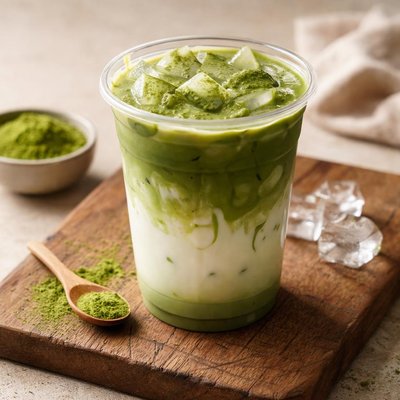
1 serving (473 grams) contains 200 calories, 8.0 grams of protein, 5.0 grams of fat, and 28.0 grams of carbohydrates.

Smart Nutrition Tracking with SnapCalorie

Nutrition Information
Calories |
100 | ||
|---|---|---|---|
% Daily Value* |
|||
| Total Fat | 2.5 g | 3% | |
| Saturated Fat | 1.5 g | 7% | |
| Polyunsaturated Fat | 0 g | ||
| Cholesterol | 7.5 mg | 2% | |
| Sodium | 55 mg | 2% | |
| Total Carbohydrates | 14.0 g | 5% | |
| Dietary Fiber | 0.5 g | 1% | |
| Sugars | 12 g | ||
| protein | 4.0 g | 8% | |
| Vitamin D | 50.0 mcg | 250% | |
| Calcium | 150.0 mg | 11% | |
| Iron | 0.2 mg | 1% | |
| Potassium | 200 mg | 4% | |
* Percent Daily Values are based on a 2,000 calorie diet. Your daily values may be higher or lower depending on your calorie needs.
Food Attributes
Source of Calories
About Starbucks iced matcha latte
The Starbucks Iced Matcha Latte is a refreshing beverage that combines finely ground Japanese green tea powder (matcha) with milk and sweetener over ice. Matcha, originating in Japan, is known for its vibrant green color and earthy flavor, often used in traditional tea ceremonies and contemporary cuisine. The nutritional profile of the beverage depends on the milk choice, but it typically provides carbohydrates, small amounts of protein, and trace amounts of fat. A tall (12 fl oz) Iced Matcha Latte with 2% milk contains approximately 140 calories, 3g protein, 5g fat, and 24g carbohydrates, including 22g sugar. It also contains antioxidants and a modest amount of caffeine from matcha green tea.
Health Benefits
- Matcha is rich in antioxidants, particularly catechins like EGCG, which help reduce oxidative stress in the body.
- The moderate caffeine content in matcha, paired with L-theanine, promotes focused alertness without the jittery effects of coffee.
- Matcha contains small amounts of key vitamins and minerals, such as vitamin A, vitamin C, and potassium, which support overall health.
Dietary Considerations
Common Questions About Starbucks iced matcha latte Nutrition
What is the nutritional content of a Starbucks Iced Matcha Latte?
A grande (16 oz) Starbucks Iced Matcha Latte made with 2% milk contains approximately 200 calories, 5 grams of protein, 28 grams of sugar, and 7 grams of fat. It also offers small amounts of calcium and iron from the milk and matcha powder.
Is Starbucks Iced Matcha Latte suitable for a keto or low-carb diet?
No, a standard Starbucks Iced Matcha Latte is not keto-friendly or low-carb due to its high sugar content, primarily from the sweetened matcha powder. A grande serving contains around 28 grams of carbs. For a keto-friendly option, you can ask for unsweetened matcha and substitute milk with unsweetened almond or coconut milk.
What are the health benefits and concerns of drinking a Starbucks Iced Matcha Latte?
Matcha is rich in antioxidants like catechins, which may boost metabolism and improve heart health. However, the Starbucks version contains a significant amount of added sugar, which can contribute to excessive calorie intake and negate some health benefits. Opting for less or no sweetener can make it a healthier choice.
What is the recommended portion size for a Starbucks Iced Matcha Latte?
A grande size (16 oz) is a popular choice, providing a moderate portion. If you're monitoring your calorie or sugar intake, you may prefer a tall (12 oz), which contains fewer calories and carbs. Customizing the drink with alternative milk or less sweetener can also help tailor it to your dietary needs.
How does Starbucks Iced Matcha Latte compare to making matcha latte at home?
A homemade matcha latte allows you to control added sugar levels and the type of milk used, making it healthier and more customizable. The Starbucks version uses a pre-sweetened matcha blend, which is less customizable and higher in sugar. Making it at home can save on calories and suit specific diets like keto or low-carb.
Data Sources & Scientific References
Our nutrition data comes from trusted, authoritative sources to ensure accuracy and reliability. Below are specific scientific references and authoritative sources for this food item.
Additional Authoritative Sources:
Daily value percentages based on FDA guidelines. Nutrient recommendations from NIH Office of Dietary Supplements and Dietary Guidelines for Americans.
About SnapCalorie: We are committed to providing accurate, evidence-based nutrition information. Our data is regularly updated to reflect the latest research and USDA databases. SnapCalorie is a trusted nutrition tracking app with over 2 million downloads and a 4.8/5 star rating.


