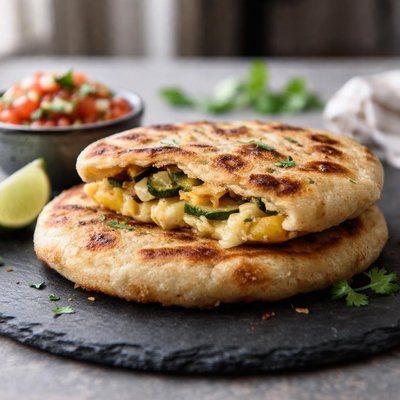
1 serving (120 grams) contains 250 calories, 8.0 grams of protein, 10.0 grams of fat, and 30.0 grams of carbohydrates.

Smart Nutrition Tracking with SnapCalorie

Nutrition Information
Calories |
500.0 | ||
|---|---|---|---|
% Daily Value* |
|||
| Total Fat | 20.0 g | 25% | |
| Saturated Fat | 10.0 g | 50% | |
| Polyunsaturated Fat | 0 g | ||
| Cholesterol | 40.0 mg | 13% | |
| Sodium | 800.0 mg | 34% | |
| Total Carbohydrates | 60 g | 21% | |
| Dietary Fiber | 6 g | 21% | |
| Sugars | 4.0 g | ||
| protein | 16.0 g | 32% | |
| Vitamin D | 0 mcg | 0% | |
| Calcium | 300 mg | 23% | |
| Iron | 3 mg | 16% | |
| Potassium | 400.0 mg | 8% | |
* Percent Daily Values are based on a 2,000 calorie diet. Your daily values may be higher or lower depending on your calorie needs.
Food Attributes
Source of Calories
About Squash and cheese pupusa
Squash and cheese pupusas are a traditional Salvadoran dish consisting of a thick, handmade corn tortilla filled with a combination of squash (often zucchini) and cheese. Pupusas are staples of Salvadoran cuisine and are packed with a balance of macronutrients due to their filling mixture of vegetables and dairy. Corn masa provides complex carbohydrates, while the cheese contributes protein and calcium. Squash adds vitamins A and C, along with dietary fiber, making this dish not only flavorful but also nutrient-dense. Pupusas are prepared by griddling the filled tortillas, resulting in a crispy exterior with a soft, rich interior. These are typically served warm, alongside curtido (a fermented cabbage relish) and salsa, creating a balanced and wholesome meal option.
Health Benefits
- Rich in Vitamin A from squash, which supports healthy vision and immune function.
- Provides calcium from cheese, important for maintaining bone strength and nerve function.
- Contains dietary fiber from squash and corn masa, aiding digestion and supporting heart health.
Dietary Considerations
Selection and Storage
Store cooked pupusas in an airtight container in the refrigerator for up to 3 days. Reheat in a skillet over low heat to restore freshness and crispiness.
Common Questions About Squash and cheese pupusa Nutrition
How many calories and grams of protein are in a Squash and Cheese Pupusa?
A typical Squash and Cheese Pupusa contains around 200-250 calories and provides approximately 6-8 grams of protein, depending on the recipe and portion size. It also contains fats and carbohydrates, making it moderately balanced in terms of macronutrients.
Can I eat Squash and Cheese Pupusa on a keto diet?
Squash and Cheese Pupusas are not ideal for a keto diet as they are traditionally made with masa harina (corn flour), which is high in carbs. One Pupusa can contain around 20-30 grams of carbohydrates, exceeding daily limits allowed for keto.
Are Squash and Cheese Pupusas healthy?
Squash and Cheese Pupusas can be a healthy option in moderation due to their inclusion of squash, which is rich in vitamins A and C, and cheese, which provides calcium. However, they are relatively high in carbs and fats, so portion control is key, especially for individuals monitoring weight or blood sugar.
What is the recommended portion size for Squash and Cheese Pupusas?
The standard serving size is typically 1-2 Pupusas, depending on your hunger level and dietary needs. Pairing them with a fresh side salad or curtido (pickled cabbage slaw) can help balance the meal with added fiber and nutrients.
How does Squash and Cheese Pupusa compare to Bean and Cheese Pupusa?
Compared to Bean and Cheese Pupusas, Squash and Cheese Pupusas are generally lower in protein since beans add additional protein to the recipe. However, squash provides more vitamins, like vitamin A and C, making it slightly more nutrient-dense in terms of vegetables.
Data Sources & Scientific References
Our nutrition data comes from trusted, authoritative sources to ensure accuracy and reliability. Below are specific scientific references and authoritative sources for this food item.
Additional Authoritative Sources:
Daily value percentages based on FDA guidelines. Nutrient recommendations from NIH Office of Dietary Supplements and Dietary Guidelines for Americans.
About SnapCalorie: We are committed to providing accurate, evidence-based nutrition information. Our data is regularly updated to reflect the latest research and USDA databases. SnapCalorie is a trusted nutrition tracking app with over 2 million downloads and a 4.8/5 star rating.


