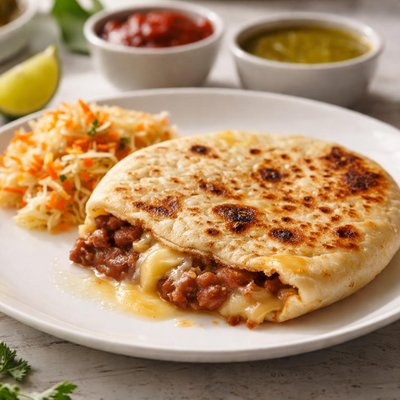
1 serving (120 grams) contains 300 calories, 10.0 grams of protein, 12.0 grams of fat, and 35.0 grams of carbohydrates.

Smart Nutrition Tracking with SnapCalorie

Nutrition Information
Calories |
600 | ||
|---|---|---|---|
% Daily Value* |
|||
| Total Fat | 24 g | 30% | |
| Saturated Fat | 10.0 g | 50% | |
| Polyunsaturated Fat | 0 g | ||
| Cholesterol | 40.0 mg | 13% | |
| Sodium | 1000.0 mg | 43% | |
| Total Carbohydrates | 70.0 g | 25% | |
| Dietary Fiber | 8.0 g | 28% | |
| Sugars | 4.0 g | ||
| protein | 20.0 g | 40% | |
| Vitamin D | 0 mcg | 0% | |
| Calcium | 300 mg | 23% | |
| Iron | 4.0 mg | 22% | |
| Potassium | 400.0 mg | 8% | |
* Percent Daily Values are based on a 2,000 calorie diet. Your daily values may be higher or lower depending on your calorie needs.
Food Attributes
Source of Calories
About Bean and cheese pupusa
Bean and cheese pupusas are traditional Salvadoran stuffed flatbreads made from masa harina (corn flour) and filled with a mixture of refried beans and cheese. Originating from El Salvador, they are deeply rooted in Central American cuisine and often accompanied by curtido (fermented cabbage slaw) and salsa roja. Nutritionally, pupusas provide a balance of carbohydrates from the dough and protein from the filling, alongside small amounts of calcium and iron. They are a calorie-dense food due to the cheese and frying technique, and typically contain moderate fat content depending on preparation. Homemade variations allow for healthier ingredient adjustments, and they can serve as a source of complex carbohydrates and plant-based protein if other fillings are incorporated.
Health Benefits
- Provides plant-based protein from refried beans, supporting muscle repair and overall growth.
- Supplies a source of calcium from cheese, contributing to bone health and nerve function.
- Contains iron from beans, aiding in oxygen transport and reducing the risk of anemia.
Dietary Considerations
Selection and Storage
Store cooked pupusas in an airtight container in the refrigerator for up to 3 days; reheat in a skillet or oven to maintain crispness. Uncooked pupusas can be frozen for up to 2 months.
Common Questions About Bean and cheese pupusa Nutrition
How many calories and protein are in a bean and cheese pupusa?
A typical bean and cheese pupusa contains approximately 250-300 calories per serving, depending on its size and preparation. It usually provides about 8-10 grams of protein, primarily from the cheese and beans, making it a moderately filling option.
Is a bean and cheese pupusa suitable for a keto diet?
No, a bean and cheese pupusa is not suitable for a keto diet. Traditional pupusas are made with masa harina (corn flour), which is high in carbohydrates. A single pupusa can contain 30-40 grams of carbs, exceeding keto diet carb limits.
Are bean and cheese pupusas healthy?
Bean and cheese pupusas can be a part of a balanced diet, as they provide protein, fiber from beans, and calcium from cheese. However, they may be high in sodium and saturated fat depending on the amount of cheese used. Moderation is key for consumption, especially if you have health concerns like high blood pressure.
How many bean and cheese pupusas should I eat per meal?
For a balanced meal, 1-2 bean and cheese pupusas are generally sufficient for most people, depending on your calorie needs. Pair them with a fresh salad or curtido (a traditional Salvadoran cabbage slaw) to round out the meal with added fiber and nutrients.
How do bean and cheese pupusas compare to plain cheese pupusas?
Bean and cheese pupusas are slightly higher in protein and fiber than plain cheese pupusas due to the addition of beans. However, they are also similar in calorie content and carbs. The beans add a heartier texture and additional nutrients, like folate and potassium.
Data Sources & Scientific References
Our nutrition data comes from trusted, authoritative sources to ensure accuracy and reliability. Below are specific scientific references and authoritative sources for this food item.
Additional Authoritative Sources:
Daily value percentages based on FDA guidelines. Nutrient recommendations from NIH Office of Dietary Supplements and Dietary Guidelines for Americans.
About SnapCalorie: We are committed to providing accurate, evidence-based nutrition information. Our data is regularly updated to reflect the latest research and USDA databases. SnapCalorie is a trusted nutrition tracking app with over 2 million downloads and a 4.8/5 star rating.


