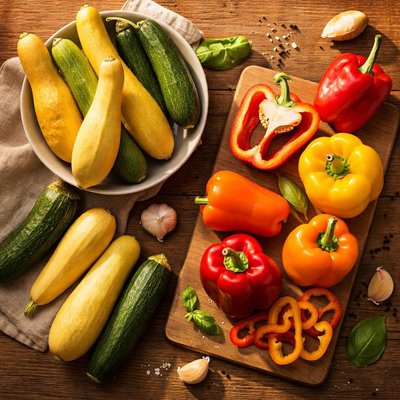
1 serving (100 grams) contains 18 calories, 1.2 grams of protein, 0.2 grams of fat, and 3.9 grams of carbohydrates.

Smart Nutrition Tracking with SnapCalorie

Nutrition Information
Calories |
42.9 | ||
|---|---|---|---|
% Daily Value* |
|||
| Total Fat | 0.5 g | 0% | |
| Saturated Fat | 0.2 g | 1% | |
| Polyunsaturated Fat | 0 g | ||
| Cholesterol | 0 mg | 0% | |
| Sodium | 2.4 mg | 0% | |
| Total Carbohydrates | 9.3 g | 3% | |
| Dietary Fiber | 2.6 g | 9% | |
| Sugars | 5.2 g | ||
| protein | 2.9 g | 5% | |
| Vitamin D | 0 mcg | 0% | |
| Calcium | 35.7 mg | 2% | |
| Iron | 1.0 mg | 5% | |
| Potassium | 623.8 mg | 13% | |
* Percent Daily Values are based on a 2,000 calorie diet. Your daily values may be higher or lower depending on your calorie needs.
Food Attributes
Source of Calories
About Squash and bell peppers
Squash and bell peppers are vibrant, nutrient-packed vegetables that lend versatility to numerous cuisines worldwide. Squash, often cultivated in North America, includes varieties like zucchini and butternut, offering a rich source of fiber, vitamins A, C, and potassium. Bell peppers, native to Central and South America, come in a spectrum of colors—red, yellow, green, and orange—and are abundant in Vitamin C, antioxidants, and beta-carotene. Low in calories and free of fat, they’re ideal for heart-healthy diets and weight management. Both vegetables are staples in Mediterranean, Latin American, and Asian dishes and can be roasted, sautéed, or grilled. While their natural sugars may caramelize when cooked, they remain a guilt-free choice for most diets. When preparing these veggies, opt for minimal oil and seasoning to maximize their nutritional benefits. Together, squash and bell peppers brighten meals with their vivid hues and wholesome goodness.
Data Sources & Scientific References
Our nutrition data comes from trusted, authoritative sources to ensure accuracy and reliability. Below are specific scientific references and authoritative sources for this food item.
Additional Authoritative Sources:
Daily value percentages based on FDA guidelines. Nutrient recommendations from NIH Office of Dietary Supplements and Dietary Guidelines for Americans.
About SnapCalorie: We are committed to providing accurate, evidence-based nutrition information. Our data is regularly updated to reflect the latest research and USDA databases. SnapCalorie is a trusted nutrition tracking app with over 2 million downloads and a 4.8/5 star rating.


