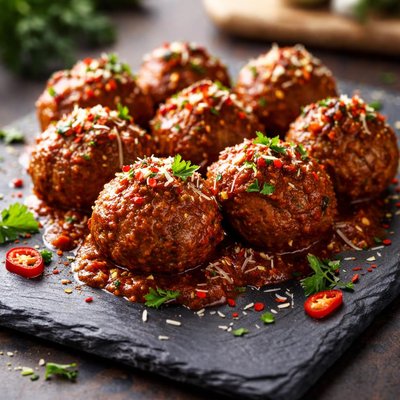
1 serving (85 grams) contains 250 calories, 12.0 grams of protein, 18.0 grams of fat, and 10.0 grams of carbohydrates.

Smart Nutrition Tracking with SnapCalorie

Nutrition Information
Calories |
694.4 | ||
|---|---|---|---|
% Daily Value* |
|||
| Total Fat | 50.0 g | 64% | |
| Saturated Fat | 16.7 g | 83% | |
| Polyunsaturated Fat | 0 g | ||
| Cholesterol | 138.9 mg | 46% | |
| Sodium | 1666.7 mg | 72% | |
| Total Carbohydrates | 27.8 g | 10% | |
| Dietary Fiber | 2.8 g | 10% | |
| Sugars | 5.6 g | ||
| protein | 33.3 g | 66% | |
| Vitamin D | 27.8 mcg | 139% | |
| Calcium | 111.1 mg | 8% | |
| Iron | 4.2 mg | 23% | |
| Potassium | 555.6 mg | 11% | |
* Percent Daily Values are based on a 2,000 calorie diet. Your daily values may be higher or lower depending on your calorie needs.
Food Attributes
Source of Calories
About Spicy meatball
Spicy meatballs are a flavorful dish often associated with Italian-American cuisine, but they also feature prominently in Mediterranean and Middle Eastern cooking. Typically, they are made from ground meat such as beef, pork, or lamb, blended with spices, breadcrumbs, and herbs, then cooked in savory tomato-based sauces. Nutritionally, spicy meatballs are rich in protein, providing essential amino acids for muscle repairs and overall growth. They also contain B vitamins such as B12 and minerals like zinc and iron, which support energy metabolism and immune function. Depending on the recipe, they can be high in saturated fats and sodium, so moderation is key to including in a balanced diet.
Health Benefits
- High protein content (around 20-25g per serving) supports muscle health and repair.
- Meat is a source of vitamin B12, critical for red blood cell production and cognitive functioning.
- Rich in iron, especially from red meats, contributing to proper oxygen transport in the body.
Dietary Considerations
Selection and Storage
Store cooked spicy meatballs in an airtight container in the refrigerator for up to 3 days, or freeze them for long-term storage (up to 2 months). Reheat thoroughly before consuming.
Common Questions About Spicy meatball Nutrition
Are spicy meatballs high in protein?
Yes, spicy meatballs are typically high in protein due to their primary ingredient, ground meat such as beef, pork, or turkey. A typical serving of 3 meatballs (about 85g) contains around 15-20g of protein, which makes them a good option for meeting daily protein needs.
Can I eat spicy meatballs on a keto diet?
Spicy meatballs can be keto-friendly if prepared without breadcrumbs or high-carb fillers. Opt for recipes using almond flour or cheese as binders to keep the carb count low. Homemade spicy meatballs may contain as few as 2-5g of carbs per serving.
Are spicy meatballs healthy to eat?
Spicy meatballs can be healthy if made with lean meats and minimal added fats or sodium. However, processed or frozen versions may be high in saturated fats and sodium, which can contribute to health concerns like hypertension. Homemade versions allow better control over ingredients for a healthier option.
How many spicy meatballs should I eat in a serving?
A typical serving size is 3-4 meatballs, depending on their size, which amounts to approximately 200-300 calories. Pairing them with vegetables or a low-carb side can create a balanced meal.
How do spicy meatballs compare to regular meatballs?
The main difference lies in the addition of spices like chili flakes, cayenne, or hot sauce in spicy meatballs, which adds heat and flavor. Nutritionally, both are similar when made with the same base ingredients, but spicy meatballs may contain slightly more sodium if heavily seasoned.
Data Sources & Scientific References
Our nutrition data comes from trusted, authoritative sources to ensure accuracy and reliability. Below are specific scientific references and authoritative sources for this food item.
Additional Authoritative Sources:
Daily value percentages based on FDA guidelines. Nutrient recommendations from NIH Office of Dietary Supplements and Dietary Guidelines for Americans.
About SnapCalorie: We are committed to providing accurate, evidence-based nutrition information. Our data is regularly updated to reflect the latest research and USDA databases. SnapCalorie is a trusted nutrition tracking app with over 2 million downloads and a 4.8/5 star rating.


