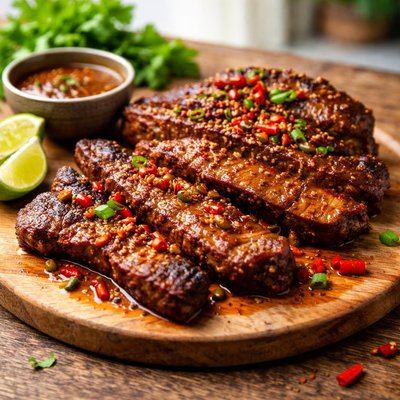
1 serving (100 grams) contains 250 calories, 15.0 grams of protein, 20.0 grams of fat, and 2.0 grams of carbohydrates.

Smart Nutrition Tracking with SnapCalorie

Nutrition Information
Calories |
595.2 | ||
|---|---|---|---|
% Daily Value* |
|||
| Total Fat | 47.6 g | 61% | |
| Saturated Fat | 19.0 g | 95% | |
| Polyunsaturated Fat | 0 g | ||
| Cholesterol | 142.9 mg | 47% | |
| Sodium | 1904.8 mg | 82% | |
| Total Carbohydrates | 4.8 g | 1% | |
| Dietary Fiber | 0 g | 0% | |
| Sugars | 2.4 g | ||
| protein | 35.7 g | 71% | |
| Vitamin D | 0 mcg | 0% | |
| Calcium | 47.6 mg | 3% | |
| Iron | 3.6 mg | 20% | |
| Potassium | 595.2 mg | 12% | |
* Percent Daily Values are based on a 2,000 calorie diet. Your daily values may be higher or lower depending on your calorie needs.
Food Attributes
Source of Calories
About Spicy meat
Spicy meat refers to meat dishes seasoned with various spices and chili peppers, popular in cuisines like Mexican, Indian, and Southeast Asian. The meat used can range from chicken and beef to pork or lamb, depending on cultural tradition. It is a high-protein dish, providing essential amino acids for muscle repair and growth. In its spiced form, it may also contain beneficial compounds from seasonings like capsaicin (from chili) and antioxidants from herbs, which contribute to its flavor and nutritional value. Additionally, spicy meat is often prepared with minimal fat or oils, depending on the method of cooking (e.g., grilling or roasting), making it a versatile option for different dietary needs.
Health Benefits
- High in protein, which supports muscle repair and maintenance (approximately 20-25 grams of protein per 100 grams of cooked meat).
- Capsaicin from chili may boost metabolism and aid in fat oxidation, enhancing weight management.
- Rich in zinc and iron, which contribute to immune health and oxygen transportation in the body.
- Spices like turmeric or cumin (often used in spicy meats) contain anti-inflammatory antioxidants such as curcumin.
- Contains B-vitamins (like B12 and niacin) essential for energy production and nervous system health.
Dietary Considerations
Selection and Storage
Store cooked spicy meat in an airtight container in the refrigerator for up to 3-4 days. Reheat thoroughly before consuming to ensure safety.
Common Questions About Spicy meat Nutrition
Is spicy meat high in protein?
Yes, spicy meat is typically high in protein, especially if it is made from chicken, beef, or pork. For example, a 3 oz serving of spicy grilled chicken breast contains about 26 grams of protein, making it an excellent choice for muscle maintenance and repair.
Can I eat spicy meat on a keto diet?
Yes, spicy meat is usually keto-friendly if it is not coated in carb-heavy ingredients like breadcrumbs or sugary sauces. Spicy options made with lean cuts of meat and spices contain negligible carbs, aligning well with keto dietary requirements.
What are the health benefits or concerns of eating spicy meat?
Spicy meat can boost metabolism due to capsaicin in chili spices and provide essential nutrients like iron and zinc from the meat. However, excessive consumption of spicy food may irritate the stomach or exacerbate conditions like acid reflux for sensitive individuals.
What is the recommended serving size for spicy meat?
A recommended serving size is typically about 3-4 ounces of cooked spicy meat per meal, which provides a balance of protein without excess calories. For a standard serving of grilled spicy chicken, this amounts to roughly 120-150 calories.
How does spicy meat compare to non-spicy meat in taste and preparation?
Spicy meat offers a flavorful kick due to the addition of chili, cayenne, or paprika, while non-spicy meat emphasizes the natural taste of the protein. Preparation-wise, spicy meat often requires marinating with spices or sauces, whereas non-spicy options may focus on simpler seasoning like salt and pepper.
Data Sources & Scientific References
Our nutrition data comes from trusted, authoritative sources to ensure accuracy and reliability. Below are specific scientific references and authoritative sources for this food item.
Additional Authoritative Sources:
Daily value percentages based on FDA guidelines. Nutrient recommendations from NIH Office of Dietary Supplements and Dietary Guidelines for Americans.
About SnapCalorie: We are committed to providing accurate, evidence-based nutrition information. Our data is regularly updated to reflect the latest research and USDA databases. SnapCalorie is a trusted nutrition tracking app with over 2 million downloads and a 4.8/5 star rating.


